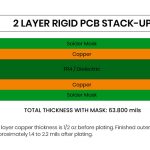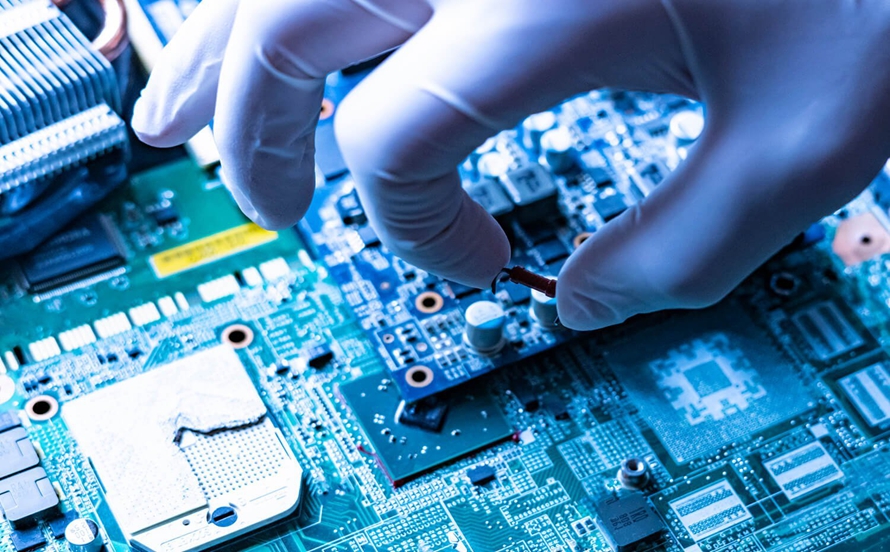
Turnkey PCB Assembly: PCB Design, PCB Manufacturing & Complete Electronics Manufacturing Guide
PCB assembly is a technology-intensive manufacturing process that requires advanced equipment, significant capital investment, strict quality control, and skilled personnel. For many companies, building and managing an entire electronics manufacturing operation in-house is neither practical nor cost-effective.
This is where Turnkey PCB Assembly services become valuable. Instead of coordinating multiple suppliers for bare PCBs, electronic components, assembly, testing, and logistics, customers can work with one manufacturing partner responsible for managing most or all stages of production.
A professional turnkey provider can receive essential manufacturing data—including the Bill of Materials (BOM), Gerber files, pick-and-place files, assembly drawings, and testing requirements—and transform these inputs into tested and production-ready electronic assemblies.
What Is Turnkey PCB Assembly?
Turnkey PCB Assembly is an end-to-end manufacturing solution in which a PCB assembly provider manages the major stages required to produce a finished printed circuit board assembly (PCBA).
Depending on the project scope, turnkey services may include:
- PCB design review and DFM analysis
- PCB fabrication
- Electronic component sourcing
- PCB assembly
- SMT and through-hole assembly
- Programming and configuration
- AOI, X-ray, ICT, and functional testing
- Quality inspection
- Conformal coating or other secondary processes
- Packaging and shipping
- Production documentation and after-sales support
The main advantage of this model is supplier consolidation. Rather than managing separate PCB manufacturers, component distributors, assembly houses, and testing providers, the customer has one primary manufacturing partner coordinating the overall process.
A turnkey model can be particularly useful for prototype development, low-to-medium-volume production, and complex electronic products that require close coordination between PCB Manufacturing and assembly.
Documents Required for Turnkey PCB Assembly
A successful turnkey PCB assembly project depends heavily on complete and accurate manufacturing documentation. The exact file package varies by project, but several documents are commonly required.
Bill of Materials (BOM)
The BOM identifies the components required for production. It typically includes:
- Manufacturer part number (MPN)
- Customer part number
- Component description
- Quantity per PCB
- Reference designators
- Approved manufacturers
- Component specifications
- Alternative or substitute parts
- Purchasing requirements
A well-prepared BOM allows the assembly provider to verify component availability, identify obsolete parts, evaluate lead times, and plan procurement.
PCB Gerber Files
Gerber files are widely used manufacturing data for PCB fabrication. Depending on the CAD system and project requirements, the fabrication package may include files representing:
- Copper layers
- Solder mask
- Silkscreen
- Board outline
- Paste layers
- Drill information
- Other fabrication-related data
Gerber data should be reviewed together with the fabrication drawing and stackup information to ensure that the intended PCB Design can be manufactured correctly.
Pick-and-Place Files
Pick-and-place files, also known as centroid or XY files, provide the automated assembly equipment with component placement information.
Typical information includes:
- Reference designator
- X/Y coordinates
- Component rotation
- PCB side
- Package information
These files help the placement machine accurately position surface-mount components during SMT assembly.
Additional Manufacturing Documents
Other documents may be required depending on the product and testing strategy:
- Assembly drawings
- Schematic diagrams
- Netlist files
- IPC-D-356 data
- Fabrication drawings
- Assembly specifications
- Special process instructions
- Programming files
- Test procedures
- Inspection criteria
For example, IPC-D-356 data can support electrical testing of fabricated PCBs, while a netlist helps verify electrical connectivity against the intended design.
A complete documentation package reduces engineering questions, minimizes manufacturing ambiguity, and helps improve production consistency.
Two Main Turnkey PCB Assembly Models
Turnkey PCB assembly is generally offered in two broad models: full turnkey and partial turnkey.
Full Turnkey PCB Assembly
With full turnkey assembly, the manufacturing provider manages essentially the complete production chain.
Depending on the agreement, this may include:
- Design review or engineering support
- PCB fabrication
- Component procurement
- PCB assembly
- Programming
- Inspection and testing
- Secondary manufacturing processes
- Final quality control
- Packaging
- Shipping
The customer mainly provides the product requirements and manufacturing data, while the provider coordinates the required suppliers, materials, equipment, and production operations.
This approach is especially useful for customers that do not have their own established electronics supply chain.
Partial Turnkey PCB Assembly
Partial turnkey assembly allows the customer to supply some materials while the assembly provider handles the remaining requirements.
For example, a customer may provide:
- Bare PCBs
- Critical integrated circuits
- Proprietary components
- Connectors
- Specialized components
The assembly provider then sources the remaining components and performs assembly, testing, inspection, and other required operations.
Partial turnkey manufacturing can provide customers with greater control over strategically important components while still reducing procurement and production workload.
Turnkey PCB Assembly Process
A professional turnkey manufacturing program typically follows a structured workflow.
1. PCB Design Review and Engineering Verification
The process begins with reviewing the customer’s product and manufacturing data.
The engineering team may evaluate:
- Schematic and PCB layout
- PCB stackup
- Component footprints
- Component spacing
- Trace width and spacing
- Thermal management
- Via structures
- Assembly clearances
- Manufacturing tolerances
- Test accessibility
DFM and DFA reviews can identify potential problems before production begins.
This is an important connection between PCB Design and PCB Manufacturing, because a board that works electrically may still be difficult or expensive to manufacture or assemble.
2. Material and Component Procurement
After the design and BOM are approved, the provider begins sourcing materials and components.
Procurement considerations may include:
- Component availability
- Lead time
- Lifecycle status
- Minimum order quantity
- Approved manufacturers
- Counterfeit risk
- Cost
- Storage requirements
For high-value or long-lead-time components, procurement planning should begin early to avoid production delays.
3. PCB Manufacturing
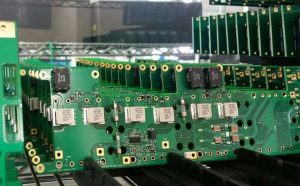
The bare PCB is fabricated according to the approved manufacturing data.
The PCB fabrication process may include:
- Material preparation
- Imaging
- Copper etching
- Drilling
- Hole-wall preparation
- Copper plating
- Lamination for multilayer boards
- Solder mask application
- Surface finishing
- Silkscreen printing
- Electrical testing
- Final inspection
Depending on the application, the board may use FR-4, aluminum, high-Tg laminates, Rogers-type high-frequency materials, ceramic substrates, or other specialized materials.
4. PCB Assembly
After PCB fabrication and component procurement, the assembly stage begins.
Most electronic products combine surface-mount and through-hole technologies.
Surface-Mount Technology (SMT)
SMT places components directly onto PCB pads using solder paste and automated placement equipment.
A typical SMT process includes:
- Solder paste printing
- Solder paste inspection
- Component placement
- Reflow soldering
- AOI inspection
- Additional inspection or testing
SMT is widely used because it supports high component density, automated production, and compact PCB layouts.
Through-Hole Technology (THT)
Through-hole components have leads that pass through plated or non-plated holes in the PCB.
Depending on the product, components may be inserted manually or automatically and then soldered using:
- Wave soldering
- Selective soldering
- Hand soldering
- Through-hole reflow or pin-in-paste processes for suitable designs
THT remains important for connectors, transformers, relays, large capacitors, mechanical components, and applications requiring strong mechanical anchoring.
5. Programming and Configuration
Some PCB assemblies require firmware or software to be programmed before testing.
Programming may involve:
- Microcontrollers
- Memory devices
- FPGAs
- Communication modules
- Configuration EEPROMs
- Other programmable ICs
The manufacturing provider may use dedicated programming fixtures or automated programming equipment depending on production volume and product requirements.
6. Testing and Quality Inspection
Testing is one of the most important stages of PCB Assembly.
Different tests identify different categories of defects.
Visual Inspection
Operators inspect the assembled PCB for visible problems such as:
- Missing components
- Incorrect components
- Solder bridges
- Poor solder joints
- Component damage
- Mechanical defects
Automated Optical Inspection (AOI)
AOI systems use cameras and image-processing algorithms to identify assembly defects.
AOI can detect issues such as:
- Component presence
- Component orientation
- Solder bridging
- Misalignment
- Incorrect placement
- Certain solder joint abnormalities
X-Ray Inspection
X-ray inspection is particularly useful for solder joints and components that cannot be adequately inspected from the surface.
It can be valuable for:
- BGA packages
- QFN packages
- Bottom-terminated components
- Hidden solder joints
- Voids and internal solder defects
In-Circuit Testing (ICT)
ICT checks electrical characteristics and connectivity at designated test points.
It can help identify:
- Open circuits
- Short circuits
- Incorrect component values
- Certain assembly defects
Functional Testing
Functional testing verifies whether the finished PCBA operates according to the product’s functional requirements.
Depending on the product, this may include:
- Power-on testing
- Communication testing
- Signal verification
- Sensor testing
- Motor control
- Display testing
- Input/output verification
Not every product requires every test method. The appropriate test strategy should be determined according to product complexity, volume, risk, and customer requirements.
7. Final Quality Control
After assembly and testing, the finished PCBAs undergo final quality verification.
Quality control may include:
- Visual inspection
- Dimensional inspection
- Test-result verification
- Label verification
- Configuration verification
- Workmanship inspection
- Documentation review
For demanding applications, additional standards and customer-specific acceptance criteria may also apply.
8. Packaging and Shipping
Electronic assemblies require appropriate packaging to prevent damage during transportation.
Typical considerations include:
- ESD-safe packaging
- Moisture protection
- Mechanical protection
- Shock and vibration protection
- Component protection
- Traceability labeling
For international transportation, packaging must also account for extended handling and environmental exposure.
9. After-Sales Support
After production, manufacturing support may continue according to the commercial agreement.
Services can include:
- Failure analysis
- Repair or rework
- Replacement
- Engineering change support
- Production documentation
- Field-return analysis
- Manufacturing feedback
Maintaining production records can make troubleshooting and future product revisions more efficient.
Advantages of Turnkey PCB Assembly
1. Simplified Supply Chain Management

One of the biggest advantages of turnkey manufacturing is supplier consolidation.
Without turnkey assembly, a company may need to coordinate:
- PCB manufacturers
- Component suppliers
- PCB assembly factories
- Testing laboratories
- Packaging suppliers
- Logistics companies
A turnkey provider can coordinate many of these activities under one manufacturing program, reducing communication overhead.
2. Access to Manufacturing Expertise
Professional PCB assembly requires specialized knowledge in engineering, procurement, SMT, THT, testing, quality control, and manufacturing.
An experienced turnkey provider can apply established manufacturing processes rather than requiring the customer to build every capability internally.
3. Reduced Procurement and Production Risk
Component shortages, incorrect parts, manufacturing defects, and documentation errors can all disrupt production.
A structured turnkey process helps reduce these risks through:
- BOM verification
- Component sourcing controls
- Incoming inspection
- DFM analysis
- Automated assembly
- Process inspection
- Electrical testing
- Traceability
However, turnkey manufacturing does not eliminate risk completely. Customers should still establish clear quality requirements, approved components, change-control procedures, and acceptance criteria.
4. Potential Cost Efficiency
Building an internal PCB assembly operation requires substantial investment in:
- SMT placement machines
- Reflow ovens
- Solder paste printers
- Inspection systems
- Testing equipment
- Production facilities
- ESD controls
- Skilled personnel
For companies without sufficient production volume, outsourcing may reduce the need for these fixed investments.
A turnkey provider may also leverage established supplier relationships and purchasing volumes to improve procurement efficiency.
5. Faster Production Coordination
When PCB fabrication, component procurement, assembly, and testing are managed through an integrated workflow, communication between production stages can become more efficient.
This can be particularly valuable for:
- Prototypes
- Engineering validation builds
- Product launches
- Low-volume production
- Time-sensitive projects
Actual lead time still depends on component availability, PCB complexity, production volume, testing requirements, and engineering changes.
6. Flexible Manufacturing Options
Turnkey providers can support different project models, including:
- Prototype PCB assembly
- Low-volume production
- Medium-volume production
- High-volume production
- SMT assembly
- THT assembly
- Mixed-technology assembly
- Consigned components
- Partial turnkey assembly
- Full turnkey manufacturing
This flexibility allows the manufacturing model to evolve as a product moves from prototype to mass production.
7. Better Production Traceability
A well-managed turnkey program can maintain records covering:
- Component batches
- PCB lots
- Assembly parameters
- Inspection results
- Test results
- Rework records
- Production dates
- Material information
Traceability can be particularly important for industrial, automotive, medical, aerospace, and other applications with strict quality requirements.
Disadvantages and Limitations of Turnkey PCB Assembly
Although turnkey assembly offers many benefits, customers should also consider its limitations.
1. Less Direct Control Over Individual Suppliers
When a turnkey provider manages PCB fabrication and component procurement, the customer may have less direct involvement with individual upstream suppliers.
This makes supplier selection, approved vendor lists, material specifications, and change-control agreements particularly important.
2. Supplier Selection Can Be Challenging
The quality of a turnkey project depends heavily on the manufacturing partner.
Customers should evaluate factors such as:
- Engineering capabilities
- PCB manufacturing capability
- SMT/THT equipment
- Component sourcing controls
- Testing capabilities
- Quality systems
- Production capacity
- Traceability
- Communication
- Lead-time management
- Cost structure
A low quotation alone does not necessarily indicate the lowest total manufacturing cost.
3. Dependence on the Manufacturing Partner
Because many processes are centralized with one supplier, manufacturing problems at the provider can potentially affect multiple stages of the project.
A clear communication structure, documented specifications, quality agreements, and contingency planning can help reduce this dependency.
4. Engineering Changes Require Coordination
Design revisions, component substitutions, PCB revisions, and firmware changes must be carefully controlled.
A professional provider should have an engineering change process to ensure that outdated files or components do not accidentally enter production.
How to Choose a Turnkey PCB Assembly Partner
Choosing a turnkey partner requires more than comparing assembly prices.
Evaluate PCB Design and Engineering Support
Check whether the provider can support:
- DFM analysis
- DFA analysis
- PCB layout review
- Stackup review
- Thermal design
- Component selection
- Design-for-test analysis
Evaluate PCB Manufacturing Capability
Consider:
- Layer count
- Board dimensions
- Minimum trace/space
- Minimum drill size
- Copper thickness
- Surface finishes
- Controlled impedance
- HDI capability
- Flexible or rigid-flex capability
- High-frequency materials
Evaluate Assembly Capability
Confirm whether the supplier supports:
- SMT
- THT
- Mixed-technology assembly
- Fine-pitch components
- BGA
- QFN
- Micro-BGA
- Large components
- Press-fit components
- Conformal coating
- Wire or cable assembly
Evaluate Testing Capability
Depending on the product, testing may include:
- AOI
- X-ray
- ICT
- Flying probe testing
- Functional testing
- Burn-in testing
- Programming
- Boundary-scan testing
The appropriate combination depends on the product’s electrical and reliability requirements.
Turnkey PCB Assembly vs. Consigned PCB Assembly
The primary difference is responsibility for materials and procurement.
| Feature | Turnkey PCB Assembly | Consigned PCB Assembly |
|---|---|---|
| PCB sourcing | Provider-managed or coordinated | Customer-provided or specified |
| Component sourcing | Mainly provider-managed | Mainly customer-managed |
| Assembly | Provider | Provider |
| Testing | Provider | Provider |
| Supply-chain management | More centralized | More customer-controlled |
| Customer procurement workload | Lower | Higher |
| Material control | Shared or provider-managed | Greater customer control |
Neither model is universally suitable. The appropriate choice depends on the customer’s procurement strategy, component relationships, intellectual-property requirements, inventory position, and manufacturing resources.
Applications of Turnkey PCB Assembly
Turnkey PCB assembly is used across many electronics industries, including:
- Consumer electronics
- Industrial automation
- Telecommunications
- Automotive electronics
- Medical electronics
- Power electronics
- LED lighting
- IoT devices
- Test and measurement equipment
- Security systems
- Aerospace and defense electronics
- Smart home products
Products with complex BOMs, multiple manufacturing stages, or demanding testing requirements can particularly benefit from an integrated manufacturing workflow.
Why Work With Kingda for Turnkey PCB Assembly?
For companies looking for an integrated manufacturing partner, Kingda can serve as a single point of coordination for PCB-related manufacturing requirements.
A turnkey PCB assembly program can integrate engineering review, PCB fabrication coordination, component sourcing, SMT/THT assembly, inspection, testing, and final delivery according to the customer’s project requirements.
When evaluating Kingda or any other turnkey manufacturing partner, customers should clearly define:
- PCB specifications
- BOM requirements
- Approved components
- Assembly requirements
- Quality standards
- Testing requirements
- Packaging requirements
- Delivery schedule
- Engineering change procedures
- Documentation and traceability requirements
A clearly defined manufacturing specification helps both sides establish consistent expectations from prototype through production.
Conclusion
Turnkey PCB Assembly provides an integrated approach to electronics manufacturing by combining PCB fabrication, component procurement, assembly, testing, inspection, and logistics under a coordinated manufacturing program.
Compared with managing multiple suppliers independently, turnkey manufacturing can simplify supply-chain management, reduce internal workload, improve production coordination, and provide access to specialized manufacturing expertise.
However, choosing the right manufacturing partner remains essential. Customers should evaluate engineering capabilities, PCB Manufacturing technology, assembly equipment, component sourcing, testing capabilities, quality management, traceability, communication, and total cost before starting a long-term partnership.
For modern electronics manufacturers, a well-structured turnkey solution can provide a practical bridge between PCB Design, prototype development, PCB assembly, and scalable production.
Article Summary
Turnkey PCB assembly is an end-to-end electronics manufacturing solution that can cover PCB design review, PCB manufacturing, component sourcing, SMT/THT assembly, programming, testing, inspection, packaging, and delivery. Full turnkey assembly places most procurement and manufacturing responsibilities with the supplier, while partial turnkey assembly allows customers to provide selected PCBs or components. The model can simplify supply-chain management and reduce internal manufacturing investment, but supplier selection, quality control, documentation, and engineering change management remain critical to project success.