



Portable chemical air detectors rely on highly integrated PCB assemblies to continuously monitor gas concentrations in industrial, medical, and IoT environments. Low-power operation is critical to maximize battery life while maintaining accurate sensor response and reliable wireless communication. These PCB assemblies integrate gas sensors, analog front-ends, microcontrollers, wireless modules, and…
IoT communication systems operate across diverse environments, from consumer smart home gateways to industrial edge computing platforms. These systems rely on highly integrated PCB assemblies that combine RF modules, microcontrollers, power management circuits, and communication interfaces such as Wi-Fi, Bluetooth, and cellular connectivity. Ensuring long-term reliability of IoT communication PCB…
Electric vehicles (EVs) rely heavily on efficient power management systems that control various critical functions such as battery charging, energy distribution, and motor control. The Electronic Control Units (ECUs) in these systems are responsible for managing multiple submodules, including the powertrain, charging system, HVAC system, and safety control units. As…
Introduction Industrial automation systems rely heavily on control electronics to operate machinery, robotics, sensors, and production lines with precision and stability. At the heart of these systems are industrial control PCBs that manage data communication, power regulation, and signal processing across complex automation architectures. As industrial equipment becomes more compact…
Introduction Automotive ECUs are the backbone of modern vehicles, controlling engine management, transmission, braking, ADAS, and AI-assisted systems. As vehicles integrate more sensors, high-speed communication networks, and electric powertrain electronics, ECU PCBAs must ensure signal integrity, EMI suppression, thermal stability, and long-term reliability. Industrial-grade PCB assembly for automotive ECUs ensures…
Thermal Management and CTE Control of Medical Ventilator PCB Assemblies for Long-Term Continuous Operation in ICU Devices defines the engineering baseline for ensuring stable respiratory control, signal integrity, and mechanical reliability in intensive care environments. ICU ventilators operate continuously for extended periods, where Medical Ventilator PCB Assemblies are exposed to…
Engineering Context Modern healthcare IoT systems integrate medical ventilators with smart gateways and wireless routers to enable real-time monitoring, telemedicine, and hospital-wide device coordination. PCB assemblies in these systems must support low-latency digital and RF communication, robust EMI suppression, and precise phase stability to maintain patient safety and operational reliability.…
Engineering Context Medical ventilators and hospital respiratory monitoring platforms operate in mission-critical environments where PCB assemblies must maintain signal integrity, precise control, and robust EMI suppression under continuous operation. High-density sensor interfaces, motor control circuits, and RF telemetry modules are sensitive to electromagnetic interference, thermal stress, and mechanical vibration. Kingda…
Medical ventilators are mission-critical life support systems that demand high-reliability PCB assemblies with precise signal integrity and power integrity control. These systems integrate sensors, microcontrollers, motor drivers, high-speed communication interfaces, and safety-critical monitoring circuits that must operate with deterministic latency and minimal noise. Any degradation in insertion loss, impedance control,…
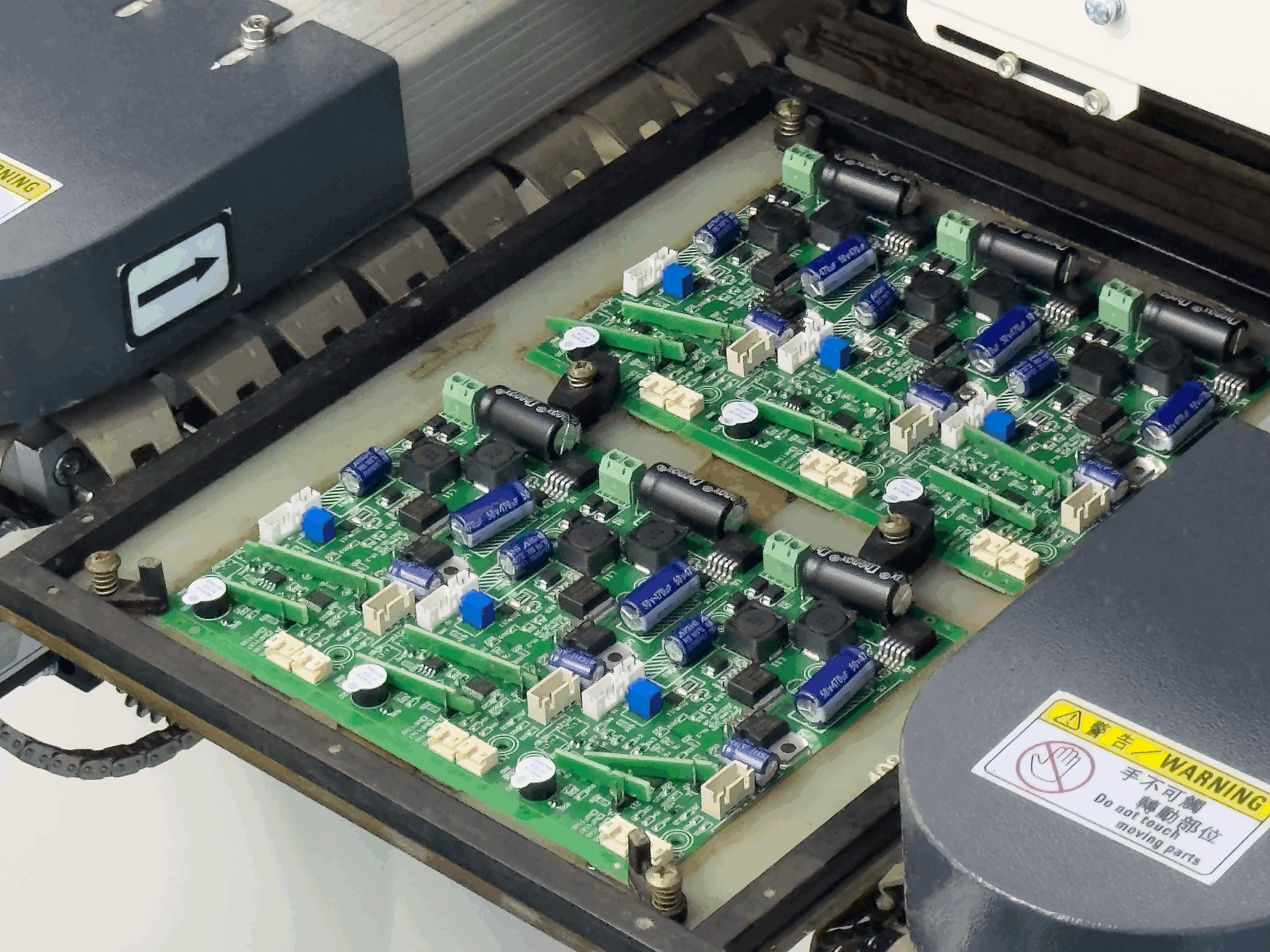
Engineering Context High-speed communication modules are fundamental components in modern networking equipment, data transmission systems, and industrial communication platforms. These modules integrate high-speed processors, RF interfaces, power management circuits, and dense interconnect structures within compact form factors. In such architectures, SMT PCB assembly is no longer a purely mechanical manufacturing…
