Press Platen Temperature Control: 6 Checks for Even Lamination Press platen temperature is the variable that decides how resin flows, how fast it gels and whether the panel that comes out matches the thickness and registration the customer ordered. Platen controllers can read perfectly while the board in the middle…
PCB Etch Factor Review: A Practical Review for Manufacturing Teams Modern electronics depend on boards that are assembled correctly the first time. Every product – a phone, a charger, a medical instrument or an industrial controller – relies on thousands of solder joints that must conduct current for years. This…
ESD Audit for PCB Assembly: What to Measure and Where An esd audit is a measurement exercise, and it fails when it turns into a paperwork exercise. The written program, the signs and the training records are necessary, but they do not protect a board. What protects the board is…
PCB Etch Factor Plan: A Factory-Floor Review Buyers and engineers often focus on the finished product and forget the production line behind it. In practice, most field failures can be traced back to process decisions made during assembly. Understanding PCB etch factor plan gives you a practical advantage when you…
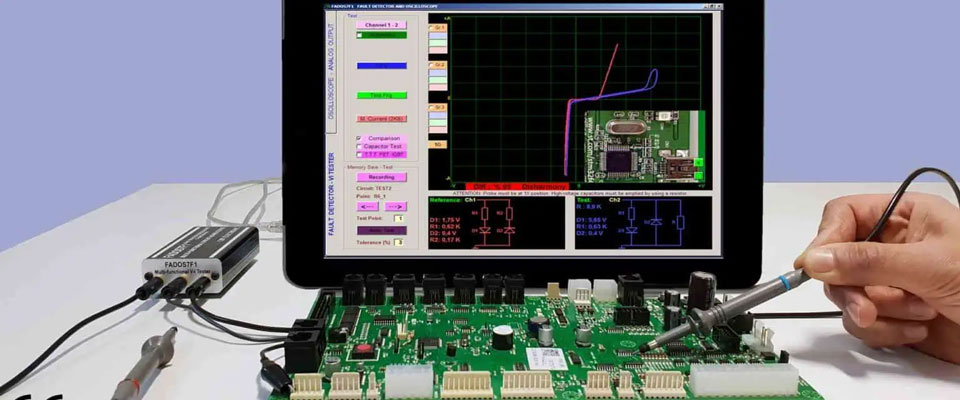
Electrical Test Fixture Design: Probe Pitch and Grid Density An electrical test fixture holds a bare board and presses a bed of probes onto its test points so that every net can be checked for continuity and isolation in a single pass. The fixture is where the electrical test either…
Oxygen Concentration: Design Rules and Process Limits The oxygen concentration inside a reflow oven decides how much of the flux is consumed by the atmosphere rather than by the solder. At the 210,000 ppm of ordinary air, oxidation competes with wetting throughout the profile; at 1,000 ppm in a nitrogen…
Anodic Bleed Under Conformal Coating: Causes and Controls Anodic bleed is the dark, sometimes glassy track that appears along a conductor on a coated assembly after the board has spent time under bias in humid air. It is a corrosion product rather than a coating defect, and it belongs to…
Solder Resist Dam Design: Dam Width and Component Spacing A solder resist dam is the strip of mask that separates two adjacent openings on a board. It prevents solder from bridging between pads during assembly, keeps the paste on the pad during printing, and provides the electrical isolation the design…
Surface Finish Shelf Life: Storage and Solderability Control Every board finish changes from the day it is applied. Oxide grows on the surface, intermetallic compounds grow between the finish and the copper beneath it, and the result is a surface that solders less readily than it did on the day…
Panel Utilization and Routing Margin in PCB Fabrication Panel utilization is the share of the panel area that ends up as delivered boards, and it is set at the moment the board outlines are nested. Everything else on the panel, the process edge, the gaps between boards, the tabs, the…