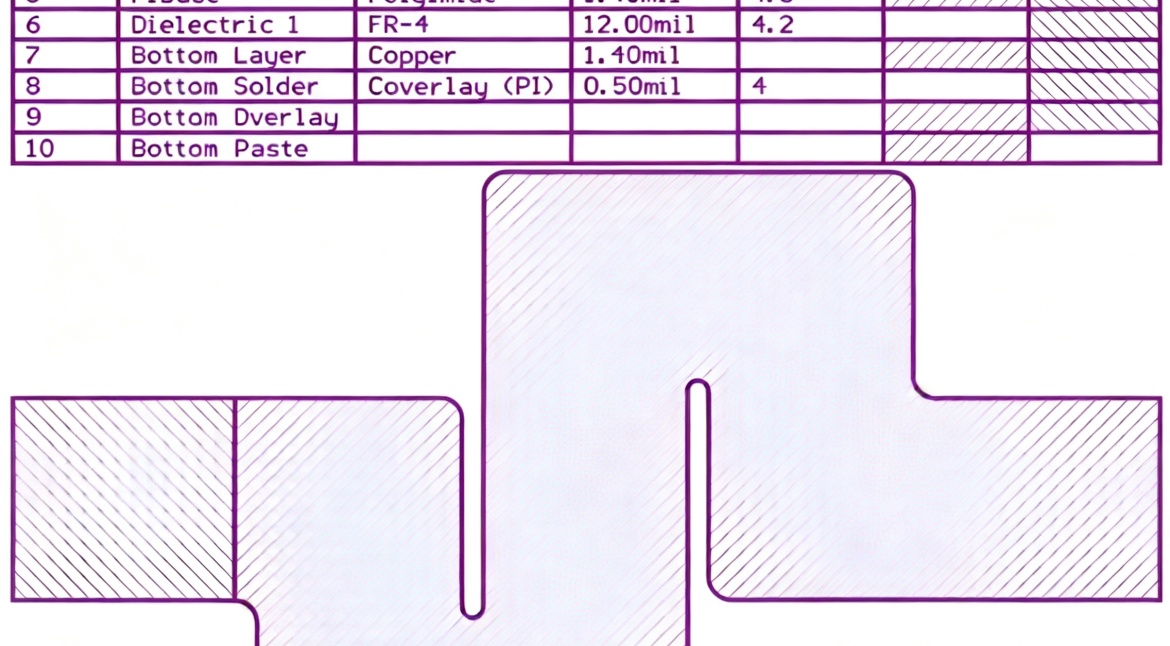
Panel Tab Routing: 6 Rules for Clean Depaneling Panel tab routing is the practice of leaving small bridges of laminate between a board and its panel frame, separating them later with a router. The tabs hold the board through printing, placement, reflow and test, and they are cut at the…
Void Formation in Solder Joints: 6 Causes and Fixes Void formation is the trapping of gas inside a solder joint as the alloy solidifies, leaving pockets that reduce the load-bearing area. It is normal to find some voids in any reflowed joint, and the question is not whether they exist…
Reflow Ramp Rate: 5 Rules for Stable Profiles Reflow ramp rate is the speed at which the board temperature rises during the preheat stage, usually quoted in degrees per second. It sets how evenly the assembly heats, how much time the flux has to act before the alloy melts, and…
Dry Cabinet Management: 5 Checks That Keep Components Within Floor Life A dry cabinet is the simplest piece of equipment in a moisture control programme and the one most often left unverified. Managing it means knowing the humidity setpoint it is holding, the time it takes to recover after the…
Ionizer Verification: 4 Steps to Confirm Static Neutralization An ionizer is the only static control device in an ESD protected area that can fail while still appearing to work. Ionizer verification with a charged plate monitor is what proves the unit is neutralizing charge rather than simply blowing air. Why…
Stencil Wipe Frequency: Preparation, Placement and Process Control Stencil wipe frequency is the interval, measured in prints, between cleaning cycles on the underside of the stencil. It is the setting that decides how much paste is deposited outside the apertures, and it is usually left at whatever the printer shipped…
Stencil Wipe Frequency: A 4-Factor Guide Stencil wipe frequency is the interval, measured in prints, between cleaning cycles on the underside of the stencil. It is the setting that decides how much paste is deposited outside the apertures, and it is usually left at whatever the printer shipped with. Set…
Solder Paste Slump: 6 Causes and How to Fix Them Solder paste slump is the tendency of a printed deposit to spread beyond its aperture footprint before the board reaches reflow. A deposit that holds its shape has a defined edge and a flat top; one that slumps develops a…
PCB 8D Report Timing: Design, Process, and Quality Notes Modern electronics depend on boards that are assembled correctly the first time. Every product – a phone, a charger, a medical instrument or an industrial controller – relies on thousands of solder joints that must conduct current for years. This article…
PCB 8D Report Handover: Design, Process, and Quality Notes Buyers and engineers often focus on the finished product and forget the production line behind it. In practice, most field failures can be traced back to process decisions made during assembly. Understanding PCB 8D report handover gives you a practical advantage…