PCB ADC Reference Layout: A Steady Reference Modern electronics depend on boards that are assembled correctly the first time. Every product – a phone, a charger, a medical instrument or an industrial controller – relies on thousands of solder joints that must conduct current for years. This article explains PCB…
PCB Copper Plating: Types, Thickness and Cost The Step That Makes a Multilayer Board Work Copper plating deposits a conductive layer onto the board surface and, more importantly, into the walls of drilled holes. Without it, the inner layers of a multilayer board would be electrically isolated from each other…
PCB Oscillator Load Capacitor Placement: What Matters on the Production Line Electronics manufacturing has become a discipline of small details. Solder paste volumes, placement accuracy, temperature profiles and inspection limits all add up to the final result. This guide looks at PCB oscillator load capacitor placement from the perspective of…
Radar PCB Cost: High Frequency Materials, Layers and Test Boards That Operate Where FR-4 Stops Working Radar systems transmit a signal, receive a reflection far weaker than the transmitted energy, and extract range, velocity and angle from the difference. The board has to keep the transmitted waveform clean, protect the…
PCB Crystal Layout Grounding: A Quiet Home for the Clock Buyers and engineers often focus on the finished product and forget the production line behind it. In practice, most field failures can be traced back to process decisions made during assembly. Understanding PCB crystal layout grounding gives you a practical…
Impedance Controlled PCB Price: Materials, Tolerances and Volume Why These Boards Cost More An impedance controlled board holds a defined characteristic impedance along its traces, which is what prevents reflection, crosstalk and signal distortion at high frequency. Achieving that requires a stackup designed around the dielectric, line width held to…
PCB Common Mode Choke Placement: A Factory-Floor Review Modern electronics depend on boards that are assembled correctly the first time. Every product – a phone, a charger, a medical instrument or an industrial controller – relies on thousands of solder joints that must conduct current for years. This article explains…
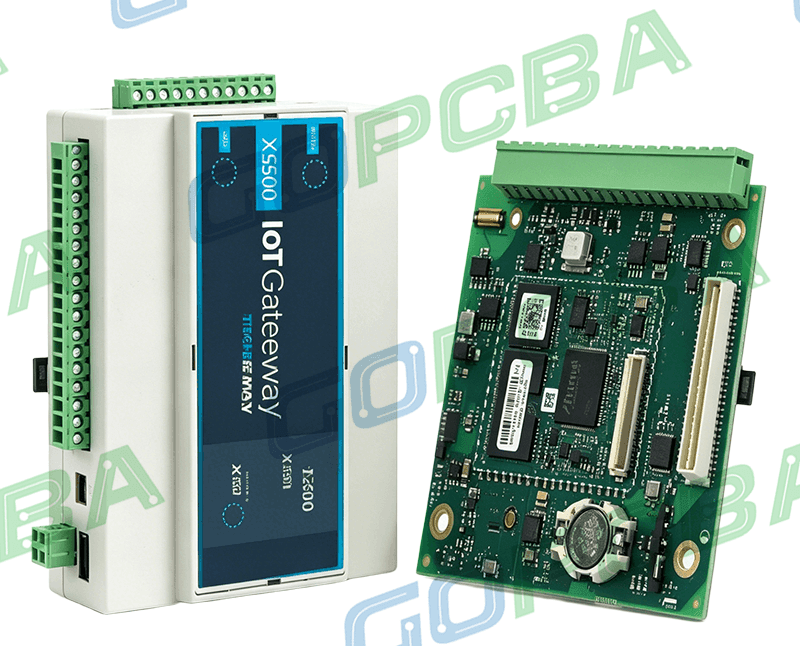
IoT Device PCB Cost: Ranges, Design Effects and Volume From Half a Dollar to Thirty The bill of materials for a connected device can be dominated by the radio module, the sensor or the battery, but the board underneath sets the price floor and often the price ceiling as well.…
PCB EMI Filter Placement: From Design to Repeatable Production Modern electronics depend on boards that are assembled correctly the first time. Every product – a phone, a charger, a medical instrument or an industrial controller – relies on thousands of solder joints that must conduct current for years. This article…
Smartwatch PCB Design: Sensors, Power and Durability A Computer the Size of a Wrist A modern smartwatch tracks heart rate and blood oxygen, logs position, runs an application processor, drives a colour display, connects over Bluetooth and Wi-Fi, and takes contactless payments. All of that fits into a case roughly…