DUV LED PCB: Transforming Industries with Deep Ultraviolet Light
Deep ultraviolet technology is opening new possibilities across healthcare, water treatment, industrial processing, environmental monitoring, and other specialized applications. At the center of many of these systems is the DUV LED PCB, which provides the electrical interconnection, mechanical support, and thermal management required for reliable deep ultraviolet LED operation.
Unlike conventional lighting applications, DUV LED systems often operate under demanding electrical, thermal, and environmental conditions. Therefore, PCB material selection, circuit design, thermal management, manufacturing precision, and assembly quality all play an important role in overall system performance.
For projects requiring advanced circuit board fabrication, PCB Manufacturing capabilities can support applications ranging from prototypes to complex multilayer production boards.
What Is a DUV LED PCB?
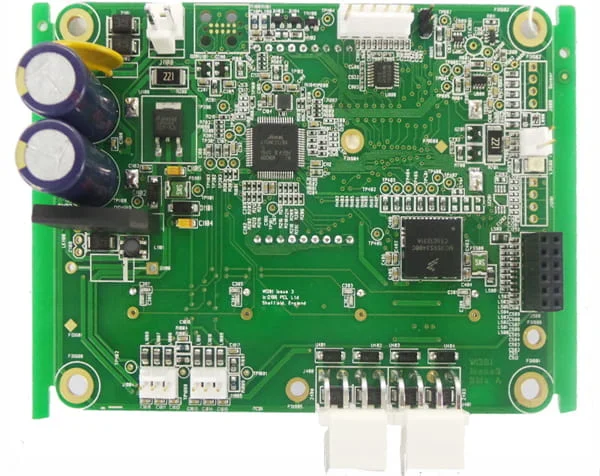
A DUV LED PCB is a printed circuit board specifically designed to support deep ultraviolet light-emitting diodes and their associated electronic circuitry.
Deep ultraviolet LEDs generally operate within approximately the 200–280 nm wavelength range. This portion of the ultraviolet spectrum is particularly important for applications where controlled UV energy is used to reduce or deactivate microorganisms, support photochemical processes, or perform specialized detection and analysis.
The PCB provides several essential functions:
- Electrical connection between DUV LEDs and the power/control circuit
- Mechanical support for LED packages and electronic components
- Thermal management to help control operating temperature
- Reliable routing of power and control signals
- Integration with sensors, drivers, connectors, and other system components
Because DUV LED systems can be sensitive to temperature and operating conditions, the PCB should be designed according to the application’s electrical, thermal, mechanical, and environmental requirements.
The Science Behind DUV LEDs
How Do DUV LEDs Work?
DUV LEDs generate ultraviolet radiation through semiconductor-based electroluminescence. When electrons and holes recombine within the semiconductor structure, energy is released in the form of photons.
By selecting suitable semiconductor materials and device structures, manufacturers can produce LEDs with specific ultraviolet emission wavelengths.
The PCB does not generate the ultraviolet light itself. Instead, it provides the electrical and mechanical platform needed to operate the LED components efficiently and reliably.
A well-designed Deep UV LED PCB therefore needs to consider current distribution, power integrity, heat dissipation, component placement, electrical isolation, and manufacturing tolerances.
DUV LEDs Compared with Traditional UV Light Sources
Compared with conventional UV lamps, DUV LED technology can provide several practical advantages.
Energy Efficiency
LED-based systems can be designed for efficient electrical operation, potentially reducing energy consumption in applications that require frequent or continuous UV operation.
Long Operating Life
Solid-state LED technology can offer long operating life when the device is operated within appropriate electrical and thermal limits. Effective PCB thermal management can help maintain stable operating conditions.
Compact Design
The small form factor of UV LEDs makes them suitable for compact equipment. A properly engineered UV LED PCB can integrate LEDs, drivers, control electronics, and connectors into a relatively small footprint.
Fast Switching
DUV LEDs can be electronically switched without the warm-up period associated with many traditional lamp technologies. This can be valuable for automated equipment and precisely controlled UV exposure systems.
Mercury-Free Technology
LED-based UV systems can avoid mercury-containing lamp technology, which can be advantageous for applications where environmental considerations and product design requirements favor solid-state light sources.
Key Features of DUV LED PCBs
Compact and High-Density Design
Many DUV LED products require multiple LEDs and electronic components within a limited physical space. High-density PCB design can help integrate the required circuitry while maintaining appropriate electrical clearances and thermal paths.
For complex designs, PCB Assembly services can integrate component placement, soldering, inspection, and testing into the manufacturing process.
Effective Thermal Management
Thermal management is one of the most important considerations in DUV LED electronics.
LED performance and lifetime can be affected by operating temperature. PCB designers may therefore need to consider copper distribution, thermal vias, heat-spreading structures, substrate selection, component placement, and the connection between the PCB and external heatsinking structures.
The appropriate solution depends on LED power, board construction, enclosure design, ambient temperature, and expected operating conditions.
Electrical Stability
A reliable UV LED PCB must provide stable current and voltage distribution to the LED array and associated driver circuitry.
Depending on the system architecture, the PCB may include:
- LED driver circuits
- Current regulation
- Power conversion
- Protection circuits
- Microcontrollers
- Sensors
- Communication interfaces
- Connectors
- Monitoring circuits
Careful PCB layout can help minimize unwanted voltage drops, noise, thermal concentration, and electrical interference.
Reliability and Long Service Life
DUV LED systems are often incorporated into equipment expected to operate repeatedly or continuously. PCB reliability therefore becomes an important part of the complete product design.
Material selection, solder-joint quality, component quality, PCB fabrication, assembly processes, inspection, and testing should all be considered during development.
For applications requiring flexible interconnections or compact three-dimensional packaging, Rigid-Flex PCB Manufacturing can provide an alternative to conventional rigid-board architectures.
DUV LED PCB Applications
Sterilization and Disinfection
One of the most important DUV LED applications is ultraviolet-based disinfection.
Specific DUV wavelengths can damage microbial genetic material and reduce the ability of microorganisms to reproduce. This makes DUV LED technology useful in equipment designed for water, air, and surface treatment.
Potential applications include:
- Water disinfection systems
- Air treatment equipment
- Surface disinfection devices
- Medical and laboratory equipment
- Portable sterilization equipment
The PCB must reliably control the LED array while supporting the required power, thermal, and control functions.
Water Treatment
DUV LEDs can be incorporated into compact water-treatment systems where controlled ultraviolet exposure is required.
Compared with larger conventional UV lamp systems, LED-based architectures can provide greater flexibility in equipment design. Compact PCB layouts can help integrate LED drivers, sensors, control electronics, and monitoring functions into a single system.
Industrial Applications
Industrial DUV LED applications extend beyond sterilization.
DUV light can be used in selected photochemical processes, resin and adhesive curing systems, inspection equipment, analytical instruments, and semiconductor-related processes.
Industrial equipment may require specialized PCB designs capable of operating reliably under elevated temperatures, vibration, continuous-duty conditions, or other demanding environments.
Environmental Monitoring
DUV LEDs can also support environmental monitoring equipment used to detect or analyze specific substances in air and water.
Portable instruments can benefit from the compact size and electronic controllability of LED-based UV sources. A well-designed Deep UV LED PCB can integrate the light source with sensors, processors, communication modules, and power-management circuits.
Scientific and Analytical Equipment
Specialized scientific instruments may use precisely controlled UV light sources for measurement, analysis, detection, or experimentation.
In these applications, consistent electrical performance and accurate control of the LED output can be important. PCB design should therefore be coordinated with the optical, electronic, mechanical, and software requirements of the complete instrument.
PCB Manufacturing Considerations for DUV LED Systems
Material Selection
Selecting the correct PCB material depends on the application’s operating temperature, electrical requirements, mechanical structure, and expected service environment.
For high-performance electronic systems, engineers may evaluate factors such as:
- Thermal performance
- Dielectric properties
- Mechanical stability
- Dimensional stability
- Copper thickness
- Layer structure
- Surface finish
- Operating environment
For more complex requirements, manufacturers may provide engineering support and DFM analysis before production. PCB Manufacturing Services can be used to evaluate multilayer, HDI, high-speed, heavy-copper, flexible, and rigid-flex PCB requirements.
Thermal Design
The PCB should be designed around the actual thermal characteristics of the DUV LED system.
Important considerations include:
- LED power consumption
- LED density
- Copper area
- Thermal vias
- Heat-spreading structures
- Heatsink interface
- Ambient temperature
- Enclosure ventilation
- Continuous versus intermittent operation
Thermal simulation and engineering analysis can help identify potential hotspots before manufacturing.
PCB Assembly Quality
The PCB itself is only one part of the final electronic system. Component assembly quality can have a direct impact on product reliability.
A professional PCBA process may include SMT assembly, through-hole assembly, automated optical inspection, X-ray inspection, electrical testing, and functional testing depending on product requirements.
For projects requiring a combination of SMT and through-hole components, Mixed Technology PCB Assembly can support more complex electronic assemblies.
Prototype and Low-Volume Production
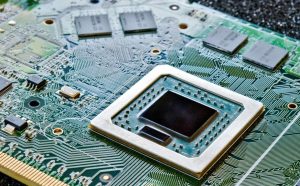
DUV LED products often require engineering validation before entering full-scale production.
Prototype PCB assembly allows engineers to verify:
- Electrical performance
- LED current distribution
- Thermal behavior
- Component placement
- Mechanical fit
- Driver performance
- System control
- Assembly reliability
For development-stage products, Rapid PCB Prototyping can help shorten the transition from PCB design to functional prototype.
Low-volume production can then be used to validate the design under more realistic manufacturing conditions before scaling production.
The Future of DUV LED PCB Technology
The development of DUV LED technology is expected to continue focusing on higher efficiency, improved optical output, better thermal performance, longer operating life, and more compact system architectures.
As LED packages and semiconductor technologies continue to evolve, PCB designs will also need to accommodate higher power density, tighter component integration, and increasingly sophisticated control systems.
The combination of advanced LED technology and modern PCB manufacturing can create smaller, smarter, and more efficient UV equipment for healthcare, industrial processing, water treatment, environmental monitoring, and scientific applications.
Conclusion
The DUV LED PCB is an essential electronic platform for modern deep ultraviolet LED systems. It provides the electrical connections, mechanical support, thermal management, and integration required to operate DUV LED devices reliably.
From sterilization and water treatment to industrial processing and environmental monitoring, DUV LED applications continue to expand beyond traditional lighting.
Successful product development requires more than simply selecting a suitable LED. Engineers should consider PCB materials, thermal management, electrical design, component selection, manufacturing tolerances, assembly quality, inspection, and system-level reliability.
For companies developing new DUV LED equipment, working with an experienced PCB manufacturing and assembly partner can help reduce manufacturing risks and accelerate the path from prototype to production. GOPCBA PCB & PCBA Manufacturing
Get a DUV LED PCB Quote
If you are developing a DUV LED system, prepare your Gerber files, BOM, PCB specifications, stack-up information, component requirements, and technical drawings for engineering review.
GOPCBA provides PCB fabrication and PCBA services for prototype, low-volume, and production requirements, helping customers move from PCB design to assembled electronic products.