Automotive, Solar and Energy Storage PCB Solutions
The rapid development of electric vehicles, solar power, and energy storage systems is increasing the technical requirements for Automotive PCB and energy-related electronic systems. These applications often operate under high current, elevated temperatures, voltage fluctuations, humidity, vibration, and continuous load conditions.
As a result, PCB solutions for new energy applications must provide reliable current carrying, thermal management, signal integrity, mechanical stability, and long-term reliability.
GOPCBA provides advanced PCB Manufacturing Services for automotive electronics, energy systems, power electronics, telecommunications, industrial equipment, and other demanding applications.
Core PCB Requirements for New Energy Applications
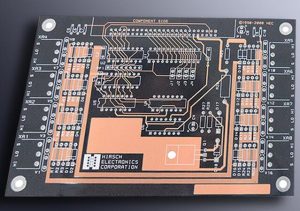
Electric vehicle powertrains, solar inverters, battery energy storage systems, and power conversion equipment place several demands on PCB construction.
High Current Carrying Capacity
Power electronics frequently handle high currents and high voltages. The PCB must provide sufficiently large conductive cross-sections while minimizing electrical resistance and temperature rise.
Heavy Copper PCB technology can increase copper cross-sectional area, improving current capacity and supporting high-power circuits. The appropriate copper weight depends on current, trace width, allowable temperature rise, board construction, and the application’s operating conditions.
Thermal Stability
Automotive and energy systems can experience continuous operation at elevated temperatures as well as repeated thermal cycling. PCB materials and construction must therefore maintain dimensional and electrical stability without excessive warpage, delamination, or degradation.
High-TG materials and appropriate multilayer construction can help address demanding temperature environments.
Efficient Heat Dissipation
Power components such as MOSFETs, IGBTs, rectifiers, regulators, and power converters generate substantial heat. PCB thermal design may combine heavy copper, thermal vias, copper-filled vias, metal-core structures, and other heat-spreading technologies.
For high-power applications, our Power PCB Manufacturing solutions support high-current, high-power, multilayer, heavy-copper, high-TG, and specialized PCB structures.
Stable Signal Transmission
Power circuits often operate alongside sensitive control, sensing, communication, and monitoring circuits. Proper layer stackup, grounding, routing, and impedance control help reduce noise and signal interference.
Long-Term Reliability
Automotive and energy equipment may need to operate continuously for years. PCB reliability therefore depends not only on the circuit design but also on material selection, copper thickness, plating, lamination, thermal management, inspection, and manufacturing consistency.
Key Materials and Manufacturing Technologies
High-Reliability PCB Materials
Material selection should be based on operating temperature, voltage, frequency, mechanical requirements, thermal conditions, and expected service life.
High-TG FR-4 and other high-performance laminates can provide improved thermal stability for demanding applications. GOPCBA supports standard FR-4, high-TG FR-4, high-performance laminates, RF materials, halogen-free materials, and aluminum-backed PCB materials.
For projects requiring higher thermal performance or current capacity, engineers can evaluate high-TG, heavy-copper, metal-core, and multilayer constructions according to the application’s specific requirements.
Heavy Copper and Thermal Management
Heavy copper is particularly valuable where current capacity and thermal performance are critical. Typical heavy-copper applications include power supplies, battery management systems, motor controllers, inverters, automotive power electronics, and renewable energy equipment.
The manufacturing process requires careful control of copper etching, plating, lamination, copper distribution, and thermal expansion. Trace geometry must also be evaluated because thicker copper can make fine-line fabrication more challenging.
Multilayer and High-Density Structures
Multilayer construction allows power, ground, control, and signal circuits to be separated into dedicated layers. This can improve routing flexibility while providing better electrical and thermal management.
GOPCBA’s manufacturing capabilities include multilayer PCB, HDI PCB, high-TG PCB, heavy-copper PCB, high-frequency PCB, blind/buried vias, metal-core PCB, and impedance-controlled PCB technologies.
Surface Finishes
Surface finish selection affects solderability, corrosion resistance, contact reliability, and product life. Depending on the application, available options include ENIG, HASL, OSP, immersion tin, immersion silver, ENEPIG, gold fingers, and other specialized finishes.
Automotive PCB Applications
Electric Vehicle Power Electronics
Electric vehicles rely heavily on power electronics for energy conversion, motor control, battery management, and charging.
Typical applications include:
- Battery Management Systems (BMS)
- Motor controllers
- Power inverters
- On-board chargers
- DC/DC converters
- Automotive power supplies
- High-voltage control modules
These systems may combine high-current power circuits with sensitive monitoring and communication functions. PCB construction must therefore balance current capacity, thermal management, signal integrity, and mechanical reliability.
Battery Management Systems
A BMS monitors voltage, current, temperature, state of charge, and other battery parameters. High-reliability PCB construction is essential because the system directly contributes to battery monitoring and protection.
GOPCBA provides Battery Management System PCBA solutions supporting high-voltage and high-current battery applications, thermal considerations, functional testing, high-voltage testing, and production traceability.
ADAS and Automotive Communications
Advanced driver-assistance systems, radar, sensors, cameras, and automotive communication modules require stable signal transmission and controlled electrical characteristics.
High-frequency materials, multilayer structures, controlled impedance, and appropriate grounding can help support high-speed and RF signal requirements.
Solar and Energy Storage PCB Applications
Solar Inverters
Solar inverters convert DC power generated by photovoltaic panels into usable AC power. Their control and power circuits may operate continuously under outdoor conditions involving temperature fluctuations, humidity, and thermal stress.
A suitable Solar PCB should therefore combine electrical reliability with effective thermal management and appropriate environmental protection.
Energy Storage Systems
Battery energy storage systems require PCBs for battery monitoring, power conversion, communication, protection, and energy management.
High-current circuits can benefit from heavy copper and optimized thermal structures, while control boards may use multilayer construction to separate power and signal domains.
GOPCBA has also developed an Energy Storage Inverter Control PCBA solution for high-efficiency energy conversion systems, with applications including solar-plus-storage systems, industrial energy storage, microgrids, EV charging energy storage, and UPS systems.
Integrated Solar and Storage Systems
Solar generation and battery storage are increasingly integrated into a single energy-management architecture. These systems require reliable connections between photovoltaic inputs, battery systems, inverters, control electronics, communication interfaces, and monitoring systems.
Multilayer PCB structures, power PCB technologies, thermal management, and reliable assembly can help improve system integration and long-term operating stability.
Quality Control and Manufacturing Reliability
Process and Inspection Control
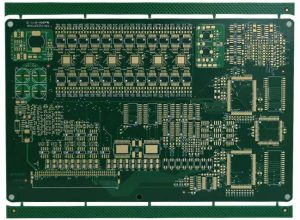
High-reliability PCB production requires systematic process control throughout fabrication. Important inspection and verification procedures may include:
- Automated optical inspection (AOI)
- X-ray inspection
- Electrical testing
- Microsection analysis
- Copper thickness verification
- Hole-size inspection
- Solder-mask inspection
- Surface-finish inspection
- Functional testing for assembled products
Manufacturing requirements should be established according to the PCB design, application environment, industry standards, and customer specifications.
Material Traceability
Material traceability is particularly important for automotive and energy applications. Production records can help manufacturers identify material batches, process conditions, inspection results, and production history when quality issues need to be investigated.
Prototype to Production
New energy products often undergo multiple design iterations before entering mass production. A PCB manufacturer should therefore be able to support prototype fabrication, engineering verification, low-volume production, and volume manufacturing while maintaining consistency between development and production builds.
Application Value of Specialized New Energy PCBs
Improved Energy Conversion Efficiency
Optimized copper structures and power distribution can reduce electrical losses and support efficient energy conversion.
Better Thermal Performance
Heavy copper, thermal vias, metal-core structures, and appropriate material selection can improve heat spreading and thermal management in high-power circuits.
Higher System Reliability
Stable materials, controlled manufacturing processes, reliable interconnections, and appropriate testing can reduce the risk of PCB-related failures during long-term operation.
Compact System Integration
Multilayer and high-density PCB structures allow more circuits to be integrated into limited spaces, which is particularly valuable for vehicle electronics and compact energy-storage systems.
Simplified Electronics Manufacturing
A capable PCB manufacturing and assembly partner can support fabrication, component sourcing, SMT, through-hole assembly, inspection, and testing. GOPCBA provides Turnkey PCB Assembly for applications including automotive, new energy, industrial, telecommunications, and other electronic products.
Conclusion
Automotive, solar, and energy storage systems require PCB technologies capable of handling high current, elevated temperatures, thermal cycling, complex signal environments, and long operating lifetimes.
By combining Automotive PCB, Energy Storage PCB, Solar PCB, Heavy Copper PCB, and Power PCB technologies with appropriate materials, multilayer structures, thermal management, controlled manufacturing, and testing, engineers can build more reliable electronic platforms for electric vehicles, renewable energy, battery storage, and power conversion systems.
GOPCBA supports advanced PCB fabrication and assembly for demanding energy and automotive applications, covering multilayer, HDI, high-TG, heavy copper, metal-core, high-frequency, and other specialized PCB technologies.