Rail Transit PCB for High-Speed Rail and Metro Signal Systems
High-speed rail and metro signal systems function as the central nervous system of modern rail transportation, supporting train control, traffic scheduling, signaling, and safety protection. As a critical hardware platform for these systems, Rail Transit PCB directly affects signal transmission stability, equipment reliability, and long-term operational safety.
GOPCBA provides advanced PCB manufacturing solutions for demanding transportation electronics, supporting complex multilayer structures, high-speed signal transmission, impedance control, and high-reliability applications.
1. High Stability Requirements for Harsh Rail Transportation Environments
Railway signaling equipment operates under changing temperatures, continuous vibration, humidity, dust, and other demanding environmental conditions. A High Reliability PCB must therefore maintain stable mechanical and electrical performance throughout its service life.
Wide Temperature Performance
Railway electronics may experience significant temperature variations during operation. PCB materials and structures should provide sufficient thermal stability to minimize risks such as warpage, delamination, and dimensional changes.
High-quality laminate selection and controlled lamination processes help maintain structural integrity and electrical performance across different operating temperatures.
Mechanical Strength and Vibration Resistance
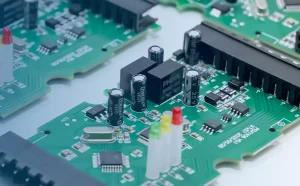
Train acceleration, braking, and continuous operation generate mechanical stress and vibration. The PCB must provide adequate rigidity and interlayer bonding strength to reduce the risk of cracking, delamination, or connection failure.
For demanding transportation applications, PCB construction should be evaluated together with board thickness, layer structure, copper distribution, material selection, and mechanical installation requirements.
Moisture and Environmental Protection
Rail transportation equipment can be exposed to humidity, dust, condensation, and, in some environments, corrosive contaminants. Appropriate surface finishes, materials, solder masks, and protective processes can improve resistance to environmental degradation.
For projects requiring a combination of electrical performance and manufacturing reliability, GOPCBA provides comprehensive PCB Manufacturing Services covering advanced PCB fabrication and production support. PCB Manufacturing Services
2. Precision Manufacturing for Reliable Signal Transmission
Signal systems require accurate and consistent transmission of control and communication signals. Manufacturing accuracy therefore plays an important role in the performance of a Railway Signal PCB.
Fine-Line Circuit Fabrication
Modern rail signaling systems can integrate multiple communication, control, monitoring, and safety functions within a limited PCB area. Fine-line fabrication allows more routing density while maintaining compact board dimensions.
The appropriate trace width and spacing should be determined according to the signal requirements, copper thickness, material system, layer structure, and manufacturer’s validated process capability.
Controlled Impedance
High-speed digital and communication signals require carefully controlled transmission-line characteristics. A Controlled Impedance PCB maintains a defined electrical impedance through coordinated control of trace width, copper thickness, dielectric thickness, dielectric constant, and stack-up geometry.
Stable impedance helps reduce reflections, signal distortion, and transmission inconsistencies, which is particularly important for high-speed communication and synchronized signaling systems.
Consistent Dielectric Structure
A stable multilayer structure provides a predictable electrical environment for high-speed signals. Precise lamination, accurate layer registration, controlled dielectric thickness, and consistent material properties help improve signal integrity.
GOPCBA supports advanced High-Speed PCB manufacturing requirements, including multilayer structures, impedance-controlled designs, high-frequency materials, and other complex PCB technologies.
3. Advanced Manufacturing Technologies for Rail Signal PCBs
A modern Rail Transit PCB may require complex structures to accommodate high-density routing, high-speed communication, power distribution, and mechanical constraints.
Precision Manufacturing Equipment and Processes
Advanced PCB production can incorporate technologies such as laser direct imaging, precision drilling, laser drilling, sequential lamination, via filling, and other specialized processes.
These technologies help support:
- Fine-line circuit fabrication
- Microvia structures
- Blind and buried vias
- High-density interconnects
- Multilayer PCB construction
- Controlled-impedance structures
- High-speed transmission paths
GOPCBA’s published PCB Capabilities include multilayer PCB fabrication, HDI, high-TG and thick-copper PCB, high-frequency PCB, blind and buried vias, impedance-controlled PCB, and other advanced structures. PCB Capabilities
Advanced Multilayer Construction
Complex rail signaling equipment may require multiple functional layers for signal routing, power distribution, grounding, and electromagnetic compatibility.
A carefully engineered multilayer stack-up can separate different circuit functions while providing stable reference planes and controlled signal paths.
HDI and High-Density Structures
When component density increases or board dimensions are restricted, HDI technology can provide additional routing flexibility through microvias, blind vias, buried vias, and sequential buildup structures.
For designs involving dense BGA packages or limited PCB space, HDI technology can help optimize routing density while maintaining electrical and mechanical requirements.
4. Quality Control and Environmental Compliance
Railway electronics require consistent manufacturing quality because PCB failures can affect equipment availability, maintenance requirements, and system reliability.
Comprehensive Inspection
A reliable manufacturing process should include inspection and testing throughout PCB production. Depending on project requirements, quality control may include:
- Automated optical inspection
- Visual inspection
- Dimensional measurement
- Cross-section analysis
- Copper thickness measurement
- Board thickness measurement
- Impedance testing
- Electrical testing
- Material verification
- Environmental compliance inspection
These inspection processes help identify manufacturing defects before products enter subsequent assembly or system integration stages.
Quality Management
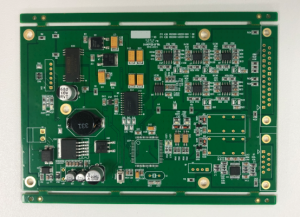
A structured quality management system helps maintain manufacturing consistency across prototype, pilot production, and volume manufacturing.
For rail transportation applications, quality management should cover material control, process parameters, traceability, inspection records, engineering changes, and production consistency.
Environmental Compliance
PCB materials and manufacturing processes should meet applicable environmental requirements for the intended market and application.
RoHS-compliant materials and controlled manufacturing processes can help support environmentally responsible electronic production while reducing the use of restricted substances.
5. Engineering Support for Rail Transportation PCB Development
Designing a Railway Signal PCB requires more than selecting a suitable laminate and manufacturing process. Electrical, mechanical, thermal, and manufacturing requirements should be evaluated together from the beginning of the project.
PCB Design and Stack-Up Optimization
The PCB stack-up influences signal integrity, impedance, electromagnetic compatibility, thermal behavior, and manufacturability.
GOPCBA provides PCB Design & Layout support covering PCB stack-up design, impedance calculation, high-frequency and high-speed design, multilayer and HDI layouts, blind and buried vias, EMC considerations, and manufacturability evaluation. PCB Design & Layout Services
DFM Engineering Review
Design-for-manufacturing review can identify potential production risks before fabrication. Typical review areas include:
- Trace width and spacing
- Via dimensions
- Copper distribution
- Layer registration
- Stack-up configuration
- Board thickness
- Component clearances
- Impedance requirements
- Material availability
- Manufacturing tolerances
Early engineering review can reduce redesigns and improve the transition from prototype to production.
High-Speed Signal Integrity
Railway communication and control systems increasingly incorporate high-speed digital interfaces. As signal rise times become faster, PCB geometry becomes increasingly important.
A high-speed PCB design should consider:
- Transmission-line impedance
- Return-current paths
- Reference planes
- Via structures
- Trace spacing
- Crosstalk
- Dielectric properties
- Copper surface characteristics
GOPCBA’s approach to High-Speed PCB manufacturing combines stack-up engineering, material selection, impedance control, and fabrication process control. High-Speed PCB Manufacturing Guide
6. Reliable PCB Solutions for Modern Rail Transportation
High-speed rail and metro systems are becoming increasingly digital, connected, and automated. Signal control, communication, monitoring, passenger information, safety systems, and onboard electronics all require increasingly reliable electronic hardware.
A modern High Reliability PCB must balance electrical performance, mechanical stability, environmental resistance, manufacturability, and long-term reliability.
For applications requiring greater routing density, HDI technology can provide compact interconnection structures and improved component breakout. For high-speed communication systems, controlled impedance and carefully engineered multilayer stack-ups help maintain signal integrity.
GOPCBA supports advanced PCB technologies including multilayer, HDI, high-speed, high-frequency, rigid-flex, high-TG, heavy-copper, and controlled-impedance PCB solutions. GOPCBA PCB Manufacturing
Conclusion
A high-quality Rail Transit PCB is an important hardware foundation for high-speed rail and metro signal systems. Reliable operation depends on more than circuit design alone. Material selection, multilayer construction, impedance control, precision fabrication, environmental protection, inspection, and engineering support all contribute to final PCB performance.
For demanding rail transportation applications, GOPCBA provides PCB manufacturing and engineering support from design review and prototyping through production manufacturing. By combining advanced fabrication technologies with controlled manufacturing processes, GOPCBA helps electronics manufacturers develop reliable PCB solutions for modern railway signaling, communication, control, and monitoring systems.