Rail Transit PCB for Reliable Train Door Control Systems: What Buyers and Engineers Should Check
Railway doors are a critical interface between passengers and the train. Their reliable operation directly affects passenger safety, transportation efficiency, and overall travel experience. Behind the precise opening and closing of train doors, real-time status monitoring, fault detection, and emergency control is a dedicated PCB designed specifically for railway door control systems.
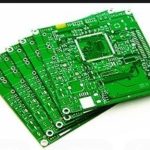
Unlike standard circuit boards, a Rail Transit PCB must be engineered around the electrical, mechanical, environmental, and safety requirements of railway applications. It provides the hardware foundation for reliable signal transmission, control commands, monitoring functions, and safety protection, helping train door systems operate accurately throughout long service cycles.
A train door control system typically performs several critical functions, including door opening and closing control, position detection, locking-status monitoring, emergency operation, and communication with the train control system.
The PCB serves as the central electrical platform connecting these functions. Its circuit architecture and component layout must be optimized according to the signal paths and control requirements of the door system. A well-designed Railway PCB helps ensure that control commands are transmitted accurately while feedback signals are collected and processed without unnecessary interference or delay.
During railway operation, doors may open and close repeatedly throughout the day. The PCB must therefore maintain stable electrical performance under frequent switching cycles. Signal delays, electrical noise, or connection instability could potentially affect door operation and system response.
Different railway platforms, including high-speed trains, metro systems, and intercity trains, may also use different door structures and control architectures. The PCB must therefore be adaptable to specific installation dimensions, interfaces, signal requirements, and system configurations.
For demanding railway electronics projects, manufacturers with dedicated Rail Transit PCB manufacturing experience can help optimize the board structure according to application requirements.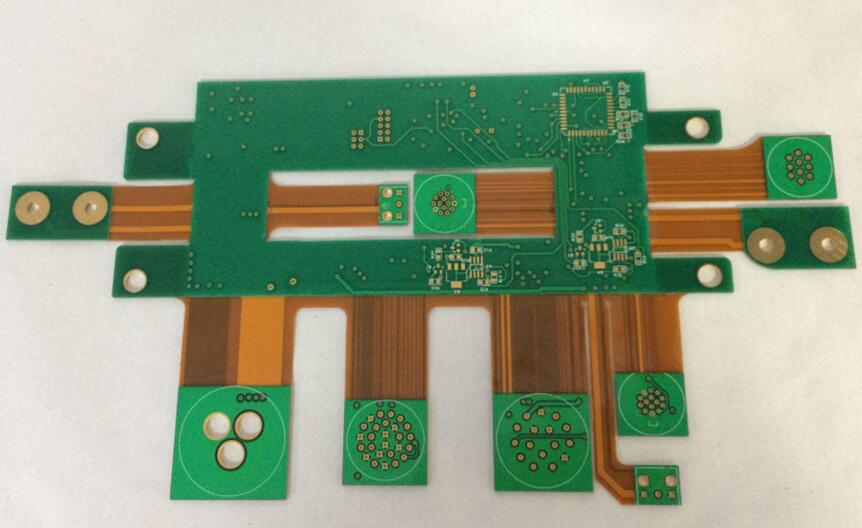
Railway electronics must operate under a wide range of environmental conditions. Depending on the route and installation location, door control electronics may experience low temperatures, high temperatures, humidity, condensation, dust, vibration, and mechanical shock.
These conditions make environmental reliability an important consideration when developing a High Reliability PCB for train door control applications.
Railway vehicles can operate across significant temperature variations. PCB materials and construction should therefore provide adequate thermal stability to minimize the risk of warpage, delamination, dimensional changes, or electrical performance degradation.
Appropriate laminate selection and controlled manufacturing processes can help maintain PCB structural integrity and electrical stability across changing operating temperatures.
Acceleration, braking, track irregularities, and continuous train operation generate mechanical vibration and shock. The PCB must maintain reliable interconnections and structural integrity throughout these conditions.
Board thickness, copper distribution, material selection, layer construction, mounting method, and component placement should be considered together to improve resistance to mechanical stress.
Railway equipment may be exposed to humidity, condensation, dust, and other contaminants. Appropriate solder mask, surface finish, material selection, and protective processes can improve resistance to environmental degradation.
These considerations are particularly important when the door control PCB is installed in areas where environmental exposure is difficult to control.
Train door control systems rely on accurate communication between sensors, controllers, motors, safety devices, and other electronic modules. Stable signal transmission is therefore essential for reliable system operation.
A High Reliability PCB must maintain consistent electrical characteristics throughout the signal path while also meeting the mechanical and manufacturing requirements of the final product.
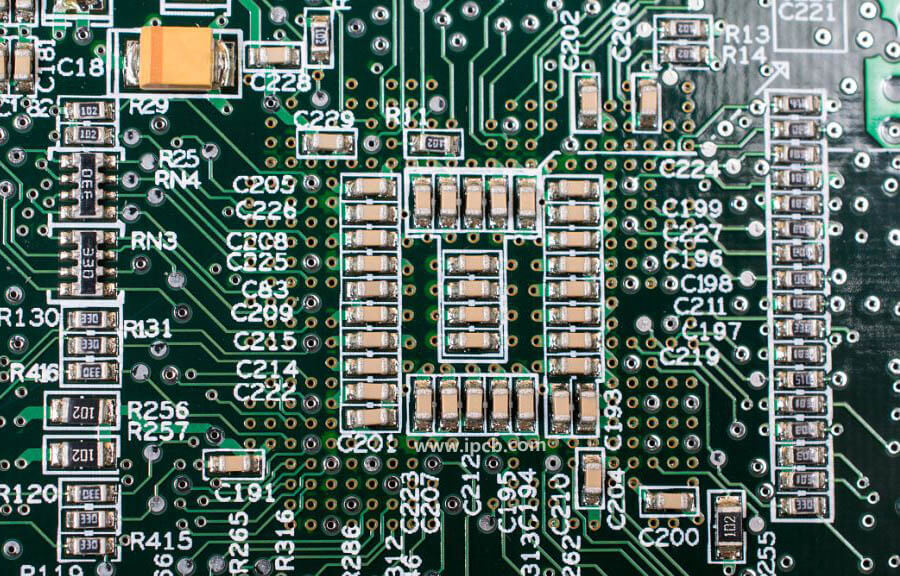
Modern railway control systems integrate more functions into increasingly compact electronic assemblies. Fine-line PCB fabrication can provide greater routing density while allowing engineers to maintain compact board dimensions.
Trace width and spacing should be determined according to electrical requirements, copper thickness, material characteristics, layer configuration, and the PCB manufacturer’s validated process capabilities.
Railway communication and control electronics may incorporate high-speed digital interfaces and communication signals. In these applications, a Controlled Impedance PCB can help maintain predictable electrical characteristics along high-speed transmission paths.
Impedance is affected by factors such as trace width, copper thickness, dielectric thickness, dielectric constant, and PCB stack-up geometry. Accurate manufacturing control is therefore essential to minimize reflections, signal distortion, crosstalk, and transmission inconsistencies.
Complex railway control boards may require separate layers for signal routing, power distribution, grounding, and electromagnetic compatibility.
A carefully engineered Multilayer PCB stack-up can provide stable reference planes and controlled signal paths while making efficient use of available board space.
Precise lamination, layer registration, dielectric thickness, and material selection are important factors in maintaining consistent electrical performance.
As railway electronics become more integrated, conventional PCB structures may not always provide sufficient routing density or electrical performance. Advanced PCB technologies can help address increasingly complex design requirements.
When component density increases or board dimensions become restricted, HDI technology can provide additional routing flexibility through microvias, blind vias, buried vias, and sequential lamination.
A HDI PCB can support dense component layouts and shorter electrical connections, making it useful for compact railway control electronics.
HDI manufacturing may incorporate technologies such as:
The appropriate HDI structure should be selected according to board dimensions, component density, signal requirements, reliability expectations, and manufacturing capability.
For more complex door control systems, multilayer construction can separate signal, power, and ground functions across different layers.
A properly engineered stack-up can improve routing efficiency while supporting signal integrity, power distribution, thermal management, and electromagnetic compatibility.
The layer count should not simply be increased to accommodate additional routing. Engineers should evaluate the entire stack-up, including dielectric thickness, copper weight, impedance requirements, thermal characteristics, and manufacturing tolerances.
Train door systems are directly associated with passenger safety. In addition to normal opening and closing functions, door control systems may need to support anti-pinch protection, incorrect-closing detection, locking verification, emergency release, and other safety-related functions.
The PCB provides the electrical connection and signal transmission platform for these functions.
When a door control system detects an abnormal condition, such as an incomplete lock or an obstruction, the relevant signal must be transmitted quickly to the control unit. The control system can then issue an appropriate command to stop closing, reopen the door, or activate an emergency function.
This requires stable signal paths and predictable electrical performance.
For safety-critical railway applications, appropriate redundancy may be incorporated into the system architecture. Depending on the overall system design, redundant signal paths or monitoring circuits can help maintain critical functions if a localized fault occurs.
PCB design should therefore consider not only normal operation but also potential failure modes, electrical isolation, component placement, connector reliability, and maintenance requirements.
A properly manufactured Railway PCB can provide a stable hardware foundation for these safety-related functions when combined with appropriate system-level protection and validation.
Railway electronics typically require consistent manufacturing quality because PCB defects can result in equipment downtime, increased maintenance requirements, or system reliability issues.
A comprehensive manufacturing process should include appropriate inspection and testing according to the specific application and customer requirements.
Typical quality-control processes may include:
Material control and process traceability are also important. Production records can help manufacturers track material batches, process parameters, inspection results, and engineering changes.
For railway applications, consistent manufacturing from prototype through production can help reduce process variation and improve long-term product reliability.
Developing a PCB for a railway door control system requires more than simply converting a circuit schematic into a physical board. Electrical, mechanical, thermal, environmental, and manufacturing requirements should be evaluated together from the beginning of the project.
The PCB stack-up directly affects signal integrity, impedance, electromagnetic compatibility, thermal performance, and manufacturability.
Engineers should evaluate:
Early engineering evaluation can help identify potential manufacturing problems before production begins.
Design-for-manufacturing analysis can identify potential risks related to trace geometry, via dimensions, copper distribution, layer registration, board thickness, component clearance, material selection, and manufacturing tolerances.
Early DFM review is especially valuable for complex Multilayer PCB, HDI, and controlled-impedance designs because manufacturing limitations can directly influence PCB performance and production yield.
As railway systems become more connected and intelligent, high-speed communication interfaces are increasingly common.
High-speed PCB design should consider:
Manufacturing consistency is essential because small variations in physical PCB geometry can affect the electrical characteristics of high-speed signals.
Modern railway systems are becoming increasingly digital, connected, and automated. Train door control systems must work together with onboard communication, monitoring, safety, and control systems to provide reliable transportation services.
A modern Rail Transit PCB must therefore balance several requirements, including:
Depending on the application, advanced technologies such as multilayer construction, HDI, controlled impedance, high-Tg materials, heavy copper, and high-speed PCB structures may be incorporated into the design.
The appropriate technology should always be selected according to actual electrical, mechanical, environmental, and manufacturing requirements rather than simply choosing the most advanced structure available.
A dedicated train door control PCB is an important hardware foundation for safe and reliable railway operation. Unlike conventional circuit boards, it must withstand vibration, temperature variations, humidity, dust, repeated operating cycles, and other demanding conditions while maintaining stable electrical performance.
The successful development of a Railway PCB depends on multiple factors, including material selection, multilayer construction, signal integrity, impedance control, precision fabrication, environmental protection, inspection, and engineering support.
For demanding rail transportation applications, GOPCBA provides PCB manufacturing and engineering support covering advanced PCB technologies from prototype development to production manufacturing. By combining reliable fabrication processes with engineering-oriented manufacturing control, GOPCBA supports the development of dependable PCB solutions for railway door control, signaling, communication, monitoring, and other transportation electronics.
Practical Checklist
A concise recap of the manufacturing details that decide repeatability.
- HDI manufacturing may incorporate technologies such as: record the agreed limits and verify them again in the production lot.
- Engineers should evaluate: check the drawing, process sheet and inspection plan before release.
- High-speed PCB design should consider: treat this as a repeat-order checkpoint and keep the result with the lot record.
- Documentation and traceability: review the production data and close any deviation before the next build.
- Handling and release checks: confirm the requirements, process settings and inspection records at first-article approval.
- Repeat-order consistency: record the agreed limits and verify them again in the production lot.