Automotive Radar PCB Prototyping: Why Small-Batch Production Matters
As advanced driver assistance systems (ADAS) and intelligent driving technologies continue to evolve, automotive radar has become an important sensing technology for modern vehicles. The PCB inside a radar module serves as a critical platform for signal transmission, component interconnection, power distribution, and high-frequency circuit operation. Its manufacturing precision can directly influence radar performance and system reliability.
For this reason, Automotive Radar PCB prototyping has become an important bridge between PCB design and volume production. Small-batch prototyping allows engineering teams to validate circuit performance, identify design risks, optimize manufacturing processes, and confirm product reliability before committing to large-scale production.
For demanding radar applications, material selection, impedance control, stack-up design, and manufacturing precision must be considered together. High-frequency radar PCB manufacturing requires tighter process control than conventional PCB fabrication.
The primary purpose of PCB Prototyping is to provide engineers with an opportunity to validate the design before mass production.
Automotive radar operates in complex and constantly changing driving environments. A radar PCB may need to maintain stable performance under vibration, temperature changes, electromagnetic interference, and long operating cycles. During the early development stage, potential problems may not always be visible through simulation or theoretical analysis alone.
Small-batch prototypes allow engineers to manufacture a limited number of boards and test them under realistic operating conditions. These tests can evaluate signal transmission, impedance performance, component compatibility, thermal behavior, mechanical stability, and environmental adaptability.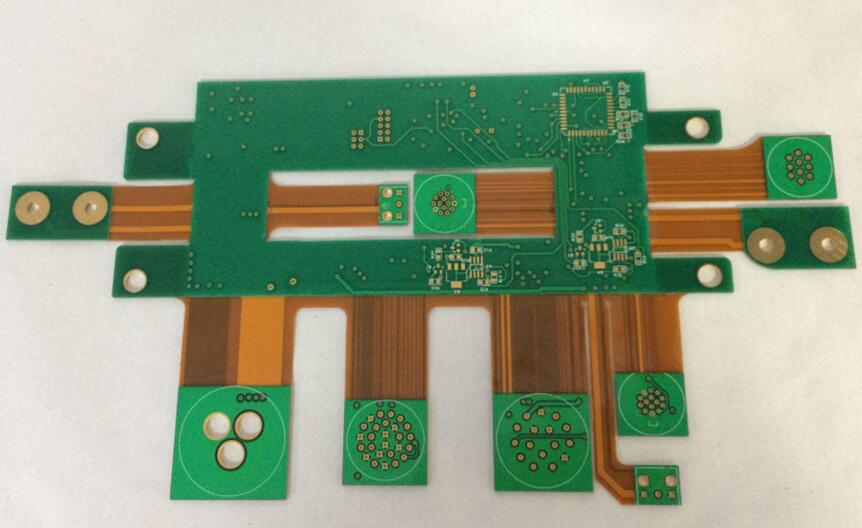
If a problem is identified, the PCB layout, material selection, stack-up, routing, or manufacturing process can be modified before volume production begins.
This approach reduces development risk and prevents expensive design changes after mass production has already started.
Automotive radar technology develops rapidly, and PCB designs often require several engineering iterations before reaching production readiness.
A small prototype run provides physical samples that engineers can evaluate immediately. Instead of relying entirely on simulation results, development teams can compare actual electrical and mechanical performance against the original design requirements.
This creates an efficient development cycle:
Design → Prototype → Test → Optimize → Re-prototype → Production
For projects involving high-frequency signals, controlled impedance, compact layouts, or complex multilayer structures, close cooperation between PCB design and manufacturing teams can significantly improve development efficiency. Professional PCB Design Services can also help evaluate stack-up, impedance, manufacturability, and EMC considerations before fabrication.
Unlike conventional consumer electronics, automotive radar circuits operate at high frequencies, including commonly used 24 GHz, 77 GHz, and 79 GHz bands.
At these frequencies, dielectric properties and material consistency become critical. Low-loss materials can help reduce signal attenuation and maintain more predictable electrical performance.
Depending on the radar architecture, manufacturers may use specialized high-frequency laminates, PTFE-based materials, Rogers materials, or hybrid constructions combining high-frequency materials with conventional PCB materials.
Material selection should consider dielectric constant, dissipation factor, thermal stability, dimensional stability, copper compatibility, and manufacturing requirements.
Radar signals are highly sensitive to changes in impedance. Variations in trace width, dielectric thickness, copper thickness, layer registration, and material properties can affect signal transmission.
Therefore, High-Frequency PCB manufacturing requires precise control of the complete PCB structure.
Common design considerations include:
Manufacturing tolerances must be coordinated with the electrical requirements defined during PCB design. Even small variations can influence impedance and signal loss in high-frequency applications.
Modern automotive radar modules require increasingly compact circuit architectures. More functions must be integrated into smaller PCB areas, increasing the demand for high-density interconnection technologies.
An HDI PCB can use microvias, blind vias, buried vias, and fine-line routing to reduce signal path length and improve component density.
These technologies are particularly useful when radar modules require compact multilayer structures and efficient connections between RF, control, power, and processing circuits.
Advanced PCB manufacturing capabilities can support fine trace and spacing requirements, laser drilling, high layer counts, and complex via structures for high-density applications.
Automotive radar PCBs must operate reliably under significantly harsher conditions than many conventional electronic products.
During actual vehicle operation, the PCB may experience:
Therefore, Automotive PCB Manufacturing requires coordinated control of materials, PCB construction, fabrication processes, inspection, and reliability testing.
The PCB structure must be designed to maintain stable electrical and mechanical performance throughout its expected service life. Automotive PCB manufacturing therefore involves more than simply producing the circuit pattern; material selection, thermal performance, dimensional stability, and process consistency must all be considered.
One of the most important advantages of small-batch prototyping is risk reduction.
Producing thousands of boards before confirming the design can create significant financial and schedule risks. If a design problem is discovered after mass production begins, correcting the issue may require PCB redesign, tooling changes, component replacement, or even product recalls.
Small-batch production creates a controlled validation stage before large-scale manufacturing.
Engineers can use prototype results to confirm:
Once the prototype has passed the required tests, the validated design can move toward volume production with significantly lower uncertainty.
Small-batch PCB prototyping is also valuable for startups, research teams, and companies developing new radar products.
Large-volume production often requires significant upfront investment, while a prototype run allows development teams to validate technical feasibility with a much smaller initial commitment.
For innovative automotive radar projects, the process can therefore become:
Concept → PCB Design → Small-Batch Prototype → Functional Testing → Optimization → Pilot Production → Mass Production
This development model provides greater flexibility when product specifications are still evolving.
Quality control is essential even when only a small number of prototype PCBs are produced. Prototype boards are often used to make important engineering decisions, so inconsistent manufacturing results can lead to incorrect conclusions during testing.
A reliable quality process should begin with engineering review and continue through material verification, fabrication, inspection, electrical testing, and final quality control.
Key inspection activities may include:
A structured quality management system helps maintain consistency between prototype production and subsequent manufacturing stages. GOPCBA’s quality management process includes design review, DFM checking, new product introduction, manufacturing control, testing, supply chain management, and personnel training.
A prototype is not simply a sample for checking whether the circuit works. It also provides valuable manufacturing data.
During small-batch production, engineers can identify problems related to:
Correcting these issues at the prototype stage is generally much easier than resolving them after volume production has started.
For complex automotive radar products, the transition from prototype to mass production should therefore be treated as an engineering process rather than simply a change in production quantity.
GOPCBA provides PCB fabrication solutions covering prototype development, multilayer boards, HDI structures, high-frequency PCBs, controlled-impedance boards, and other advanced PCB technologies.
As intelligent driving systems become more sophisticated, automotive radar modules are expected to deliver higher resolution, greater detection accuracy, stronger interference resistance, and more compact system integration.
These requirements place increasing demands on PCB materials, circuit density, signal integrity, thermal management, and manufacturing precision.
Small-batch Automotive Radar PCB prototyping provides an effective way to address these challenges. It allows engineers to test new designs, optimize high-frequency structures, evaluate manufacturing feasibility, and reduce the risk associated with mass production.
For projects involving millimeter-wave radar, specialized materials, HDI structures, controlled impedance, and multilayer construction, prototype manufacturing should be integrated into the engineering development process from the beginning.
Small-batch automotive radar PCB prototyping is an essential stage between circuit design and mass production. It provides engineering teams with an opportunity to validate electrical performance, optimize PCB structures, identify manufacturing problems, and improve product reliability before large-scale production.
For automotive radar applications, successful PCB development requires more than accurate circuit fabrication. High-frequency materials, impedance control, HDI technology, multilayer construction, thermal management, environmental reliability, and strict quality control must work together.
By using a structured prototype-to-production workflow, automotive electronics developers can reduce technical risks, control development costs, accelerate product validation, and establish a more reliable foundation for future mass production.