Medical PCB Assembly Cleanliness Control Guide
Medical electronics cover patient monitors, ultrasound systems, surgical robots and diagnostic instruments. Each device depends on printed circuit boards that must work reliably for years. Contamination on those boards can cause leakage, corrosion and intermittent faults. A structured cleanliness program controls where contamination comes from and proves the result. This guide explains the process from material choice through cleaning, inspection and packaging. It also shows what buyers and engineers should verify before a build starts.
Cleanliness is not a final cosmetic step. It is part of electrical reliability and patient safety. Flux residues, metal particles and dust can collect around fine-pitch joints and vias. Some residues absorb moisture and form conductive paths between circuit nodes. That leads to leakage current, signal drift or a short. For measuring equipment, even a small electrical change can affect accuracy. A written cleanliness plan keeps assembly, inspection and test teams working from the same limits.
Electrical and Safety Impact
Medical equipment often performs critical functions, so board reliability affects equipment safety. An unexpected failure in monitoring, anesthesia or surgical equipment can interrupt a procedure. Cleanliness control reduces these risks by removing contamination-related defects before they reach the field. The goal is not a spotless appearance. The goal is a stable surface that will not change behavior under humidity or heat. Engineers should define which contamination types matter for the design and how each one will be checked.
Ionic contaminants deserve special attention. These residues can interact with moisture and drive electrochemical migration or corrosion. As boards shrink and component density rises, the distance between conductors falls. That leaves less tolerance for any conductive residue. Long-term reliability therefore depends on controlling ionic contamination, not only visible dirt. Buyers should ask how the supplier measures ionic residue and what happens when a reading drifts outside its window. That response reveals whether the process is actually monitored or merely taken for granted.
Contamination Sources in Production
Contamination enters during PCB production and assembly. Soldering leaves flux residue when the process or cleaning method is not controlled. Cutting, drilling and routing generate dust and metallic particles. Operators can transfer fingerprints, skin oils and moisture through direct handling. Airborne dust and fibers settle on exposed surfaces. Each source needs its own control, because a single fix will not cover all of them. The production environment and the handling rules matter as much as the cleaning machine.
Boards can also become dirty after manufacturing. Packaging materials may release fibers during transport. Poor storage exposes boards to humidity, dust and temperature swings. Long exposure to moisture raises the risk of oxidation and corrosion. Packaging, storage and handling should therefore sit inside the cleanliness system, not outside it. A board that passes inspection can fail later if it is bagged or stored badly. Buyers should confirm the packaging spec and the storage conditions before release.
Contamination can also arrive after installation. During operation and maintenance, equipment may meet cleaning agents, pharmaceutical liquids, biological material or dust. If seals are inadequate, these substances reach internal assemblies. Maintenance tools add another risk. Dirty wipes, cotton swabs or the wrong cleaning agent can leave new residue on the board. Service procedures should name approved materials and forbid others. That rule protects the board long after the factory has shipped it.
Prevention at the Source
Prevention is cheaper than removal. Production and assembly areas should be controlled to reduce airborne particles. Operators should follow handling rules and wear suitable gloves and protective clothing where required. Material choice also matters. Low-residue soldering materials and compatible cleaning agents cut the contamination generated during assembly. For complex assemblies, the factory can combine technologies to suit the product. SMT PCB assembly suits compact, high-density designs, while other methods may be needed for larger parts.
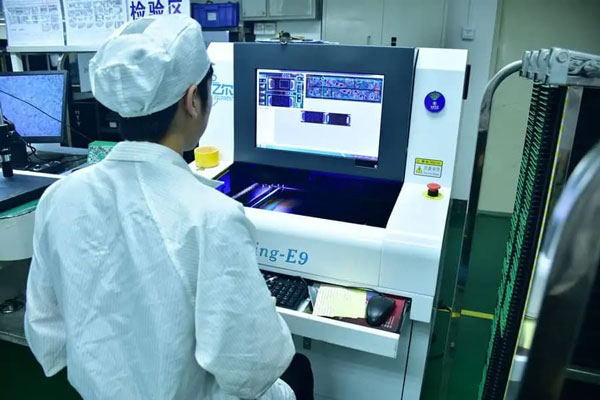
Prevention only works when it is written down. A short checklist at each station catches problems before they reach the customer. The checklist should cover glove use, board handling, station cleanliness and material storage. Supervisors should review it on a fixed schedule, not only when a defect appears. Records from these checks support later investigations. When a field return arrives, the record shows which conditions applied on that day. That evidence is faster than memory and more honest than opinion.
Cleaning Process Choices
No single cleaning method suits every assembly. The right process depends on board material, component package, soldering technology, contaminant type and cleanliness target. Flux residues may need a compatible cleaning solution with controlled mechanical or ultrasonic action. Particle contamination may need filtered air, vacuum extraction or another suitable method. Sensitive parts such as connectors, switches and sensors need protection from cleaning fluids. After cleaning, the assembly must dry fully, because leftover moisture supports corrosion and leakage.
Cleaning agents must match every material on the board. A wrong solvent can damage plastics, markings, conformal coatings, adhesives or sensitive components. Evaluate each agent before production use. Compatibility testing shows whether the process removes residue without harming the board or its parts. Buyers should ask for that test data and for the approved agent list. A supplier that cannot name its cleaning chemistry cannot control it. The same logic applies to drying, where time and temperature need defined limits.
Mixed-technology assemblies need extra care. Medical boards often combine surface-mount parts with large connectors, transformers and mechanical components. For leaded parts, component procurement and process planning must match the package type. Contaminants collect around leads, holes and other hard-to-clean areas. The process should give both SMT and through-hole areas enough cleaning and inspection. A cleaning cycle designed only for flat surfaces will leave residue in these traps. Engineers should review the board layout and flag every difficult zone before the first run.
Inspection and Verification
Cleaning alone does not prove a board is clean. Verification shows whether the process met its target. Visual inspection is the basic check. Operators look for flux residue, dust, metal particles, stains and foreign matter on surfaces and joints. Magnification helps on fine-pitch parts and small joints. Visual checks cannot find every contamination type, but they remain a useful part of process control. They also catch handling problems early, before more boards are affected.
Ionic contamination testing measures conductive residue on the board surface. Excessive ionic contamination becomes a reliability concern when moisture is present. The test tells the factory whether cleaning is working and whether the process is stable over time. For medical products, this data supports process validation and long-term reliability claims. Particle inspection adds another layer. Methods may include microscopy or particle measurement, chosen by design, environment and customer requirement. The inspection plan should name the method, the sampling point and the acceptance limit.
Verification data should be recorded and kept with the lot. A result without context proves little. The record should show the test method, the sample, the reading and the operator. Trends matter more than single readings, because a slow drift signals a process problem before scrap grows. Buyers auditing a supplier should ask to see these trends, not just a pass certificate. A factory that tracks cleanliness over months can show whether its process is stable. That evidence supports quality management in a practical way.
Components and Storage Control
Cleanliness is not decided by cleaning alone. Component selection and procurement affect the whole assembly. Parts with unsuitable materials, packaging, finishes or storage can add contamination or limit cleaning options. A controlled supply chain ensures parts meet spec and are handled well before assembly. Packaging should protect components from humidity, dust and other factors. Moisture-sensitive parts need dry storage and proper bake rules. A part that absorbs moisture can crack during reflow and leave debris on the board.
Incoming inspection should confirm part identity, packaging condition and storage history. Reels and trays should stay sealed until use, and opened parts should return to dry storage. These steps are simple, but they are often skipped under schedule pressure. Skipping them shifts risk to the assembly line and then to the customer. A written storage rule removes the guesswork. It also gives the buyer a clear point to check during an audit. Small habits at the stores counter protect the whole build.
Process Flow and Best Practices
A complete strategy covers the full workflow, not one cleaning step. The flow runs from incoming inspection through controlled storage, surface preparation, assembly, soldering, cleaning, drying, inspection and packaging. Each stage feeds the next, so a weakness in one shows up later. Integrating fabrication, sourcing, assembly and test under one controlled flow reduces the risk of contamination between stages. Buyers should map the whole route and ask where contamination could enter. The answer often reveals a gap between two departments.
Several practices improve consistency. Operators should avoid unnecessary contact with board surfaces. The facility should control dust, fibers and oil through regular cleaning. Materials should be chosen for the final medical application, not for convenience. Cleaning parameters such as time, temperature, concentration, pressure and drying should be set and validated before volume production. Testing should run on a regular schedule. Clean boards should be packed and stored properly after inspection. For teams moving from samples to volume, rapid PCBA prototyping helps prove the process early.
Training supports every one of these practices. Operators need to understand why a parameter window exists before they adjust it. Inspectors need to recognize real defects, not just obvious dirt. Engineers need to explain changes in the data. A trained team responds faster and repeats fewer mistakes. Records should capture who handled each lot and which materials were used. When a problem appears months later, that record is the fastest route to the cause. That record also provides proof that the corrective action was carried through to the following batch.
Changes in materials, stencils or profiles feed back into the process. A new paste batch, a different stencil thickness or a revised reflow profile can shift residue levels. Each change should trigger a review against the cleanliness limits. This systems view turns a capable line into a predictable one. Factories that review data monthly and rank their top defects remove them one by one. Over time, defect rates fall and lead times shorten. The same discipline supports high-volume PCB assembly without surprises.
For buyers, the takeaway is simple. Ask for the cleanliness spec, the cleaning chemistry, the verification method and the lot records. Confirm how components are stored and how clean boards are packed. Check that the process is validated before volume, not after a failure. These questions cost little at the start and save a great deal later. A supplier that answers with data is easier to trust than one that answers with promises. Build the comparison on records, and the choice becomes clear.