PCB Board Price: Key Factors That Affect PCB Manufacturing Cost
In the electronics manufacturing industry, printed circuit boards (PCBs) are essential components that provide the electrical and mechanical foundation for electronic devices. As a result, the PCB board price has a direct impact on product development budgets, manufacturing costs, and overall market competitiveness.
However, PCB pricing is not determined by a single factor. The final cost depends on a combination of board specifications, material selection, manufacturing processes, quality requirements, production volume, and market conditions.
Understanding these factors can help engineers, purchasing teams, and product manufacturers make better decisions when selecting PCB suppliers and controlling project costs.
1. Board Specifications: Size, Layer Count, and Materials
The basic specifications of a PCB are among the most important factors affecting the PCB manufacturing cost. Board size, layer count, and material selection all have a direct influence on the amount of raw materials, processing time, and manufacturing resources required.
PCB Size
PCB dimensions directly affect material consumption. A larger circuit board requires more copper-clad laminate, solder mask, copper foil, and other production materials.
Large boards can also occupy more manufacturing panel space and reduce the number of individual PCBs that can be produced from a single production panel. This can increase material waste and processing costs.
For example, PCBs used in industrial control systems, power equipment, and large communication systems are often considerably larger than those used in compact consumer electronics. Therefore, their manufacturing costs can be higher even when the basic circuit structure is similar.
PCB Layer Count
Layer count is another major factor in determining the PCB board price.
Single-sided and double-sided PCBs generally have relatively simple structures and require fewer manufacturing steps. Multilayer boards, however, require additional inner-layer fabrication, lamination, drilling, copper plating, and inspection processes.
As the number of layers increases, manufacturing complexity also increases. High-layer-count boards may require tighter layer alignment, more sophisticated stack-up design, controlled impedance, blind and buried vias, or other advanced technologies.
For applications that require high-density routing and reliable signal transmission, a multilayer PCB is often necessary despite its higher manufacturing cost.
Material Selection
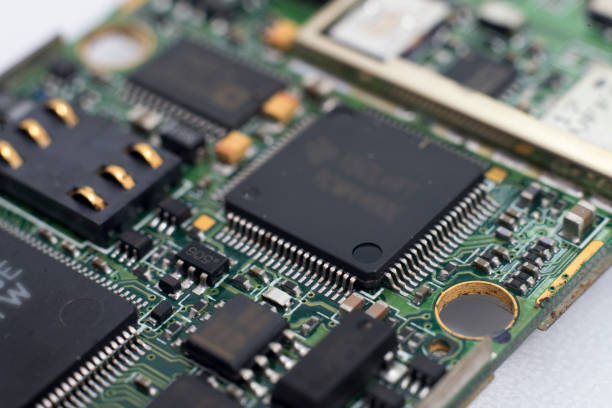
PCB materials can also have a significant impact on cost.
Standard FR-4 is widely used because it offers a good balance between electrical performance, mechanical strength, thermal performance, and cost. However, applications involving high-frequency signals, high-speed data transmission, elevated temperatures, or demanding reliability requirements may require specialized materials.
Depending on the application, manufacturers may use high-TG FR-4, Rogers materials, aluminum substrates, flexible materials, or rigid-flex materials. These materials offer specific performance advantages but generally have higher material costs than standard PCB laminates.
The right material should therefore be selected according to electrical, thermal, mechanical, and environmental requirements rather than simply choosing the lowest-cost option.
2. Manufacturing Requirements: Surface Finish and Precision
Manufacturing requirements are another important part of the overall PCB manufacturing cost. Surface finish, trace geometry, hole specifications, dimensional tolerances, and inspection requirements can all influence the final quotation.
Surface Finish
Surface treatment protects exposed copper and improves solderability and long-term reliability.
Common PCB surface finishes include HASL, ENIG, OSP, and ENEPIG. Each process has different technical characteristics and cost implications.
HASL is commonly selected for applications where cost efficiency is important. ENIG provides a relatively flat surface and is widely used for fine-pitch components and applications requiring good solderability.
OSP can provide a cost-effective surface protection solution, while ENEPIG is often considered for applications with demanding reliability and surface performance requirements.
Therefore, surface finish should be selected according to component requirements, soldering processes, reliability expectations, and application conditions.
Trace Width and Spacing
High-density PCB designs often require smaller trace widths and spacing. Fine-line designs demand tighter process control and more advanced imaging, etching, and inspection technologies.
For example, a PCB with relatively wide traces may be easier to manufacture than a high-density board with extremely fine traces, small pads, and dense component placement.
The official PCB manufacturing capabilities of GOPCBA include advanced fabrication technologies such as fine trace/spacing, HDI, microvias, controlled impedance, blind and buried vias, and via-in-pad structures.
Hole Size and Via Technology
Hole diameter and via structure can also affect PCB pricing.
Standard through holes are generally simpler to manufacture. Smaller holes, microvias, blind vias, buried vias, and via-in-pad structures require more specialized drilling, plating, filling, and inspection processes.
For high-density electronic products, advanced via technologies can significantly improve routing density and miniaturization, but they also increase manufacturing complexity.
3. Order Volume: Prototype, Low Volume, and Mass Production
Production quantity has a major influence on the unit PCB board price.
Prototype PCB Production
PCB prototypes are usually manufactured in relatively small quantities for design verification and functional testing.
Although the total order value may be relatively small, the unit price can be higher because engineering preparation, tooling, setup, material preparation, and testing costs are distributed across fewer boards.
For engineering teams developing new electronic products, prototype production is important because it allows potential design and manufacturing issues to be identified before mass production.
For projects requiring rapid design verification, prototype PCB assembly can integrate PCB fabrication and component assembly into the early development stage.
Low-Volume PCB Production
Low-volume production sits between prototyping and large-scale manufacturing. It is commonly used for pilot production, product validation, specialized industrial equipment, and products with uncertain initial demand.
Compared with prototypes, low-volume production can achieve better unit economics while maintaining production flexibility.
For companies that need smaller production runs without committing to mass production quantities, low-volume PCB assembly can provide a practical balance between cost, flexibility, and production efficiency.
High-Volume PCB Production
As order quantities increase, manufacturers can achieve economies of scale.
Large production runs allow manufacturers to optimize material purchasing, production scheduling, machine setup, testing procedures, and labor utilization. Engineering and setup costs can also be distributed across a larger number of boards.
As a result, the unit price of a high-volume PCB order is generally lower than that of a small prototype order with otherwise identical specifications.
However, high-volume manufacturing also places greater emphasis on production consistency, quality control, component supply, and process stability.
4. PCB Assembly Requirements Can Affect Total Project Cost
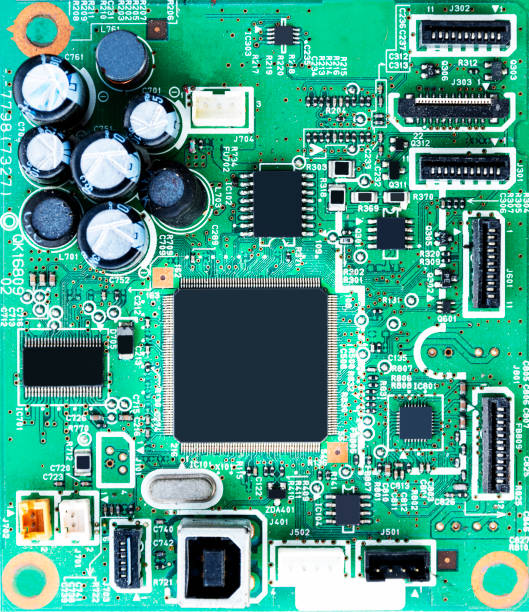
When evaluating the total cost of an electronic product, it is important to distinguish between PCB fabrication and PCB assembly.
A bare PCB is only the foundation of the electronic product. Components must be mounted and soldered to the board before the finished assembly can perform its intended function.
The assembly cost depends on factors such as:
- Number of components
- Component package types
- SMT component density
- Through-hole components
- Soldering requirements
- Assembly quantity
- Testing requirements
- Component sourcing
- Special production requirements
For example, SMT assembly is highly suitable for compact and high-density electronic products, while through-hole assembly may still be necessary for components requiring strong mechanical connections.
For boards containing both SMT and through-hole components, mixed-technology assembly can provide a suitable manufacturing solution.
5. Component Procurement and Supply Chain Conditions
Electronic components can represent a substantial portion of the total PCBA cost.
Component availability, manufacturer, package type, quantity, lead time, and market demand can all influence project costs.
Supply shortages or sudden demand increases can result in longer lead times and higher component prices. On the other hand, efficient component sourcing and consolidated procurement can help improve cost control.
For turnkey projects, integrating PCB fabrication, assembly, and component sourcing can simplify supply-chain management and reduce the number of suppliers involved in a project.
Therefore, components procurement should be considered together with PCB manufacturing and assembly when calculating the overall electronics manufacturing budget.
6. Design Complexity and Engineering Requirements
PCB design complexity can have a significant influence on manufacturing costs.
Simple two-layer boards with conventional components are generally easier to manufacture than high-density boards containing fine-pitch components, controlled impedance, complex stack-ups, high-speed interfaces, or advanced via structures.
Engineering review before production can identify potential manufacturing problems at an early stage.
Design-for-Manufacturing (DFM) analysis can help engineers identify issues related to:
- Trace width and spacing
- Component clearance
- Hole sizes
- Pad dimensions
- Layer stack-up
- Via structures
- Panelization
- Manufacturing tolerances
A well-optimized design can reduce production risks, improve yield, and potentially lower the total PCB manufacturing cost.
7. Quality Control and Testing Requirements
Quality assurance is another factor that can influence PCB pricing.
Basic PCB production may require standard visual inspection and electrical testing. More demanding applications may require additional inspection methods, including automated optical inspection (AOI), X-ray inspection, impedance testing, dimensional inspection, and other specialized tests.
For example, HDI boards, via-in-pad designs, and complex multilayer PCBs may require more extensive inspection than simple single- or double-sided boards.
GOPCBA’s PCB manufacturing process includes quality-control procedures such as AOI, X-ray inspection, electrical testing, process monitoring, and final inspection.
Although additional testing can increase the initial manufacturing cost, it can reduce the risk of defective products reaching the next stage of production.
8. Delivery Requirements and Production Lead Time
Production schedule can also influence the final PCB quotation.
Standard production schedules generally allow manufacturers to optimize production planning and machine utilization. Urgent orders may require production schedule adjustments, expedited engineering review, priority manufacturing, or faster logistics.
Prototype projects often have particularly tight deadlines because PCB fabrication and assembly are directly connected to engineering validation schedules.
For time-sensitive projects, selecting a supplier capable of supporting both rapid prototyping and subsequent production can help reduce transition time between development stages.
9. Market Supply and Demand
External market conditions can affect PCB board price even when the board design itself remains unchanged.
PCB manufacturing depends on materials and components such as copper foil, copper-clad laminate, solder mask materials, chemicals, and electronic components.
When raw material prices increase, manufacturers may face higher production costs. Changes in copper prices can be particularly relevant because copper is a fundamental material used in PCB fabrication.
Similarly, periods of strong demand can create capacity pressure across the electronics supply chain. When demand exceeds available manufacturing capacity, production lead times and market prices may increase.
Conversely, weak demand and excess manufacturing capacity may create stronger price competition between suppliers.
10. How to Control PCB Manufacturing Costs
Understanding the factors behind PCB pricing makes it easier to control costs without sacrificing product reliability.
Optimize the PCB Design
Avoid unnecessary complexity when it does not provide meaningful electrical or mechanical benefits. Optimize layer count, routing, via structures, board dimensions, and component placement according to actual product requirements.
Select Materials Based on Application Requirements
Standard FR-4 may be sufficient for many applications, while high-frequency, high-speed, thermal, or flexible applications may require specialized materials.
The goal should be to select the appropriate material rather than automatically choosing either the cheapest or most expensive option.
Optimize Production Quantity
If demand is predictable, increasing production volume can improve unit economics. For new products, however, it is generally better to validate the design through prototypes before committing to large production quantities.
Consider Manufacturing at the Design Stage
DFM analysis should be performed before PCB production rather than after manufacturing problems occur.
Early engineering review can identify design risks and help reduce rework, delays, and unnecessary production expenses.
Evaluate the Total Manufacturing Cost
PCB cost should not be evaluated solely by the bare-board quotation.
A complete cost analysis should consider:
- PCB fabrication
- Component procurement
- PCB assembly
- Testing
- Quality inspection
- Logistics
- Engineering support
- Production lead time
A supplier offering a lower bare PCB price may not necessarily provide the lowest overall project cost if assembly, component sourcing, engineering, or logistics costs are significantly higher.
Conclusion
The PCB board price is determined by a combination of technical specifications, materials, manufacturing processes, production volume, quality requirements, engineering complexity, and market conditions.
Board size, layer count, material type, surface finish, trace geometry, via technology, testing requirements, and production quantity all play important roles in determining the final quotation.
For electronics manufacturers, the best approach is not simply to look for the lowest PCB price. Instead, the goal should be to balance PCB manufacturing cost, product performance, reliability, production efficiency, and long-term supply stability.
By optimizing PCB design, selecting suitable materials, choosing the appropriate production volume, and working with an experienced PCB manufacturing and assembly partner, companies can achieve more predictable costs while maintaining the quality and reliability required for their electronic products.