PCB Manufacturing & PCBA for Robot Vision Systems
Robot vision systems are rapidly transforming industrial automation, quality inspection, autonomous navigation, and AI robotics. At the heart of every vision module—whether it is a high-speed image sensor, a motor vision processor carrier board, or a real-time imaging controller—lies a precision-manufactured PCB that delivers stable signal transmission, low-noise power delivery, and reliable system structure.
For companies developing high-precision vision systems, custom PCB manufacturing capabilities are essential. Robot vision equipment demands high-density routing, strict impedance control, high-frequency stability, noise immunity, and multi-layer high-speed signal structures.
This article explores how PCB manufacturing supports the performance requirements of robot vision systems, and how GoPCB delivers engineer-driven manufacturing capabilities—from prototype to volume production—with turnkey PCBA services and real-world USD pricing.
1. The Role of PCB in Robot Vision Systems
A robot vision system comprises high-speed image sensors, AI edge processors, high-speed interfaces, and optical acquisition modules. To ensure stable operation, the PCB must provide:
- High signal integrity – supporting real-time image transmission
- Precise impedance control – for MIPI, LVDS, USB3.0, and other high-speed interfaces
- Low-noise power distribution – ensuring stable detection circuitry
- Thermal stability – enabling reliable FPGA and AI chip operation
The PCB is essentially the structural and signal backbone of the vision system.
2. Core PCB Requirements for Robot Vision Equipment
Modern robot vision hardware places exceptionally high demands on PCBs, including:
- High-speed image processing capability – supporting GHz-class signals with extremely tight manufacturing tolerances.
- EMC/EMI noise suppression – reducing interference to improve image clarity.
- High-density interconnection – for fine-pitch sensors, fine-pitch BGA packages, and flexible connectors.
- Efficient thermal management and stable power delivery – handling the high-power demands of AI accelerators and FPGA processing modules.
3. Common PCB Types Used in Robot Vision Systems
Typical PCB types for these systems include:
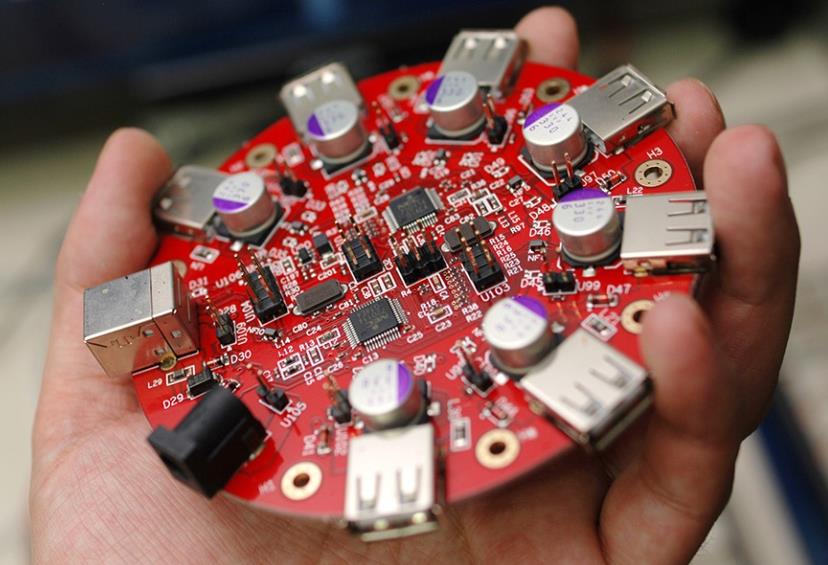
- HDI PCBs (High-Density Interconnect)
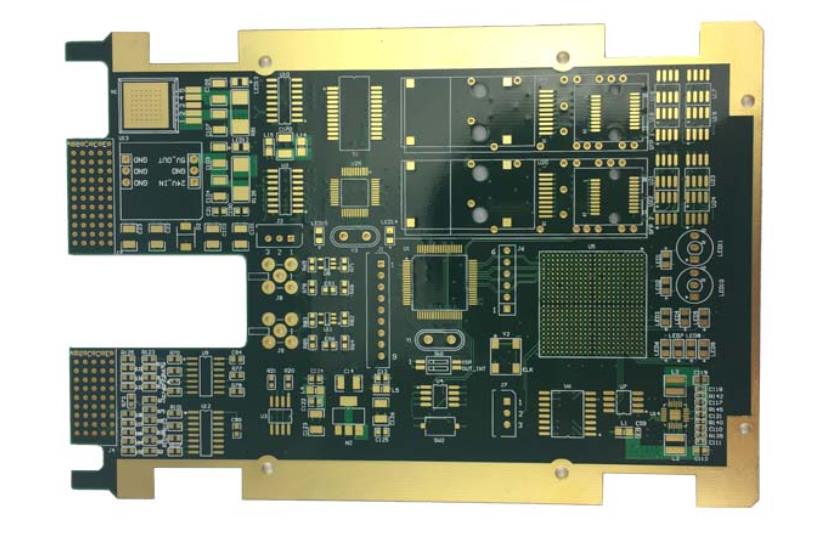
- 6–20 layer multilayer boards
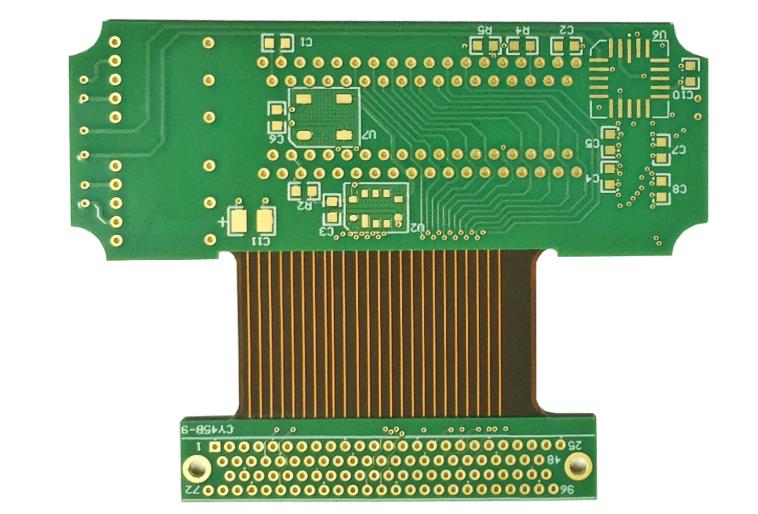
- Rigid-Flex PCBs
- High-frequency PCBs – for LiDAR and ToF depth sensing
These board types improve high-speed signal stability and reduce the impact of mechanical vibration.
4. Custom PCB Manufacturing Capabilities for Vision Systems
Robot vision products demand the following manufacturing capabilities:
- 3/3mil trace and spacing
- Laser via HDI processing
- Impedance control within ±10%
- Surface finishes: ENIG, immersion silver, OSP
- X-ray inspection for BGA and microvia pads
These capabilities significantly reduce signal noise and distortion risks. GoPCB’s PCB manufacturing platform is built to meet these exacting standards.
5. How GoPCB Supports Robot Vision Hardware Manufacturing
GoPCB specializes in PCB manufacturing and turnkey PCBA services for AI, industrial robotics, and machine vision inspection equipment.
- Engineering review – stack-up, impedance, and DFM reviews before production.
- Rapid prototyping – 3–5 days for robot vision PCB samples. Explore our prototype PCB assembly services.
- Full lifecycle support – from 1–10 units for camera development to 1000+ units for volume production.
- International certifications – ISO 9001, IATF 16949, UL, and RoHS.
GoPCB’s manufacturing systems have been widely deployed in industrial cameras, depth vision modules, and intelligent robot controllers.
6. Robot Vision PCB Pricing (USD)
Realistic price ranges (USD):
| PCB Type | Specifications | Sample Price (USD/m²) | Volume Price (USD/m²) |
|---|---|---|---|
| 6-layer HDI PCB | 3/3mil, laser vias | $180 – $260 | $120 – $165 |
| 8-layer multilayer board | ENIG, impedance control | $260 – $380 | $180 – $240 |
| Rigid-Flex PCB | PI material, 1–2 flex layers | $300 – $450 / set | $180 – $250 / set |
| High-frequency PCB (Rogers) | Rogers 4350B | $230 – $350 | $150 – $220 |
Pricing varies with layer count, material, HDI complexity, and other factors.
7. Material Selection for Robot Vision PCBs
Common materials used in robot vision equipment:
- FR-4 High Tg (TG170+) – for standard industrial camera processing boards.
- Rogers / PTFE high-frequency materials – for ToF, millimeter-wave sensing, LiDAR, and other high-frequency vision applications.
- Polyimide (PI) – for flex applications on robotic arms.
Material choice directly impacts imaging speed, temperature stability, and signal quality.
8. PCBA Assembly Services for Robot Vision PCBs
Vision system assembly requires extreme precision:
- 0.3mm fine-pitch BGA
- Image sensor placement and optical alignment
- FPGA / AI processor soldering
- AOI optical inspection
- Functional testing (image shift, frame rate verification, etc.)
GoPCB provides complete SMT PCB assembly and full turnkey PCBA services, from PCB fabrication to assembled boards.
9. Quality and Reliability Testing for Vision PCBs
Key tests include:
- X-ray inspection for BGA solder joints
- Thermal cycling tests (−40°C to +125°C)
- High-speed signal integrity testing
- Vibration resistance tests (for robotic arm applications)
These ensure industrial-grade reliability for demanding environments.
10. Lead Times and Production Flow
GoPCB’s typical lead times:
- Standard production: 7–10 days
- HDI prototype rush: 3–5 days
- PCBA: 7–12 days (including BOM procurement)
For high-volume PCB assembly, we offer streamlined production to meet your capacity needs.
Process flow: Engineering review → CAM → Board fabrication → Testing → Assembly → Shipping.
11. Typical Application Scenarios
GoPCB serves a wide range of applications, including:
- Industrial robot vision positioning systems
- Automated inspection and defect recognition equipment
- AGV/AMR navigation vision control boards
- Medical robot vision assistance modules
- AI-embedded vision sensors
12. FAQ: Robot Vision System PCB Manufacturing
Q1: What PCB is suitable for high-speed vision processing chips?
Requires HDI structure, low-loss materials, 4–12 layer high-speed architecture, and strict impedance control.
Q2: How can noise be reduced in vision system PCBs?
Use differential routing, additional ground layers, power filtering, and high-quality ENIG finish.
Q3: What material is recommended for image sensors?
FR-4 TG170+ is sufficient for most vision modules; high-frequency vision applications require Rogers/PTFE.
Q4: Can GoPCB handle fine-pitch BGA placement?
Yes, down to 0.3mm BGA, with X-ray verification of solder joint quality.
13. Conclusion
Robot vision systems depend fundamentally on PCB signal stability, high-speed transmission capability, and structural reliability. Through HDI processes, precision impedance control, high-frequency material selection, and professional PCBA services, GoPCB delivers reliable and cost-effective PCB and PCBA solutions for robotics, automation, and machine vision developers worldwide.
Whether you need custom PCBs for robot vision systems, rapid prototyping, volume production, or full-turnkey PCBA, GoPCB’s turnkey PCB assembly services provide complete support from design to delivery.
URL: https://www.gopcba.com/robot-vision-system-pcb-manufacturing/