High Tg PCB Applications: Where High Tg Circuit Boards Are Used
As electronic technology continues to advance, electronic equipment is becoming more integrated, more powerful, and more dependent on long-term reliability. At the same time, many electronic systems must operate in increasingly demanding environments, ranging from high-temperature industrial facilities to space applications, high-frequency communication infrastructure, and vibration-intensive automotive systems.
Conventional PCB materials may not always provide the thermal and mechanical stability required for these applications. A High Tg PCB offers improved thermal resistance, structural stability, and reliable electrical performance, making it an important solution for electronic systems exposed to elevated temperatures and demanding operating conditions.
By selecting an appropriate High Tg PCB material, engineers can reduce the risk of substrate deformation, delamination, and electrical instability while improving the overall reliability of the finished electronic assembly.
Key Applications of High Tg PCBs
The demand for High Tg PCB applications continues to increase as modern electronic systems become more compact, powerful, and sophisticated. Four important application areas include telecommunications, aerospace, automotive electronics, and industrial control.
1. Telecommunications
High Tg PCBs play an important role in modern telecommunications equipment, particularly in 5G infrastructure, wireless communication systems, optical communication equipment, and high-frequency electronic devices.
Communication equipment often operates continuously and generates significant heat because of its high component density and intensive data-processing requirements. Under these conditions, conventional PCB substrates may experience thermal stress, deformation, or changes in electrical performance.
A high Tg substrate can maintain better dimensional and structural stability when exposed to elevated temperatures. This helps preserve the integrity of signal paths and reduces the potential impact of thermal stress on the circuit.
High Tg materials are particularly useful in applications involving high-frequency signals. In 5G base stations, antenna systems, and optical modules, signal attenuation and interference can affect overall communication performance. Properly selected PCB materials can help maintain stable electrical characteristics under demanding operating conditions.
For applications that require both circuit fabrication and assembly, engineers can also integrate PCB manufacturing with subsequent assembly processes to simplify production and improve project coordination.
2. Aerospace and Space Electronics
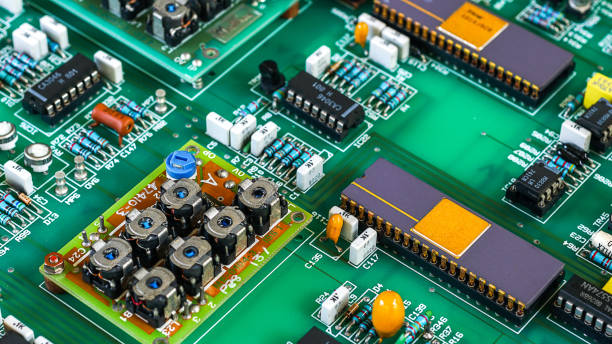
Aerospace electronics require exceptionally high levels of reliability. Satellite communication systems, aircraft control systems, navigation electronics, and other aerospace equipment may be exposed to temperature variations, mechanical vibration, radiation, and other environmental stresses.
In space applications, electronic equipment can experience significant temperature differences depending on its exposure to sunlight and surrounding conditions. Repeated thermal cycling can place considerable stress on PCB materials and interconnections.
A High Tg PCB material provides improved thermal stability and can help reduce the risks associated with repeated heating and cooling. Its structural stability can help minimize substrate deformation and interlayer stress, which are important considerations for multilayer circuit boards.
High Tg materials can therefore be considered when designing electronic systems that must maintain reliable circuit performance under demanding environmental conditions. For complex aerospace electronics, a High Tg multilayer PCB can also provide the routing density required by advanced control, communication, and navigation systems.
3. Automotive Electronics
The rapid development of intelligent vehicles and new-energy vehicles has significantly increased the complexity of automotive electronic systems. Electronic control units, battery management systems, driver-assistance systems, communication modules, and other vehicle electronics must operate reliably despite temperature fluctuations and continuous mechanical vibration.
Engine compartments can expose electronic systems to elevated temperatures, while vehicle operation generates mechanical vibration and shock. Conventional PCB materials may face increased thermal and mechanical stress under these conditions.
A High Tg PCB can provide improved thermal stability, helping the substrate maintain its structural integrity at elevated operating temperatures. This can reduce the risk of deformation that may affect solder joints, circuit connections, or component reliability.
High Tg PCBs are also suitable for automotive electronic systems that require dense routing and stable electrical performance. Applications such as battery management systems and intelligent driving electronics can benefit from PCB materials designed to maintain reliable operation under demanding thermal and mechanical conditions.
When both SMT and through-hole components are used in automotive electronic assemblies, combining appropriate PCB materials with suitable assembly technologies becomes especially important.
4. Industrial Control Systems
Industrial environments can be particularly challenging for electronic equipment. Manufacturing facilities, metallurgy plants, chemical processing systems, and other industrial applications may expose control electronics to elevated temperatures, dust, vibration, and continuous operation.
Programmable logic controllers, process monitoring equipment, motor control systems, and industrial automation electronics often need to operate reliably for extended periods. In high-temperature production environments, excessive thermal stress can negatively affect conventional PCB materials and increase the risk of circuit failure.
Using a High Tg PCB material can improve thermal stability and reduce the potential for substrate deformation caused by temperature changes. A lower thermal expansion response can also help reduce mechanical stress on circuit structures and interconnections.
For industrial systems requiring high-density routing, a High Tg multilayer PCB can provide additional circuit layers for complex signal and power distribution while maintaining the thermal performance required by demanding applications.
For projects requiring low-volume production or engineering validation before larger-scale manufacturing, prototype assembly can also help engineers identify potential design and assembly issues at an early stage.
Why High Tg PCB Materials Matter
The primary advantage of a high Tg substrate is its ability to maintain better mechanical and dimensional stability at elevated temperatures.
The glass transition temperature, or Tg, describes the temperature range at which a PCB’s resin system transitions from a relatively rigid state toward a softer, more rubber-like state. When electronic equipment operates near or above the material’s Tg, the substrate can experience increased thermal expansion and reduced mechanical stability.
Choosing an appropriate High Tg PCB helps engineers maintain more stable PCB characteristics in high-temperature applications. This is particularly important for multilayer boards, high-density designs, and products exposed to repeated thermal cycling.
However, PCB material selection should not be based solely on Tg. Designers should also consider dielectric properties, coefficient of thermal expansion, copper structure, layer count, operating frequency, mechanical requirements, manufacturing processes, and the intended operating environment.
High Tg PCB Manufacturing Considerations
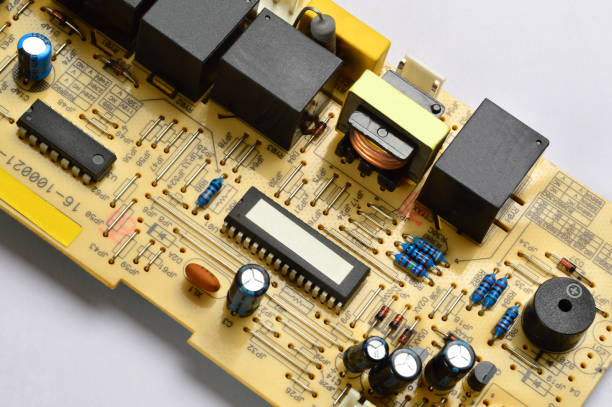
Successful High Tg PCB manufacturing requires appropriate material selection and process control throughout PCB fabrication and assembly.
For complex boards, engineers need to consider factors such as layer structure, copper thickness, thermal management, via design, impedance requirements, soldering conditions, and dimensional stability.
The PCB fabrication process should also be coordinated with the requirements of the final assembly. This is especially important for high-reliability applications where material characteristics, component selection, and soldering processes all influence final product performance.
For projects requiring a complete supply chain, turnkey assembly can combine PCB fabrication, component sourcing, assembly, and testing into a more integrated production workflow.
High Tg PCB Applications Across Advanced Industries
From 5G communication infrastructure to aerospace electronics, intelligent vehicles, and industrial automation, High Tg PCB applications continue to expand as electronic systems become more powerful and operate in increasingly demanding environments.
The combination of thermal stability, mechanical reliability, and stable electrical performance makes high Tg materials a valuable option for applications where conventional PCB substrates may not provide sufficient reliability.
For advanced electronic products, selecting the right High Tg PCB material should be part of a broader engineering evaluation that considers the board structure, operating temperature, electrical requirements, assembly technology, and expected service life.
As technologies such as 5G, artificial intelligence, intelligent vehicles, industrial automation, and aerospace electronics continue to develop, demand for reliable high-performance circuit boards is expected to increase. Proper material selection and controlled High Tg PCB manufacturing can provide an important foundation for achieving stable and dependable electronic products.