PCB Manufacturers: How to Find the Right PCB Manufacturing Partner
Choosing the right PCB Manufacturer is one of the most important decisions in electronic product development and production. The quality of the PCB directly affects electrical performance, product reliability, manufacturing cost, and delivery schedules.
With thousands of PCB suppliers serving different markets and technical requirements, simply choosing a manufacturer based on price is rarely enough. Engineers and purchasing teams need to evaluate manufacturing capabilities, material options, quality systems, production technology, engineering support, and supply-chain reliability before selecting a long-term partner.
Whether you need prototype boards, low-volume production, or high-volume manufacturing, this guide explains the most effective ways to find and evaluate a reliable PCB manufacturing partner.
What Is a PCB Manufacturer?
A PCB manufacturer is a company that converts PCB design files into physical printed circuit boards through a series of manufacturing processes.
Depending on the supplier’s capabilities, these processes may include:
- Copper-clad laminate preparation
- Inner-layer imaging
- Circuit etching
- Lamination
- Mechanical and laser drilling
- Desmear and hole preparation
- Electroless and electrolytic copper plating
- Outer-layer imaging
- Solder mask application
- Silkscreen printing
- Surface finishing
- Electrical testing
- Final inspection and packaging
A professional PCB Manufacturer may also provide engineering support, design-for-manufacturing (DFM) analysis, prototype production, component sourcing, and PCB assembly.
For customers looking for an integrated manufacturing partner, GOPCBA provides comprehensive PCB Manufacturing services covering different board structures and production requirements.
How to Find Reliable PCB Manufacturers Online
The internet is usually the fastest way to build an initial list of potential PCB suppliers. However, not every supplier listed online has the same manufacturing capabilities or quality standards.
1. Search PCB Industry Websites
Industry directories and electronics manufacturing platforms can provide useful information about PCB suppliers in different countries and regions.
When searching these platforms, you can usually filter manufacturers according to:
- Country or manufacturing location
- Prototype or mass production
- Rigid or flexible PCBs
- Layer count
- Material type
- Surface finish
- Application industry
- PCB assembly capabilities
This approach can help you quickly identify manufacturers that match your basic requirements.
However, directory listings should only be considered a starting point. Always verify technical specifications and production capabilities directly with the manufacturer.
2. Search Directly Through Search Engines
Search engines can help you identify manufacturers using specific technical keywords such as:
- PCB manufacturer
- PCB manufacturer in China
- Multilayer PCB manufacturer
- HDI PCB manufacturer
- High-frequency PCB manufacturer
- Rigid-flex PCB manufacturer
- PCB fabrication services
- PCB prototype manufacturer
More specific searches usually produce more relevant results than simply searching for “PCB factory.”
For example, if your project requires fine-line routing and microvias, searching specifically for an HDI PCB manufacturer can help narrow the results to suppliers with appropriate production technology.
3. Evaluate the Manufacturer’s Official Website
A manufacturer’s website is often one of the best sources of initial technical information.
A professional PCB supplier should clearly explain its:
- PCB manufacturing capabilities
- Layer-count range
- Materials
- Minimum trace and spacing
- Minimum via and drill sizes
- Copper thickness
- Surface finishes
- PCB types
- Quality certifications
- Testing capabilities
- Engineering services
- PCB assembly capabilities
A website that only focuses on low prices without providing meaningful technical information should be evaluated carefully.
How to Evaluate a PCB Manufacturer
Finding potential suppliers is only the first step. The more important question is how to determine whether a manufacturer is suitable for your project.
1. Check PCB Manufacturing Capabilities
The first factor to evaluate is whether the manufacturer can actually produce the board structure required by your design.
For standard boards, this may include two-layer and four-layer PCBs. More complex projects may require high-layer-count multilayer boards, HDI structures, rigid-flex boards, heavy copper PCBs, high-frequency materials, or controlled-impedance designs.
A manufacturer’s capabilities should match your current project as well as your potential future requirements.
For example, a supplier experienced in standard FR-4 boards may not necessarily have the process control required for advanced HDI PCB production.
2. Review Material Options
PCB performance is strongly influenced by the substrate material.
FR-4 remains one of the most widely used PCB materials, but advanced applications may require other materials, including:
- High-TG FR-4
- High-frequency laminates
- PTFE-based materials
- Metal-core substrates
- Flexible materials
- Rigid-flex materials
- Low-loss materials
Material selection depends on electrical, thermal, mechanical, and environmental requirements.
For high-speed or RF applications, dielectric constant, dissipation factor, thermal stability, and dimensional stability may be especially important.
3. Examine Quality Control
Quality control should cover the entire manufacturing process rather than relying only on final inspection.
A reliable PCB Manufacturer should have controlled procedures for:
- Incoming material inspection
- Inner-layer inspection
- Lamination control
- Drilling inspection
- Copper plating
- Circuit imaging and etching
- Solder mask
- Surface finishing
- Electrical testing
- Final inspection
Automated optical inspection (AOI), electrical testing, X-ray inspection, and other verification methods may be used depending on the PCB structure and application.
For demanding products, it is also important to understand how the manufacturer manages traceability and process documentation.
4. Check Certifications
Certifications can provide useful evidence of a manufacturer’s quality-management system and industry experience.
Depending on the target application, relevant certifications may include:
- ISO 9001
- ISO 13485
- IATF 16949
- UL-related requirements
- RoHS and REACH compliance
However, certifications should not be considered the only selection criterion. A supplier should also demonstrate suitable process capabilities and practical experience with similar PCB designs.
PCB Design and Engineering Support
Manufacturing problems often originate before production begins.
An experienced manufacturer can identify potential problems during the engineering review stage, including:
- Insufficient copper spacing
- Incorrect drill sizes
- Manufacturing limitations
- Inadequate annular rings
- Impedance-control issues
- Layer-stackup problems
- Solder mask clearance problems
- Via and pad design conflicts
For this reason, it is useful to work with a manufacturer that provides professional PCB engineering support.
Before fabrication, designers should ensure that Gerber files, drill files, stackup information, fabrication drawings, and other production documents are complete and consistent.
You can also review GOPCBA’s PCB Design & Layout service to understand how design data can be prepared for manufacturing.
Prototype Capability Matters
PCB prototyping is an important step before mass production.
A prototype allows engineers to verify:
- Electrical functionality
- Component placement
- Mechanical dimensions
- Signal integrity
- Thermal performance
- Assembly compatibility
- Manufacturing feasibility
A manufacturer that supports prototypes and production can make the transition from engineering validation to volume manufacturing more efficient.
For development projects, working with a supplier that offers PCB Prototype Assembly can further reduce the gap between PCB fabrication and functional product validation.
Multilayer PCB Manufacturing Capability
A Multilayer PCB contains multiple conductive copper layers separated by dielectric materials.
Compared with simple two-layer boards, multilayer PCBs require more complex processes, including:
- Inner-layer circuit fabrication
- Inner-layer inspection
- Layer stacking
- Lamination
- Drilling
- Hole preparation
- Copper plating
- Outer-layer circuit formation
- Solder mask
- Surface finishing
- Electrical testing
Layer alignment is particularly important because small registration errors can affect vias, pads, and signal routing.
When selecting a manufacturer for multilayer projects, ask about its lamination technology, layer-registration control, drilling capabilities, impedance control, and inspection systems.
HDI PCB Manufacturing
HDI technology is increasingly used in compact and high-performance electronic products.
An HDI PCB can use microvias, blind vias, buried vias, fine traces, fine-pitch pads, and sequential lamination to increase routing density while reducing board size.
HDI manufacturing requires tighter process control than many conventional PCB structures.
Important factors include:
- Laser drilling capability
- Microvia reliability
- Sequential lamination
- Fine-line imaging
- Via-in-pad processing
- Copper filling
- Layer registration
- Electrical testing
If your project requires advanced HDI technology, confirm that the manufacturer has actual production experience rather than simply listing HDI as a service category.
From PCB Fabrication to PCB Assembly
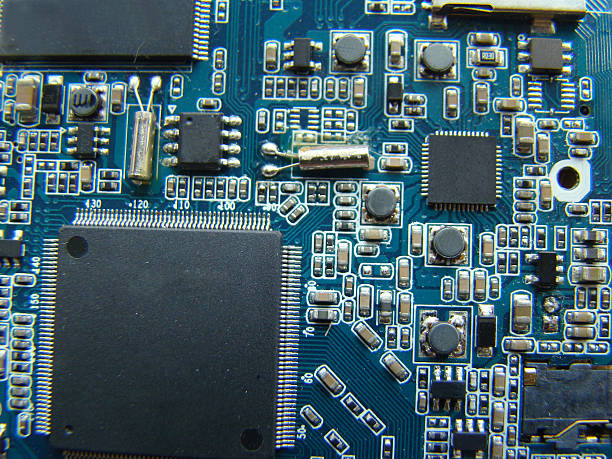
PCB fabrication is only one part of the electronics manufacturing process.
After the bare PCB is manufactured, components may need to be assembled using SMT, through-hole technology, or mixed-technology assembly.
A full-service supplier can simplify the production chain by integrating:
- PCB fabrication
- Component sourcing
- SMT assembly
- Through-hole assembly
- Inspection
- Functional testing
- Final assembly
- Packaging
For customers looking for an integrated solution, Turnkey PCB Assembly can combine PCB fabrication, component procurement, assembly, inspection, and testing within a coordinated manufacturing workflow.
This can reduce supplier-management complexity and improve communication between PCB fabrication and assembly teams.
What Questions Should You Ask a PCB Manufacturer?
Before placing an order, it is useful to ask potential suppliers several technical and commercial questions.
Manufacturing Questions
- What PCB technologies do you support?
- What is your maximum layer count?
- What are your minimum trace and spacing capabilities?
- What drill sizes can you manufacture?
- Do you support blind and buried vias?
- Do you manufacture HDI PCBs?
- Can you support controlled-impedance designs?
- What surface finishes are available?
Quality Questions
- What certifications do you hold?
- What inspection equipment do you use?
- Do you perform 100% electrical testing?
- How do you manage material traceability?
- How are production defects handled?
- Can you provide inspection reports?
Engineering Questions
- Do you provide DFM review?
- Can you review Gerber and drill files before production?
- Can you help optimize stackup design?
- Can you support prototype development?
- Can you handle engineering changes?
Commercial Questions
- What are the minimum order quantities?
- What are typical prototype lead times?
- What are standard production lead times?
- How are urgent orders handled?
- What shipping options are available?
- Can PCB fabrication and assembly be handled together?
Price Should Not Be the Only Selection Criterion
PCB pricing is important, but the lowest quotation does not always represent the lowest total cost.
A cheaper PCB can create additional costs if it results in:
- Higher defect rates
- Delayed delivery
- Poor solderability
- Dimensional problems
- Impedance failures
- Assembly issues
- Rework
- Repeated engineering changes
A better approach is to evaluate the total value offered by the supplier.
Consider manufacturing capability, quality, engineering support, communication, delivery reliability, and after-sales service together with the unit price.
How to Choose the Right PCB Manufacturer
The ideal supplier depends on the specific requirements of your project.
For a simple prototype, you may prioritize fast engineering feedback and flexible quantities.
For a complex Multilayer PCB, you may need advanced lamination, high layer-count capability, and precise layer registration.
For an HDI PCB, laser drilling, microvia processing, fine-line imaging, and sequential lamination become more important.
For automotive, medical, industrial, aerospace, or other demanding applications, quality systems, traceability, testing, and long-term reliability should receive additional attention.
The best PCB Manufacturer is therefore not necessarily the cheapest supplier. It is the manufacturer whose technology, quality system, engineering resources, production capacity, and service model match your product requirements.
Final Thoughts
Finding a reliable PCB manufacturing partner requires more than comparing quotations. Companies should evaluate manufacturing technology, materials, quality control, certifications, engineering support, prototype capabilities, production capacity, and delivery performance.
A qualified supplier should be able to understand your design requirements, identify potential manufacturing risks, produce PCBs consistently, and support the project from prototype development through production.
For companies looking for an integrated electronics manufacturing partner, GOPCBA provides PCB fabrication and assembly solutions covering different PCB technologies and production requirements. Selecting the right supplier at the beginning of a project can significantly reduce manufacturing risks and create a more stable path from design to finished electronic products.