PCB Contract Manufacturing: 10 Key Factors to Consider When Choosing a Partner
Outsourcing PCB production has become an important strategy for electronics companies that want to reduce manufacturing costs, improve production flexibility, and focus internal resources on product development and core business activities.
However, choosing a PCB contract manufacturing partner involves more than comparing prices. Technical specifications, material selection, production capabilities, quality management, delivery schedules, engineering support, and communication can all affect the final result.
Whether you are developing a new electronic product, preparing for mass production, or looking for a long-term manufacturing partner, a systematic supplier evaluation process can help reduce production risks.
This guide explains the key factors companies should consider when selecting a reliable PCB Manufacturer for outsourced PCB production.
What Is PCB Contract Manufacturing?
PCB Contract Manufacturing refers to outsourcing the production of printed circuit boards to a specialized manufacturing company.
Depending on the project, the outsourced service may cover bare PCB fabrication only or extend to a complete electronics manufacturing workflow.
Typical services can include:
- PCB fabrication
- Multilayer PCB manufacturing
- HDI PCB manufacturing
- Flexible and rigid-flex PCB production
- Prototype PCB production
- PCB assembly
- SMT assembly
- Through-hole assembly
- Component sourcing
- Electrical testing
- Inspection and quality control
- Packaging and delivery
The scope of outsourcing should be clearly defined before production begins. Some customers provide all materials and components, while others prefer a turnkey manufacturing solution.
For companies that need both fabrication and assembly, GOPCBA provides integrated PCB Manufacturing services and PCB assembly solutions to support different stages of electronics production.
Why Do Companies Outsource PCB Manufacturing?
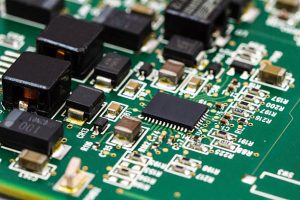
There are several reasons companies choose PCB Outsourcing instead of building and operating their own PCB production lines.
Lower Manufacturing Costs
Building an in-house PCB production facility requires significant investment in equipment, production space, engineering personnel, testing systems, environmental controls, and process management.
Outsourcing allows companies to access established manufacturing infrastructure without carrying the full cost of operating a PCB factory.
Access to Specialized Technology
Advanced PCB technologies such as HDI, fine-line circuits, high-layer-count boards, controlled impedance, rigid-flex construction, and specialized materials require sophisticated equipment and process expertise.
A qualified contract manufacturer can provide access to these capabilities without requiring the customer to develop them internally.
Greater Production Flexibility
External manufacturing partners can support prototypes, small batches, and larger production runs according to project requirements.
This flexibility is particularly valuable for startups, engineering teams, and companies whose product demand changes over time.
Faster Product Development
Working with an experienced manufacturer can shorten the path from PCB design to prototype and production.
Engineering review, DFM analysis, PCB fabrication, assembly, and testing can be coordinated more efficiently when the manufacturing partner has experience with the entire process.
1. Clearly Define Your PCB Requirements
Before contacting a supplier, prepare complete technical requirements.
The more information you provide, the easier it is for a manufacturer to evaluate the project accurately and provide a reliable quotation.
Important PCB specifications may include:
- Number of layers
- Board dimensions
- PCB thickness
- Copper thickness
- Minimum trace width and spacing
- Minimum hole diameter
- Via structure
- Controlled impedance requirements
- Surface finish
- Solder mask
- Silkscreen
- Base material
- Special reliability requirements
For complex boards, also provide the required stackup, impedance requirements, fabrication drawings, and other engineering documentation.
You should also clearly distinguish between prototype, low-volume, and mass-production requirements because manufacturing strategies and pricing can vary significantly between different production stages.
2. Prepare Complete Manufacturing Data
Incomplete or inconsistent production files can cause unnecessary engineering delays.
A typical PCB manufacturing package may contain:
- Gerber files
- NC drill files
- PCB fabrication drawings
- Stackup information
- Drill specifications
- Impedance requirements
- Material requirements
- Surface-finish requirements
- Special manufacturing instructions
If PCB assembly is included, the package may also need:
- Bill of Materials (BOM)
- Pick-and-place files
- Assembly drawings
- Component specifications
- Approved vendor information
- Testing requirements
Before production, the manufacturer should review the data and identify potential manufacturing issues.
GOPCBA also provides PCB Design & Layout services, helping customers prepare PCB designs and production data for manufacturing.
3. Evaluate the Manufacturer’s Technical Capabilities
Not every PCB factory can manufacture every type of board.
A supplier that is suitable for a simple two-layer FR-4 PCB may not be suitable for a high-density multilayer board or advanced HDI design.
When evaluating a PCB Manufacturer, check whether its capabilities match your requirements in areas such as:
Layer Count
Determine whether the manufacturer can consistently produce your required layer count.
Fine-Line Technology
For dense layouts, trace width and spacing capability can be critical.
Drilling
Check mechanical drilling and laser-drilling capabilities if your project requires small vias or microvias.
Via Technology
Complex designs may require blind vias, buried vias, microvias, or via-in-pad structures.
Material Compatibility
Confirm that the manufacturer can work with your specified laminate and dielectric materials.
Impedance Control
For high-speed and RF designs, verify that the manufacturer has the engineering and testing capability to control and verify impedance.
Technical capability should always be evaluated based on actual production experience rather than a simple list of technologies on a website.
4. Check Quality Management and Inspection Processes
Quality control should cover the entire manufacturing process.
A reliable supplier should have defined procedures for incoming materials, production processes, inspection, testing, and final shipment.
Important quality-control stages may include:
- Incoming material inspection
- Inner-layer inspection
- Lamination inspection
- AOI inspection
- Drilling inspection
- Copper plating control
- Solder mask inspection
- Surface-finish inspection
- Electrical testing
- Final visual inspection
Depending on the PCB type, additional inspection methods such as X-ray inspection, microsection analysis, impedance testing, or dimensional verification may also be appropriate.
When evaluating PCB Manufacturing suppliers, ask what inspection equipment is available and which tests are included in the standard production process.
5. Verify Certifications and Industry Experience
Certifications can provide useful evidence that a manufacturer operates according to a structured quality-management system.
Depending on the application, relevant certifications may include:
- ISO 9001
- ISO 13485
- IATF 16949
- UL-related requirements
- RoHS compliance
- REACH compliance
Industry experience is equally important.
For example, manufacturers serving automotive electronics may need to meet requirements that differ from those for consumer electronics. Medical electronics, industrial control systems, telecommunications equipment, and other demanding applications may also require specific quality and traceability practices.
Do not select a supplier solely because it has a particular certification. Consider the combination of certification, process capability, equipment, engineering expertise, and experience with similar products.
6. Review Prototype and Low-Volume Capabilities
Prototyping is an important stage of product development.
A prototype PCB allows engineers to identify potential problems before committing to larger production quantities.
During prototype validation, teams can evaluate:
- Circuit functionality
- Mechanical fit
- Component placement
- Signal integrity
- Thermal behavior
- Assembly compatibility
- Manufacturing feasibility
A manufacturing partner that can support both prototypes and production can make the transition to volume manufacturing much smoother.
For projects that require functional prototypes, GOPCBA offers PCB Prototype Assembly to help customers validate PCB designs before larger-scale production.
7. Evaluate Production Capacity and Lead Times
Production capacity is another important factor in PCB Outsourcing.
A supplier may have excellent technical capabilities but still struggle to meet your schedule if its production lines are overloaded.
Ask potential suppliers about:
- Current production capacity
- Prototype lead times
- Standard production lead times
- Expedited production options
- Material procurement times
- Production scheduling
- Capacity during peak periods
Do not evaluate lead time only by looking at the number of calendar days quoted.
Consider the complete manufacturing cycle, including engineering review, material preparation, fabrication, testing, inspection, and shipping.
A realistic and consistently achievable lead time is more valuable than an aggressive promise that cannot be maintained.
8. Compare the Complete Cost Structure
Price is an important consideration, but the lowest quotation is not necessarily the most economical option.
When comparing suppliers, examine the complete cost structure.
Potential cost elements include:
- PCB materials
- Fabrication
- Engineering charges
- Tooling
- Testing
- Surface finishing
- Special processes
- Component sourcing
- PCB assembly
- Packaging
- Shipping
Ask whether additional charges may apply if engineering changes, special testing, urgent production, or material substitutions are required.
A transparent quotation helps prevent unexpected costs later in the project.
More importantly, consider total cost of ownership rather than simply the unit price.
A supplier with better process control may have fewer defects, less rework, fewer delivery problems, and lower overall production costs.
9. Establish Clear Quality and Contract Requirements
Before production begins, both parties should agree on technical and commercial requirements.
The manufacturing agreement should clearly define:
Quality Standards
Specify applicable IPC standards, customer specifications, inspection criteria, and acceptance requirements.
Delivery Requirements
Define production schedules, shipping arrangements, and procedures for handling delays.
Defect Handling
Establish how defective boards will be investigated, replaced, reworked, or credited.
Confidentiality
PCB design files, BOMs, circuit layouts, and manufacturing information may contain valuable intellectual property.
Confidentiality and intellectual-property protection should therefore be addressed in the contract.
Engineering Changes
Define how design revisions, material changes, and manufacturing changes will be reviewed and approved.
Clear contractual requirements help prevent misunderstandings and provide both parties with a common reference throughout the project.
10. Evaluate Communication and Technical Support
Communication is often underestimated when selecting a PCB outsourcing partner.
Even technically capable suppliers can become difficult partners if engineering questions are not answered quickly or production information is unclear.
Evaluate how the manufacturer handles:
- Engineering questions
- DFM feedback
- Quotation requests
- Production updates
- Design changes
- Quality issues
- Delivery problems
- Corrective actions
A strong technical support team should be able to communicate clearly with engineers, purchasing teams, and project managers.
For long-term projects, consistent communication can be just as important as manufacturing equipment.
PCB Fabrication vs. PCB Assembly Outsourcing
It is important to understand the difference between PCB fabrication and PCB assembly.
PCB fabrication produces the bare circuit board. This includes processes such as circuit formation, drilling, plating, solder mask, surface finishing, and testing.
PCB Assembly, on the other hand, installs electronic components onto the bare PCB.
Assembly may include:
- SMT component placement
- Reflow soldering
- Through-hole assembly
- Wave or selective soldering
- AOI inspection
- X-ray inspection
- Functional testing
- Final inspection
Companies that want to simplify supply-chain management may choose a manufacturer capable of handling both PCB fabrication and assembly.
A turnkey model can reduce the number of separate suppliers involved in the production process.
GOPCBA’s Turnkey PCB Assembly service integrates PCB fabrication, component procurement, assembly, inspection, and testing into a coordinated manufacturing workflow.
How to Select a Long-Term PCB Manufacturing Partner
If you are looking for a supplier for repeated production rather than a one-time order, evaluate the manufacturer from a long-term perspective.
Consider the following questions:
- Can the manufacturer support both prototypes and volume production?
- Can its technology keep up with future PCB designs?
- Is its quality system stable?
- Can it maintain consistent production quality?
- Does it provide responsive engineering support?
- Can it manage material procurement effectively?
- Does it provide transparent production information?
- Can it handle engineering changes?
- Does it have experience with your target industry?
- Can it scale production when demand increases?
A supplier that meets your current requirements but cannot support future product development may eventually become a bottleneck.
Common Mistakes When Outsourcing PCB Production
Companies new to PCB Contract Manufacturing often make several avoidable mistakes.
Choosing Only by Price
The cheapest quotation may not provide the lowest overall production cost.
Providing Incomplete Documentation
Missing Gerber files, incorrect BOM information, or unclear specifications can create delays and manufacturing errors.
Ignoring DFM
A PCB may work electrically but still be difficult or expensive to manufacture.
Failing to Define Acceptance Criteria
Without clear quality requirements, disagreements may occur during inspection and delivery.
Not Checking Production Capacity
A supplier may accept an order without having sufficient capacity to meet the required schedule.
Overlooking After-Sales Support
Quality problems sometimes become more expensive because the manufacturer does not respond quickly or provide effective technical assistance.
Final Checklist for Choosing a PCB Contract Manufacturer
Before selecting a supplier, use this checklist:
| Evaluation Area | Key Questions |
|---|---|
| Technical Capability | Can the manufacturer produce your PCB structure? |
| Materials | Can it support your required laminate and materials? |
| Quality | What inspection and testing processes are available? |
| Certifications | Does it meet the requirements of your industry? |
| Prototype | Can it support prototype and low-volume production? |
| Capacity | Can it handle your current and future volumes? |
| Lead Time | Are production schedules realistic and consistent? |
| Cost | Is the quotation transparent and complete? |
| Engineering | Does the supplier provide DFM and technical support? |
| Assembly | Can PCB fabrication and assembly be coordinated? |
| Communication | Is the supplier responsive and easy to work with? |
| After-Sales | Is there a defined process for quality issues? |
Conclusion
Successful PCB Outsourcing requires more than finding a supplier with a competitive quotation. The right manufacturing partner should have the technical capabilities, quality-management system, production capacity, engineering support, and communication processes needed to meet your specific requirements.
Before placing an order, clearly define your PCB specifications, provide complete manufacturing data, evaluate the supplier’s capabilities, verify quality systems, review production capacity, and establish clear commercial and technical requirements.
For companies that need an integrated manufacturing solution, GOPCBA supports PCB fabrication, prototyping, and PCB assembly to help streamline the path from PCB design to finished electronic products.
By evaluating suppliers systematically instead of focusing only on price, companies can reduce manufacturing risks, improve product consistency, control total production costs, and build a more reliable long-term electronics supply chain.