Surgical Robot PCB: Design and Manufacturing Guide
Surgical robotics is transforming modern healthcare by enabling surgeons to perform increasingly precise, minimally invasive procedures. Robotic platforms are used across laparoscopic surgery, orthopedics, neurosurgery, and other specialized applications where accurate motion control and reliable real-time data processing are essential.
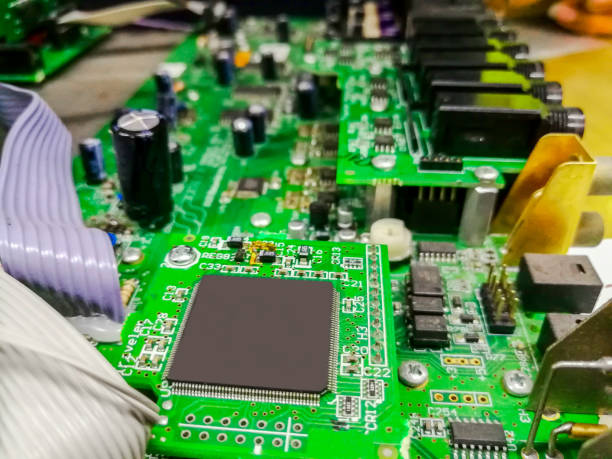
Behind the mechanical arms, surgical instruments, cameras, sensors, motors, and control systems is a sophisticated electronic architecture. The Surgical Robot PCB serves as an important hardware platform connecting these subsystems and supporting signal transmission, motor control, sensor acquisition, power management, and data processing.
Unlike ordinary consumer electronics, medical robotic electronics must be designed with a strong focus on reliability, signal integrity, electromagnetic compatibility, mechanical stability, and long-term performance. A PCB failure in a surgical robot can potentially interrupt critical equipment functions, making PCB design, manufacturing, assembly, and testing particularly important.
What Is a Surgical Robot PCB?
A Surgical Robot PCB is a printed circuit board specifically designed for electronic systems used in surgical robotic equipment.
Depending on the robotic architecture, PCBs may be integrated into:
- Robotic arm control modules
- Motor and actuator control systems
- Surgical instrument interfaces
- Position and motion sensing systems
- Force-feedback systems
- Camera and imaging modules
- Central processing units
- Communication modules
- Power-management circuits
- Operator control consoles
The PCB must provide reliable electrical connections between these systems while maintaining predictable performance under the operating conditions of medical equipment.
In many surgical robots, multiple PCB assemblies work together rather than relying on a single control board. Each board can have different electrical, mechanical, thermal, and reliability requirements.
Why Surgical Robot PCBs Require High Reliability
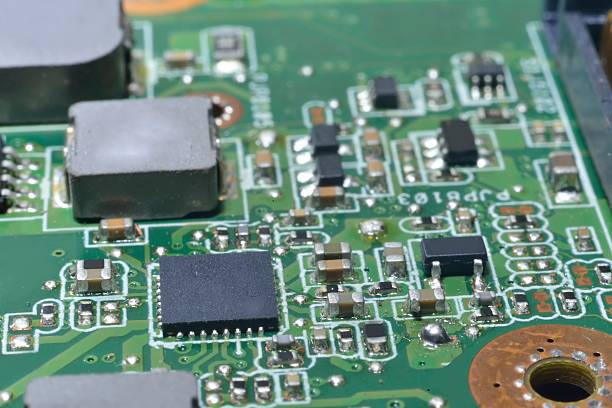
Surgical robots must respond accurately to commands and sensor feedback. A robotic system may continuously receive inputs from surgeons, cameras, position sensors, force sensors, and other devices while simultaneously controlling motors and actuators.
This creates several important PCB requirements:
- Stable signal transmission
- Low electrical noise
- Accurate sensor interfaces
- Reliable power delivery
- High-density integration
- Mechanical durability
- Thermal stability
- EMI and EMC control
- Consistent manufacturing quality
The PCB should therefore be considered part of the overall safety and reliability architecture of the robotic system rather than simply a passive interconnection platform.
Signal Integrity in Surgical Robot PCB Design
Signal integrity is particularly important in surgical robotics because control systems often depend on accurate communication between processors, sensors, actuators, and communication interfaces.
A typical surgical robot may process:
- Position sensor signals
- Encoder feedback
- Force and torque measurements
- Camera data
- Motor-control signals
- Communication data
- Diagnostic information
- User-interface commands
Any unwanted noise, crosstalk, reflection, or signal distortion can reduce system performance.
High-Speed Signal Routing
High-speed interfaces require carefully controlled PCB routing.
Designers should consider:
- Controlled impedance
- Differential-pair routing
- Trace length
- Return-current paths
- Via transitions
- Reference planes
- Crosstalk
- Connector geometry
High-speed traces should be routed with consistent electrical characteristics, while unnecessary layer transitions and discontinuities should be minimized.
For complex medical electronics, professional PCB Design and Layout can help engineers optimize stackup structures, component placement, routing, power distribution, and manufacturability before fabrication.
EMI and EMC Protection for Surgical Robot PCBs
A surgical robot operates in an environment containing multiple electronic devices. Surgical equipment may include electrosurgical systems, patient monitors, imaging equipment, displays, communication equipment, and other sources of electromagnetic energy.
Electromagnetic interference can potentially affect sensitive sensor signals or communication interfaces.
An effective PCB design may use several EMI-control techniques.
Ground Plane Design
Continuous and appropriately designed ground planes can provide controlled return-current paths and reduce unwanted electromagnetic radiation.
Grounding strategies should be planned according to circuit architecture, signal frequency, power distribution, and system-level EMC requirements.
Circuit Partitioning
Sensitive analog circuits, high-speed digital circuits, power electronics, and motor-control circuits may need appropriate physical separation.
Functional partitioning can help reduce coupling between noisy and sensitive sections of the board.
Shielding and Filtering
Depending on the system architecture, designers may incorporate:
- Shielding structures
- Common-mode filtering
- Ferrite components
- EMI filters
- Grounding structures
- Carefully positioned decoupling capacitors
EMC performance should ultimately be evaluated at the system level because PCB layout is only one part of the complete electromagnetic environment.
High-Density Integration for Surgical Robotics
Surgical robotic systems often contain compact mechanical structures and moving robotic arms. Electronics therefore need to fit into limited spaces without compromising reliability.
A Medical PCB may need to integrate numerous components within a relatively small area.
High-density PCB technologies can help achieve this objective.
Potential technologies include:
- Multilayer PCB construction
- Fine-line routing
- Microvias
- Blind vias
- Buried vias
- HDI technology
- High-density component placement
- Sequential lamination
HDI structures can increase routing density and reduce the space required for interconnections.
However, higher PCB density also increases manufacturing complexity. Accurate layer registration, drilling, plating, lamination, and inspection become increasingly important.
Sensor Interface Requirements
Sensors are fundamental to surgical robotic systems.
Depending on the application, sensors can monitor:
- Position
- Angle
- Speed
- Force
- Torque
- Pressure
- Temperature
- Instrument status
The PCB must provide a stable interface between sensors and the processing system.
Sensitive sensor signals may require:
- Low-noise routing
- Appropriate filtering
- Stable reference voltages
- Short signal paths
- Controlled grounding
- Shielding where necessary
- Proper analog/digital separation
For precision applications, PCB layout decisions can directly influence measurement quality.
Motor and Actuator Control
Robotic arms depend on motors and actuators for precise movement.
The PCB may contain motor-control circuits, drivers, feedback interfaces, and power-management components.
Motor-control sections can generate significant electrical noise, especially when switching currents rapidly.
PCB designers should therefore consider:
- High-current paths
- Power-plane design
- Grounding
- Switching-node placement
- Thermal management
- Feedback signal isolation
- EMI suppression
Sensitive feedback circuits should be protected from noisy power and switching sections as much as practical.
Thermal Management in Surgical Robot PCBs
Thermal management is another important aspect of Surgical Robot PCB design.
Processors, motor drivers, power-management devices, regulators, and other components can generate heat during operation.
Excessive temperature can affect component reliability and may influence signal and electrical performance.
PCB thermal-management techniques can include:
- Large copper areas
- Thermal vias
- Internal copper planes
- Heat-spreading structures
- Optimized component placement
- Heatsinks
- Thermal interface materials
- Mechanical cooling structures
Thermal Via Design
Thermal vias can transfer heat from component pads to internal or opposite-side copper structures.
They are especially useful for components with exposed thermal pads or relatively high power dissipation.
The number and arrangement of thermal vias should be determined based on the component package, PCB construction, manufacturing process, and thermal requirements.
PCB Materials for Medical Robotics
Material selection is an important part of medical electronics design.
A standard FR-4 material may be suitable for many applications, while more demanding designs may require materials with specific thermal, electrical, mechanical, or environmental properties.
Engineers may evaluate:
- High-Tg laminates
- Low-loss materials
- Low-CTE materials
- Halogen-free materials
- High-temperature materials
- Flexible PCB materials
High-Tg Materials
High-Tg materials can provide greater thermal stability than conventional materials and may be appropriate for electronics exposed to elevated temperatures or repeated thermal cycling.
Flexible PCB Materials
Flexible circuits can be useful where electronic connections must follow moving mechanisms or fit into compact robotic structures.
They can reduce cable assemblies and enable more efficient integration into articulated structures.
However, flexible PCB design must account for:
- Bend radius
- Dynamic flexing
- Copper structure
- Mechanical reinforcement
- Connector reliability
- Repeated-motion requirements
Mechanical Reliability of Surgical Robot PCBs
Surgical robots contain moving mechanical assemblies, including robotic arms and instrument interfaces.
PCB assemblies may therefore be exposed to vibration, movement, mechanical shock, and repeated operating cycles.
Mechanical reliability considerations include:
- PCB thickness
- Mounting-hole design
- Component anchoring
- Connector retention
- Heavy-component placement
- Solder-joint reliability
- Flexible-circuit bending requirements
Heavy components should be positioned carefully to reduce mechanical stress during movement.
The PCB mounting structure should also prevent excessive board flexing during normal operation.
Environmental Protection
Medical equipment generally operates in controlled environments, but its electronic assemblies can still encounter temperature variation, humidity, cleaning agents, and repeated equipment disinfection procedures.
PCB protection strategies may include:
- Appropriate solder-mask systems
- Conformal coating
- Protective housings
- Sealed connectors
- Corrosion-resistant surface finishes
- Appropriate material selection
It is important to distinguish PCB environmental protection from device-level biocompatibility.
A PCB material is not automatically considered biocompatible simply because the PCB is used in medical equipment. If any part of the electronic assembly can contact the patient or bodily fluids, material compatibility must be evaluated within the complete medical-device design and risk-assessment process.
Precision PCB Manufacturing for Surgical Robots
A sophisticated design requires a manufacturing process capable of consistently reproducing the specified PCB geometry and material structure.
A typical PCB Manufacturing process may include:
- Material preparation
- Inner-layer imaging
- Etching
- Lamination
- Precision drilling
- Copper plating
- Outer-layer imaging
- Solder-mask application
- Surface finishing
- Electrical testing
- Dimensional inspection
- Final quality inspection
Each stage can influence the final reliability of the PCB.
Layer Registration
Multilayer surgical robot PCBs may contain high-density routing and complex interconnections.
Accurate layer registration is important for:
- Via-to-pad alignment
- Fine-pitch structures
- Microvias
- Controlled impedance
- Annular-ring integrity
Manufacturing processes should maintain appropriate registration throughout lamination and subsequent fabrication stages.
Via and Plating Reliability
Vias provide electrical connections between PCB layers.
For medical robotic equipment, via reliability can be particularly important because the board may experience temperature changes and mechanical stresses over its service life.
Reliable copper plating and appropriate hole-wall quality help maintain electrical connectivity.
Surface Finish Selection
The PCB surface finish affects solderability, pad quality, oxidation resistance, and assembly performance.
Common surface finishes include:
- ENIG
- ENEPIG
- OSP
- Immersion tin
- HASL
For surgical robot electronics containing fine-pitch components, the selected finish should be compatible with the component package, assembly process, storage requirements, and reliability objectives.
PCB Assembly for Surgical Robot Electronics
PCB fabrication is only one part of the manufacturing process. Component assembly also has a direct impact on the reliability of the finished medical electronic system.
A typical PCB Assembly process may include:
- Solder-paste printing
- Solder-paste inspection
- SMT placement
- Reflow soldering
- AOI inspection
- X-ray inspection where appropriate
- Through-hole assembly
- Electrical testing
- Functional testing
Fine-Pitch Component Assembly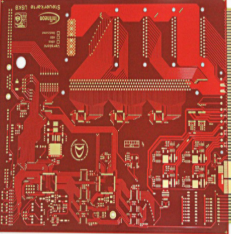
Surgical robot control electronics may use processors, memory devices, sensors, communication ICs, and other compact packages.
Fine-pitch assembly requires accurate solder-paste deposition and component placement.
Process control should address:
- Solder-paste volume
- Placement accuracy
- Reflow profile
- Pad design
- Component coplanarity
- Solder-joint quality
Reliable assembly reduces the risk of intermittent electrical connections and manufacturing defects.
Quality Inspection and Testing
Quality control is particularly important for Medical Electronics PCB applications.
Depending on the product and customer requirements, inspection may include:
Automated Optical Inspection
AOI can identify many visible assembly defects, including:
- Component misalignment
- Missing components
- Solder bridges
- Insufficient solder
- Incorrect component placement
X-Ray Inspection
X-ray inspection can be useful for packages and solder joints that cannot be fully evaluated through conventional optical inspection.
Electrical Testing
Electrical testing can verify:
- Continuity
- Isolation
- Short circuits
- Net connectivity
- Selected power rails
- Functional interfaces
Functional Testing
Where applicable, functional testing can evaluate the PCB or assembled electronic module under representative operating conditions.
The appropriate test strategy depends on the design, intended use, regulatory requirements, and customer specifications.
Reliability Testing for Surgical Robot PCBs
Reliability testing should reflect the actual operating environment of the equipment.
Potential evaluations include:
- Temperature cycling
- High-temperature exposure
- Humidity testing
- Vibration testing
- Mechanical shock testing
- Electrical stress testing
- Insulation resistance testing
- Connector-cycle testing
For robotic mechanisms, repeated-motion testing can also be relevant when flexible circuits, connectors, or moving cable assemblies are used.
The exact test parameters should be established based on the finished product requirements rather than applying a single generic test profile to every surgical robot.
Prototype Development and Validation
Medical robotic electronics typically require careful prototype validation before production.
A practical development workflow may include:
- Define system requirements
- Develop the electrical architecture
- Select components and materials
- Create the PCB stackup
- Complete PCB layout
- Review signal and power integrity
- Perform DFM analysis
- Manufacture prototype PCBs
- Assemble components
- Conduct electrical testing
- Validate mechanical integration
- Perform thermal testing
- Conduct environmental testing
- Optimize the design
- Release the production version
For early-stage medical robotics development, Prototype PCB Assembly can shorten the feedback loop between PCB design, assembly, laboratory testing, and mechanical integration.
Components and Supply Chain Considerations
Surgical robot PCBs can contain specialized processors, sensors, motor drivers, communication ICs, connectors, memory devices, and power components.
Component selection should therefore consider more than electrical specifications.
Important factors include:
- Operating temperature
- Package type
- Availability
- Product lifecycle
- Approved alternatives
- Long-term supply
- Traceability requirements
- Manufacturing compatibility
For complex medical products, early component planning can reduce redesign risks caused by component obsolescence or supply constraints.
Where required, Components Procurement can be integrated into the PCB manufacturing workflow to help coordinate component sourcing and assembly requirements.
Designing Surgical Robot PCBs for Manufacturability
Design for manufacturability should be considered from the earliest PCB design stage.
Important DFM factors include:
- Minimum trace width and spacing
- Pad dimensions
- Via structures
- Component clearance
- Solder-mask openings
- Fiducial placement
- Test-point accessibility
- Panelization
- Component orientation
- Thermal-pad design
A design that is optimized for manufacturing can improve production consistency while reducing unnecessary assembly problems and rework.
Why Surgical Robot PCB Quality Matters
The electronic architecture of a surgical robot must operate accurately and consistently. The PCB supports the communication between sensors, processors, motors, actuators, and control interfaces.
A PCB defect can potentially affect:
- Sensor feedback
- Motor control
- Data communication
- Power delivery
- System diagnostics
- Robotic motion
For this reason, a reliable Surgical Robot PCB should combine electrical performance with mechanical, thermal, environmental, and manufacturing reliability.
The complete manufacturing process should connect PCB design, material selection, fabrication, assembly, inspection, testing, and traceability.
Future Development of Surgical Robot PCBs
Surgical robotics is likely to continue moving toward greater automation, higher precision, more sophisticated sensing, and increased data processing.
Future PCB technologies may therefore require:
- Higher component density
- Faster data interfaces
- More compact form factors
- Advanced HDI structures
- Flexible and rigid-flex circuits
- Improved thermal management
- Lower-noise signal transmission
- More integrated sensor interfaces
- Advanced motor-control electronics
As robotic systems become more capable, PCB designers will need to balance miniaturization and performance with reliability and manufacturability.
Conclusion
The Surgical Robot PCB is a critical hardware foundation for modern robotic medical equipment. It connects sensors, processors, motors, actuators, communication interfaces, and power systems while supporting accurate data transmission and reliable control.
The unique requirements of surgical robotics make PCB engineering more demanding than conventional electronic applications. Signal integrity, EMI control, high-density integration, thermal management, mechanical reliability, material selection, precision manufacturing, and comprehensive testing must all be considered together.
By combining professional PCB Design and Layout, controlled PCB Manufacturing, reliable PCB Assembly, prototype validation, component planning, and application-specific testing, medical-device developers can build more dependable electronic platforms for advanced robotic surgery.
As surgical robotics continues to evolve, high-performance and reliable Medical PCB technology will remain an important foundation for precise, connected, and increasingly intelligent medical systems.