Automotive Domain Controller PCB: Design and Manufacturing Guide
The automotive industry is rapidly moving toward electrification, intelligent driving, connected vehicles, and centralized electronic architectures. As more vehicle functions become software-defined and interconnected, the domain controller has become an important electronic platform for coordinating multiple systems.
At the center of these systems is the Automotive Domain Controller PCB, which provides the electrical infrastructure for processors, communication interfaces, sensors, power-management circuits, memory devices, and other critical electronic components.
Unlike conventional consumer-electronics PCBs, automotive circuit boards must operate reliably under temperature fluctuations, vibration, humidity, electromagnetic interference, and long service-life requirements. At the same time, modern domain controllers increasingly require high-speed data transmission, high component density, efficient thermal management, and stable power distribution.
As a result, the design and manufacturing of an Automotive PCB must consider electrical performance, mechanical reliability, material selection, thermal behavior, manufacturability, and quality control as an integrated system.
What Is an Automotive Domain Controller PCB?
An Automotive Domain Controller PCB is a printed circuit board designed to support a vehicle domain controller, which integrates the processing and control functions of multiple automotive electronic systems.
Depending on the vehicle architecture, a domain controller may manage functions related to:
- Powertrain systems
- Chassis control
- Advanced driver assistance systems
- Vehicle body electronics
- Infotainment
- Digital cockpits
- Vehicle networking
- Sensor data processing
- Communication between electronic control units
The PCB provides interconnections between processors, memory, communication transceivers, sensors, power circuits, and external interfaces.
Modern domain controllers may handle large volumes of data generated by cameras, radar, LiDAR, vehicle sensors, and other electronic systems. This makes PCB signal integrity, power integrity, thermal management, and electromagnetic compatibility increasingly important.
Why Automotive Domain Controller PCBs Require Specialized Design
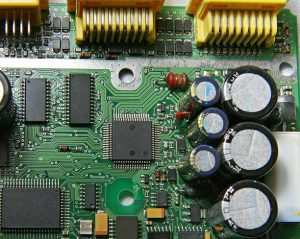
Automotive electronics operate in environments that are significantly more demanding than typical office or consumer electronics.
A domain controller PCB may experience:
- Wide temperature variations
- Continuous vibration
- Mechanical shock
- Humidity
- Dust and contamination
- Electromagnetic interference
- Electrical transients
- Long operating cycles
The PCB must maintain stable electrical connections and predictable performance throughout the intended operating environment.
For engineering teams developing automotive electronics, professional PCB Design and Layout can help address stackup planning, high-speed routing, component placement, thermal considerations, and manufacturability before fabrication begins.
Environmental Reliability of Automotive PCBs
Environmental reliability is one of the most important characteristics of an Automotive PCB.
Temperature Resistance
Automotive electronics may be installed in locations exposed to substantial temperature changes. Depending on the vehicle and installation position, electronic assemblies can encounter elevated temperatures as well as cold-start conditions.
The PCB laminate and components should therefore be selected according to the actual operating and storage temperature requirements.
Important material considerations can include:
- Glass transition temperature
- Coefficient of thermal expansion
- Thermal stability
- Moisture absorption
- Dimensional stability
- Thermal cycling performance
The PCB design should also account for differences in thermal expansion between the board, components, solder joints, connectors, and mechanical structure.
Vibration and Mechanical Shock
Vehicles continuously generate vibration and mechanical loads during operation.
These stresses can affect:
- Solder joints
- Component connections
- Vias
- Connectors
- PCB mounting points
- Large or heavy components
A reliable PCB design should therefore consider mechanical support and component placement in addition to electrical performance.
Heavy components should be appropriately positioned and supported, while mounting holes and board edges should be designed to minimize mechanical stress concentrations.
Moisture and Contamination
Automotive electronic assemblies may be exposed to humidity, condensation, dust, oils, cleaning chemicals, or other contaminants depending on their installation environment.
Potential PCB protection methods include:
- Appropriate surface finishes
- Solder-mask coverage
- Conformal coating
- Sealed enclosures
- Protected connectors
- Appropriate creepage and clearance
The appropriate protection strategy depends on the complete electronic assembly rather than the PCB alone.
High-Speed Signal Integrity in Automotive Domain Controllers
Modern domain controllers can process data from multiple high-speed communication interfaces simultaneously.
Examples may include automotive Ethernet, CAN-based networks, high-speed serial interfaces, camera interfaces, memory buses, and processor interconnections.
As data rates increase, signal integrity becomes a major PCB design consideration.
Important factors include:
- Controlled impedance
- Trace geometry
- Differential-pair routing
- Return-current paths
- Via transitions
- Crosstalk
- Signal attenuation
- Connector performance
- Power-supply noise
Controlled Impedance
High-speed transmission lines require predictable impedance throughout the signal path.
The actual impedance depends on factors such as:
- Trace width
- Copper thickness
- Dielectric thickness
- PCB material
- Reference-plane distance
- Layer structure
Changes in these parameters can affect signal reflections and transmission quality.
Therefore, stackup development should be completed before high-speed routing, with the PCB manufacturer involved where necessary to ensure the intended impedance can be consistently manufactured.
Differential-Pair Routing
Many automotive communication interfaces use differential signaling.
Differential pairs should be routed with appropriate attention to:
- Pair spacing
- Trace-length matching
- Reference planes
- Via transitions
- Impedance
- Return paths
Unnecessary discontinuities should be minimized, particularly around connectors and layer transitions.
Thermal Management for Automotive Domain Controller PCBs
Domain controllers can contain high-performance processors, communication devices, memory, power-management ICs, and other components that generate significant heat.
If heat is not effectively removed, component temperature can increase and potentially affect reliability and electrical performance.
A thermal design may incorporate:
- Large copper areas
- Thermal vias
- Copper planes
- Heat-spreading structures
- Thermal interface materials
- Heatsinks
- Optimized component placement
- Mechanical cooling structures
Thermal Via Design
Thermal vias can provide a low-resistance thermal path between a component pad and an internal or opposite-side copper structure.
They are particularly useful for power components and devices with exposed thermal pads.
The number, diameter, spacing, and arrangement of thermal vias should be determined according to the component package, PCB construction, thermal requirements, and manufacturing capabilities.
Component Placement for Thermal Management
High-power components should be positioned so that their heat can be efficiently transferred toward the available thermal path.
Thermal sources should also be separated from temperature-sensitive components where practical.
This makes component placement an important part of both electrical and thermal design.
High-Density PCB Technology for Automotive Electronics
As vehicle electronics become more integrated, the available installation space becomes increasingly valuable.
Domain controllers may need to integrate processors, memory, communication circuits, power-management devices, and multiple connectors within a relatively compact assembly.
High-density PCB technologies can help engineers achieve this integration.
Potential technologies include:
- Fine-line routing
- Microvias
- Blind vias
- Buried vias
- HDI structures
- Sequential lamination
- High-layer-count multilayer construction
These technologies can increase routing density while reducing board size.
However, higher-density construction also creates greater manufacturing complexity. PCB fabrication must maintain appropriate control over imaging, drilling, plating, lamination, and layer registration.
PCB Materials for Automotive Domain Controllers
Material selection has a direct influence on PCB reliability.
FR-4 remains widely used for many automotive electronics, but the specific laminate should be selected according to the actual electrical, thermal, mechanical, and environmental requirements.
For demanding applications, engineers may evaluate:
- High-Tg materials
- Low-loss materials
- Low-CTE materials
- Halogen-free materials
- High-temperature laminates
- Materials with controlled dielectric properties
High-Tg Materials
High-Tg laminates can provide improved thermal stability compared with standard materials.
They may be considered for applications involving elevated operating temperatures or demanding thermal cycling conditions.
Low-Loss Materials
As automotive communication systems move toward higher data rates and frequencies, dielectric loss and signal attenuation become increasingly relevant.
Low-loss materials may be considered for high-speed interfaces where signal integrity requirements justify their use.
The material selection should balance electrical performance, reliability, manufacturability, and cost.
Power Integrity and Power Distribution
A domain controller may contain multiple voltage domains supporting processors, memory, communication devices, sensors, and other circuits.
Stable power delivery is therefore essential.
PCB power-distribution design should consider:
- Power-plane structure
- Copper thickness
- Current capacity
- Voltage-drop control
- Decoupling capacitors
- Ground-plane design
- Power-return paths
- Transient response
Decoupling capacitors should be placed appropriately relative to the power pins of critical ICs to reduce high-frequency supply noise.
For complex automotive designs, power integrity should be evaluated together with signal integrity because power and signal networks can interact.
EMI and EMC Considerations
Automotive electronic systems operate in an environment containing numerous electrical and electromagnetic noise sources.
Potential sources include:
- Electric motors
- DC/DC converters
- Inverters
- Ignition systems
- High-current wiring
- Communication modules
- Other electronic control units
A reliable Automotive PCB should therefore incorporate electromagnetic compatibility considerations from the beginning of the design process.
Possible design techniques include:
- Continuous ground planes
- Short return-current paths
- Appropriate filtering
- Functional circuit separation
- Shielding
- Optimized connector placement
- Differential signaling
- Controlled high-speed routing
The PCB should also be evaluated together with its enclosure, cables, connectors, and mechanical structure because EMC performance is ultimately a system-level characteristic.
Precision PCB Manufacturing for Automotive Electronics
A well-designed PCB can still experience reliability problems if the manufacturing process cannot consistently reproduce the required dimensions and material structure.
For automotive domain controllers, manufacturing control may include:
- Material preparation
- Inner-layer imaging
- Etching
- Lamination
- Precision drilling
- Copper plating
- Outer-layer imaging
- Solder-mask application
- Surface finishing
- Electrical testing
- Dimensional inspection
- Final quality inspection
A controlled PCB Manufacturing process helps ensure that the fabricated board remains consistent with the engineering requirements.
Layer Registration
High-density multilayer boards require accurate alignment between layers.
Poor registration can affect:
- Via-to-pad alignment
- Controlled impedance
- Signal routing
- Annular rings
- Fine-pitch structures
This becomes particularly important when the board uses microvias, blind vias, or other high-density interconnection structures.
Copper Plating and Via Reliability
Plated through-holes and vias provide electrical connections between PCB layers.
The plating process should provide reliable hole-wall construction and consistent electrical connectivity.
For automotive applications, via reliability is especially important because thermal cycling and mechanical vibration can place additional stress on PCB interconnections.
Surface Finish Selection
Surface finish affects solderability, pad quality, oxidation resistance, and assembly performance.
Common PCB surface finishes include:
- ENIG
- ENEPIG
- OSP
- Immersion tin
- HASL
The appropriate finish depends on:
- Component package
- Assembly process
- Storage conditions
- Environmental requirements
- Reliability targets
- Cost considerations
For fine-pitch components used in domain controllers, a suitable surface finish can help support consistent soldering performance.
PCB Assembly for Automotive Domain Controllers
Bare PCB fabrication is only one part of the manufacturing process. Component assembly is equally important for the reliability of the finished electronic system.
A typical PCB Assembly process may include:
- Solder-paste printing
- Solder-paste inspection
- SMT component placement
- Reflow soldering
- AOI inspection
- X-ray inspection where appropriate
- Through-hole assembly
- Electrical testing
- Functional testing
Automotive domain controllers may contain fine-pitch processors, memory devices, power components, connectors, and high-speed communication components.
Placement accuracy and solder-joint quality are therefore critical.
The reflow profile should be optimized according to the PCB material, component requirements, solder-paste characteristics, and assembly process.
Quality Control and Reliability Testing
Automotive electronics require systematic quality control because failures can affect vehicle functionality and, depending on the application, safety-related systems.
Quality management should cover the entire manufacturing process.
Incoming Material Inspection
PCB laminates, copper foil, solder materials, components, and other production materials should be verified according to project requirements.
Material traceability can also help identify the source of potential quality problems.
In-Process Inspection
During PCB production and assembly, inspection can evaluate:
- Layer registration
- Copper patterns
- Plating quality
- Solder-mask coverage
- Component placement
- Solder joints
- Surface finish
- Electrical connections
Electrical Testing
Electrical testing can verify:
- Continuity
- Isolation
- Short circuits
- Net connectivity
- Power rails
- Selected functional interfaces
Additional testing may be required depending on the application and customer specifications.
Reliability Testing for Automotive Domain Controller PCBs
Testing should reflect the expected operating conditions of the finished product.
Depending on the application, testing may include:
Thermal Cycling
Thermal cycling evaluates how repeated temperature changes affect PCB materials, solder joints, vias, components, and mechanical connections.
High-Temperature Exposure
High-temperature testing can help evaluate the stability of materials and components under elevated thermal conditions.
Humidity Testing
Humidity testing can identify potential problems related to insulation resistance, corrosion, leakage currents, and material degradation.
Vibration and Mechanical Testing
Mechanical testing can help evaluate the durability of solder joints, components, connectors, and PCB mounting structures under vibration and shock.
The exact test conditions should be determined according to the vehicle platform, installation environment, applicable standards, and customer requirements.
Automotive PCB Design for Different Domain Applications
The PCB requirements can vary considerably depending on the domain controller’s function.
Powertrain and Chassis Control
Powertrain and chassis electronics may prioritize:
- Thermal stability
- Electrical robustness
- High-current capability
- Vibration resistance
- Reliable communication
Advanced Driver Assistance Systems
ADAS domain controllers can process large amounts of data from cameras, radar, LiDAR, and other sensors.
These applications can require:
- High-speed interfaces
- Controlled impedance
- High-density routing
- Low-noise power delivery
- Strong signal integrity
- Thermal management
Digital Cockpit and Infotainment
Digital cockpit systems may combine displays, processors, wireless communication, audio, networking, and user interfaces.
PCB design may therefore emphasize:
- High-speed data transmission
- RF performance
- EMI control
- Compact integration
- Thermal management
Prototype Development and Design Validation
Automotive electronics often require multiple design iterations before the final production release.
A typical development process may include:
- Define system requirements
- Select components and materials
- Develop the schematic
- Define the PCB stackup
- Complete PCB layout
- Perform signal and power integrity analysis
- Conduct DFM review
- Manufacture prototype PCBs
- Assemble components
- Conduct electrical testing
- Validate thermal performance
- Perform environmental testing
- Optimize the design
- Release the production version
For early-stage development, Prototype PCB Assembly can help engineering teams validate component placement, soldering quality, electrical functionality, and mechanical compatibility before production quantities increase.
Component Selection and Supply Chain Planning
Domain controllers can contain processors, memory devices, communication transceivers, power-management ICs, connectors, sensors, and other specialized components.
Component availability can therefore have a significant influence on development and production planning.
Engineers should evaluate:
- Component lifecycle
- Availability
- Operating temperature
- Package compatibility
- Electrical specifications
- Approved alternatives
- Lead time
- Long-term supply stability
Early supply-chain planning can reduce the risk of redesign caused by component shortages or obsolescence.
Designing Automotive Domain Controller PCBs for Manufacturability
Design-for-manufacturing should be incorporated before prototype fabrication rather than after manufacturing problems occur.
Important DFM considerations include:
- Minimum trace width and spacing
- Pad dimensions
- Via structures
- Component spacing
- Solder-mask clearance
- Panelization
- Fiducial placement
- Test-point accessibility
- Assembly orientation
- Thermal structures
A PCB layout optimized for both electrical performance and manufacturing capability can improve production consistency and reduce unnecessary manufacturing costs.
Future Development of Automotive Domain Controller PCBs
Automotive electronic architectures are continuing to evolve toward greater centralization and higher levels of integration.
Future domain controller PCBs may require:
- Higher processing density
- Faster data interfaces
- Higher layer counts
- More advanced HDI structures
- Smaller component packages
- Improved thermal management
- Lower signal loss
- More sophisticated power distribution
- Greater functional integration
The increasing use of cameras, radar, LiDAR, artificial intelligence, vehicle networking, and electrified power systems will continue to increase PCB performance requirements.
At the same time, PCB designers will need to balance electrical performance with thermal, mechanical, manufacturing, and cost considerations.
Why Automotive Domain Controller PCB Quality Matters
The PCB is a fundamental hardware platform for the vehicle’s electronic architecture.
A manufacturing defect, unreliable solder connection, impedance deviation, thermal problem, or environmental failure can affect the performance of the entire domain controller.
A high-quality Automotive Domain Controller PCB should therefore combine:
- Appropriate materials
- High-speed signal integrity
- Controlled impedance
- Stable power distribution
- Effective thermal management
- EMI and EMC control
- Reliable multilayer construction
- High-density interconnection
- Consistent PCB Manufacturing
- Reliable PCB Assembly
- Comprehensive inspection and testing
The objective is not simply to manufacture a functional circuit board, but to create a PCB that can provide predictable performance throughout the intended automotive operating environment.
Conclusion
The Automotive Domain Controller PCB is becoming increasingly important as vehicles move toward intelligent, connected, and software-defined architectures.
Compared with conventional electronics, automotive domain controller boards must address a broader combination of environmental, electrical, thermal, mechanical, and manufacturing requirements.
High-speed communication, controlled impedance, thermal management, EMI control, high-density integration, material selection, and manufacturing consistency all contribute to overall PCB reliability.
By combining application-specific PCB Design and Layout, controlled PCB Manufacturing, reliable PCB Assembly, prototype validation, and comprehensive reliability testing, engineering teams can develop circuit boards capable of supporting demanding automotive electronic systems.
As automotive architectures continue to evolve toward centralized computing, advanced driver assistance, electrification, and intelligent vehicle control, demand for high-performance and High-Reliability PCB solutions will continue to grow. Careful PCB engineering and manufacturing will remain essential to building stable and scalable automotive electronics.