Industrial Robot Control Board PCB: Design and Manufacturing Requirements
Industrial robots are a critical part of modern smart manufacturing. Their ability to perform precise movements, maintain stable operation, and respond quickly to sensor feedback depends heavily on the performance of the electronic control system. At the center of this system is the Industrial Robot Control Board PCB, which connects sensors, actuators, processors, communication interfaces, and other electronic components.
A well-designed Robot Control PCB functions as the electronic nervous system of an industrial robot. It enables fast signal transmission, accurate command execution, and reliable communication between different control modules. PCB performance can directly influence robot positioning accuracy, response time, operational stability, and service life.
For robot manufacturers and automation system developers, PCB design and manufacturing must therefore address electromagnetic interference, environmental reliability, component density, thermal management, and real-time signal transmission.
Key Requirements for Industrial Robot Control Board PCB
Industrial robot control boards operate in environments that are considerably more demanding than many conventional electronic products. Motors, drives, switching power supplies, sensors, and other industrial equipment can generate electrical noise and electromagnetic interference.
At the same time, robots may operate continuously for long periods under conditions involving vibration, heat, humidity, dust, and other environmental stresses. These factors make PCB design and manufacturing quality particularly important.
1. Strong Electromagnetic Interference Resistance
Electromagnetic interference is one of the most important challenges for an industrial robot control board.
Industrial facilities often contain servo motors, variable-frequency drives, switching power supplies, relays, and other equipment that can generate electromagnetic noise. If the PCB layout does not properly control these interference sources, sensitive signals may become distorted or unstable.
An effective control PCB design should consider:
- Proper grounding architecture
- Power and signal ground management
- Controlled signal routing
- Noise-sensitive circuit isolation
- Filtering components
- Shielding where necessary
- Appropriate component placement
- Separation of high-current and low-level signal paths
Good PCB layout practices help minimize unwanted coupling between circuits and improve signal integrity. This is particularly important for sensor signals, communication interfaces, feedback circuits, and high-speed control signals.
2. High Reliability for Continuous Industrial Operation
Reliability is another fundamental requirement for industrial robot PCBs.
Industrial robots are often designed for continuous operation and may perform repetitive movements thousands or millions of times during their service life. A failure in the control PCB can interrupt production and potentially affect the entire automated manufacturing process.
For this reason, High-Reliability PCB manufacturing should consider both material selection and manufacturing quality.
Important factors include:
- Appropriate PCB substrate selection
- Suitable temperature resistance
- Resistance to humidity and contamination
- Stable electrical connections
- Reliable solder joints
- Consistent copper structures
- Proper thermal management
- Strict manufacturing process control
The PCB and its components should be selected according to the robot’s operating environment and electrical requirements. Manufacturing processes must also provide stable connections that can withstand long-term operating conditions.
3. High-Density PCB Integration
As industrial robots become more intelligent, their control systems are required to process more information and support more functions.
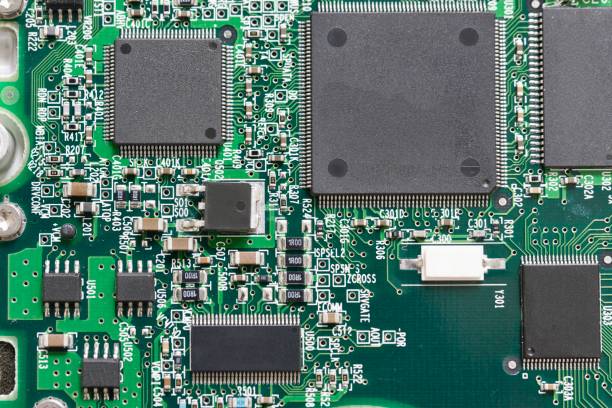
Modern robot control boards may need to accommodate microprocessors, memory devices, sensors, communication interfaces, motor-control circuits, power-management components, and other electronic devices within a limited board area.
This creates a growing demand for High-Density PCB solutions.
Multilayer PCB technology can provide additional routing space without continuously increasing the physical size of the board. Advanced structures such as blind vias and buried vias can also help engineers optimize interconnections and component placement.
A high-density PCB design can provide several benefits:
- More efficient use of board space
- Shorter signal paths
- Greater component integration
- Improved routing flexibility
- Reduced overall system size
- Better support for compact robot controllers
For complex industrial robot applications, multilayer PCB construction can be particularly useful when the design requires multiple power domains, high-speed interfaces, control signals, and sensitive analog circuits.
4. Fast Signal Processing and Real-Time Response
Industrial robots frequently depend on real-time feedback from sensors and control devices.
Applications such as precision assembly, welding, material handling, and automated inspection may require the robot to continuously receive sensor information and adjust its movements accordingly.
The control PCB therefore needs to support fast and stable signal transmission.
PCB design considerations may include:
- Optimized signal routing
- Short and controlled signal paths
- Appropriate impedance control
- Effective power distribution
- Low-noise circuit layout
- High-performance processors
- Reliable communication interfaces
A carefully planned PCB layout can reduce unnecessary signal delays and improve communication between processors, sensors, motor controllers, and other system components.
PCB Design Considerations for Industrial Robot Controllers
The PCB design stage has a major influence on the final performance and manufacturability of a robot control board.
Before production, engineers should evaluate the schematic, component packages, PCB stackup, routing strategy, mechanical constraints, power distribution, and manufacturing requirements.
A professional PCB Design & Layout process can also help identify potential design and manufacturing issues before fabrication.
Component Placement
Component placement should be planned according to circuit functionality and signal characteristics.
High-speed components, power components, sensitive analog circuits, communication interfaces, and motor-control circuits should be arranged carefully to reduce unwanted interference.
Thermal considerations should also be included during placement, especially for power devices and components that generate significant heat.
PCB Stackup Design
A suitable multilayer stackup can improve power integrity, signal integrity, and routing efficiency.
For complex robot control boards, the stackup should be evaluated according to:
- Number of signal layers
- Ground-plane configuration
- Power-plane distribution
- Dielectric thickness
- Copper thickness
- Impedance requirements
- High-speed signal requirements
Design for Manufacturing
A PCB design should not only meet electrical requirements but also be suitable for stable manufacturing.
DFM considerations can include:
- Minimum trace width and spacing
- Via structures
- Component clearances
- Solder-mask requirements
- PCB thickness
- Surface finish
- Panelization
- Assembly requirements
Early manufacturing review can help reduce production risks and unnecessary redesigns.
Industrial Robot PCB Manufacturing Process
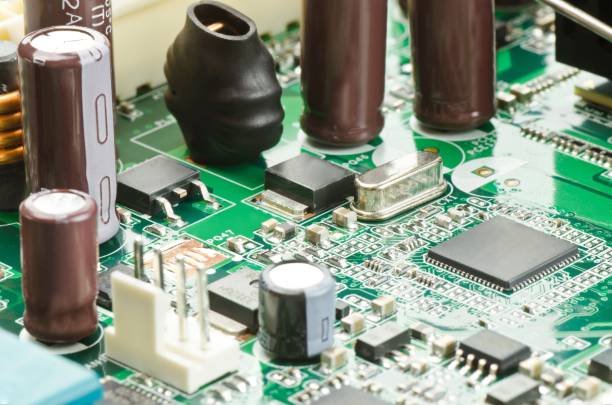
The manufacturing process of an industrial robot control board involves multiple stages, from PCB fabrication to assembly and inspection.
A professional Industrial PCB Manufacturing process generally includes:
PCB Fabrication
The bare PCB is manufactured according to the approved design files and technical specifications.
Depending on the application, the board may require multilayer construction, high-density routing, controlled impedance, special materials, or other advanced PCB technologies.
Component Procurement
Reliable component availability is important for industrial control board production.
Components should be sourced according to the approved BOM and manufacturer part numbers. Proper component management helps reduce the risks associated with counterfeit, obsolete, or unsuitable components.
PCB Assembly
Components are mounted onto the fabricated PCB using SMT, through-hole, or mixed-technology assembly processes according to the design requirements.
For complex robot controllers, accurate component placement and soldering quality are essential to long-term reliability.
Inspection and Testing
Inspection and testing help identify manufacturing defects before the assembled PCB enters the robot control system.
Depending on project requirements, inspection may include:
- Visual inspection
- Automated Optical Inspection (AOI)
- X-ray inspection
- Electrical testing
- Functional testing
Testing requirements should ideally be defined before production so that appropriate procedures and fixtures can be prepared.
Why Choose a Professional PCB Manufacturing Partner?
Industrial robot control boards combine complex electronic functions with demanding reliability requirements. Selecting an experienced manufacturing partner can help engineering teams manage PCB fabrication, component sourcing, assembly, inspection, and production more efficiently.
GOPCBA provides integrated PCB manufacturing and PCBA solutions covering PCB design, fabrication, component procurement, SMT assembly, through-hole assembly, testing, and related manufacturing services.
For customers developing industrial automation products, integrating PCB fabrication and assembly can reduce communication between multiple suppliers and simplify engineering change management.
Industrial Robot Control Board PCB Applications
Industrial robot control PCBs can be used in a wide range of automation systems, including:
- Robotic arms
- Automated assembly equipment
- Welding robots
- Material-handling robots
- Machine-vision systems
- Industrial motion-control systems
- Automated inspection equipment
- Smart manufacturing equipment
- Factory automation systems
Different applications may require different combinations of processing performance, communication interfaces, power handling, signal integrity, and environmental reliability.
How to Improve Industrial Robot PCB Reliability
Improving PCB reliability requires attention throughout the entire product development and manufacturing process.
Optimize the PCB Layout
Separate noisy circuits from sensitive circuits and optimize grounding, power distribution, and signal routing.
Select Appropriate Materials
PCB materials and electronic components should be selected according to operating temperature, electrical requirements, mechanical conditions, and expected service life.
Control Manufacturing Quality
Consistent fabrication and assembly processes are essential for reliable industrial control boards.
Define Testing Requirements Early
Testing should be considered during the design stage rather than added after manufacturing. Clearly defined acceptance criteria can make production validation more efficient.
Work With an Integrated Manufacturing Partner
Using a supplier capable of handling PCB design, PCB fabrication, component sourcing, assembly, and testing can simplify project management and improve communication between engineering and manufacturing teams.
Conclusion
The Industrial Robot Control Board PCB is a critical component in modern industrial automation systems. It must provide stable signal transmission, reliable operation, efficient integration, and fast response under demanding working conditions.
The most important design and manufacturing considerations include electromagnetic interference resistance, high reliability, high-density integration, thermal management, signal integrity, and real-time data processing.
For complex robot control applications, multilayer PCB technology, optimized layout, appropriate materials, reliable component sourcing, and strict manufacturing control can help create more stable and efficient electronic control systems.
GOPCBA provides integrated PCB design, PCB manufacturing, component procurement, PCB assembly, and testing services to support electronic product development from engineering prototypes through production.
For industrial automation companies developing next-generation robot controllers, selecting the right PCB manufacturing and assembly partner can help reduce manufacturing risks while improving product reliability, scalability, and time to market.