Power PCB Cost Analysis: A Complete Guide from Design to Mass Production
Power PCBs are at the heart of all kinds of electronic devices—whether consumer electronics, industrial equipment, or automotive electronic systems—all rely on high-reliability power boards. For engineers, procurement teams, and product managers, a deep understanding of power PCB cost structure helps strike the best balance between performance, reliability, and budget. This article provides a comprehensive breakdown of power PCB cost factors from design, materials, manufacturing, to assembly, and introduces how gopcb delivers cost-effective solutions.
1. Factors Affecting Power PCB Cost
The final price of a power PCB is mainly influenced by:
- Design complexity: Multi-layer boards or complex routing increase material consumption and production hours.
- Current carrying requirements: High-current designs require thick copper, large trace widths, and high-performance components.
- Industry standards: Automotive, medical, or aerospace-grade PCBs must meet stringent safety and testing standards, driving costs higher.
- Market factors: Global copper price fluctuations, labor costs, and logistics expenses all impact PCB pricing.
Compared to standard PCBs, power PCBs generally incur higher material and assembly costs due to their electrical and thermal management requirements.
2. Design-Related Cost Factors
Decisions made during the design phase directly affect production and assembly costs:

- Board size, thickness, and layer count: Larger boards and more layers increase cost. Typical 4-layer medium-power PCB prototypes range from $30–80/piece.
- Copper thickness: High-current traces require 2–4 oz thick copper, which raises material costs.
- Component selection: Power devices such as MOSFETs, rectifier diodes, and power regulation ICs are more expensive than standard chips.
- Thermal management design: Thermal vias, heat-spreading copper foils, and metal-core substrates add cost but are critical for reliability.
- EMI/EMC design: Additional shielding and layout optimization increase design and production complexity.
To optimize your design and reduce costs, explore our PCB design and layout services.
3. Power PCB Material Costs
Material selection significantly impacts PCB pricing:
- FR4 vs. high-Tg materials: Standard FR4 costs about $0.5–2/cm², while high-temperature FR4 or metal-core boards are more expensive.
- Aluminum-core or ceramic MCPCB: Ideal for high-power designs, small-batch pricing ranges from $15–50/piece.
- Copper thickness: Thicker copper substantially increases material costs.
- Dielectric performance: High-voltage PCBs require premium insulating materials, adding to cost.
4. Manufacturing and Process Costs
PCB fabrication processes also significantly influence pricing:
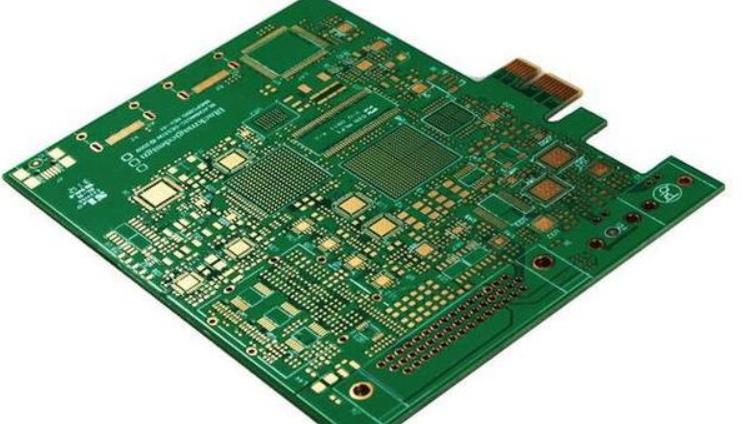
- Drilling and via technology: Micro-vias and multi-step copper plating increase production time and cost.
- Surface finishes: ENIG, HASL, and OSP have different price points.
- High-power soldering: Large thermal-mass components require multi-stage reflow processes.
- Testing and inspection: ICT, functional testing, and burn-in testing can add $5–20/piece.
- Lead time: Expedited production can double the cost.
Learn more about our advanced PCB manufacturing capabilities to ensure quality and efficiency.
5. Power PCB Assembly Costs (PCBA)
Assembly costs depend on component types and complexity:
- SMT + through-hole hybrid: Mixed processes increase labor and assembly time.
- Power components: MOSFETs, transformers, inductors, and large capacitors require precise soldering.
- Thermally sensitive components: Multi-stage reflow or thermal control processes add cost.
- Automated vs. manual soldering: High-volume production with automation reduces per-unit cost.
- Packaging and logistics: High-power PCBs require protective packaging, adding a small cost.
At gopcb, typical small-batch power PCB assembly costs around $45–70/piece, while mass-production unit prices can drop to $12–25/piece, depending on design complexity.
Explore our professional SMT PCB assembly services for high-quality results.
6. Cost Optimization Strategies
Engineers can control costs through the following approaches:
- Optimize layout: Reduce copper usage and unnecessary layers.
- Standardize components: Use common power ICs and discrete devices.
- Substrate selection: Balance performance and cost.
- DFM (Design for Manufacturability): Simplify hole sizes, thermal paths, and trace routing to reduce production difficulty.
- Choose the right supplier: Experienced manufacturers like gopcb offer cost-optimization advice while maintaining quality.
7. Global Power PCB Price Comparison
| Region | Prototype Price (USD/piece) | Small-Batch Price (USD/piece) | Remarks |
|---|---|---|---|
| China | 20–50 | 10–20 | Significant cost advantage, reliable quality, fast turnaround |
| USA | 50–120 | 25–60 | High labor costs, advanced standards |
| Europe | 60–130 | 30–70 | Strict compliance, high testing quality |
| Southeast Asia | 25–55 | 12–25 | Competitive pricing, variable lead times |
China stands out for its balance of cost-effectiveness and quality, which is why many international clients choose gopcb for volume production.
8. Price Differences Across Application Scenarios
- Consumer electronics: Lower power, price around $12–30/piece.
- Industrial equipment: Medium-to-high power, thick copper boards, price $35–80/piece.
- Automotive electronics: Must comply with ISO 26262, price $50–120/piece.
- Medical and aerospace: High-reliability requirements, price $100–250/piece.
The application scenario determines material selection, testing, and assembly processes, thereby influencing the final price.
9. Price Tiers by Volume
- Prototype / single unit: High due to tooling and debugging, about $25–70/piece.
- Small batch (10–100 pieces): Around $15–45/piece.
- Medium batch (100–1,000 pieces): Volume effects reduce cost by 30–50%.
- Large batch (1,000+ pieces): Through automated assembly and bulk procurement, price can drop to $10–25/piece.
Batch size is a key lever for controlling power PCB costs. For small-batch needs, check our low-volume PCB assembly services.
10. Typical Power PCB Price Ranges
| PCB Type | Prototype Price | Small-Batch Price | Mass-Production Price |
|---|---|---|---|
| Simple FR4 low power | $12–30 | $8–15 | $8–15 |
| 4-layer medium power | $30–70 | $20–35 | $12–20 |
| High-power MCPCB | $50–120 | $35–70 | $20–40 |
| Automotive / medical grade | $80–250 | $60–150 | $50–120 |
Prices include material, assembly, and testing costs.
11. gopcb: Power PCB Manufacturing and Pricing
gopcb offers comprehensive power PCB solutions:
- Manufacturing capabilities: Single-layer to 12+ layers, high-power MCPCB.
- Price reference: Prototype boards $25–45/piece, mass-production boards as low as $12/piece (depending on design complexity).
- Engineering support: Assistance with layout optimization, material selection, and DFM to reduce costs.
- Quality assurance: ISO9001 certified, full testing (ICT, functional, thermal aging) ensuring reliability.
Choose gopcb to achieve the best balance between cost, quality, and delivery. Explore our turnkey PCB assembly services for a seamless experience.
12. Frequently Asked Questions (FAQ)
Q1: What is the average cost of a power PCB?
Low-power, low-complexity PCBs: $12–30/piece; high-power or specialty boards: $50–250/piece.
Q2: Does copper thickness significantly affect price?
Yes, high-current thick copper increases material and production difficulty.
Q3: How can I reduce assembly costs?
Optimize layout, standardize components, and use automation for volume production.
Q4: Is aluminum-core PCB cheaper than FR4?
For high-power designs, MCPCB has higher upfront cost but lower thermal management costs.
Q5: Does the application scenario have a big impact on cost?
Yes, automotive, medical, and aerospace boards require rigorous testing and premium materials, making them more expensive.
13. Conclusion
Power PCB costs are influenced by design complexity, material selection, manufacturing processes, assembly requirements, application scenarios, and batch size. By thoroughly analyzing these factors, engineers and procurement teams can plan budgets effectively, optimize designs, control costs, and ensure performance and reliability.
gopcb provides one-stop power PCB services from prototype to mass production, with transparent pricing and comprehensive technical support. We are a trusted partner for high-power PCB projects.
For more information on our full range of services, visit our homepage or explore our PCB manufacturing and assembly solutions.