How to Reduce Impedance PCB Manufacturing Costs: Practical Cost-Saving Strategies
In the competitive electronics manufacturing industry, controlling production costs while maintaining reliable performance has become a key challenge for many companies. For high-speed electronic products, Impedance PCB Manufacturing requires strict control of materials, layer structures, trace width, dielectric thickness, and manufacturing processes.
Although impedance-controlled circuit boards usually involve more advanced manufacturing requirements, companies can significantly reduce overall costs through proper planning and optimized production strategies. By improving material purchasing, increasing production efficiency, reducing waste, and optimizing manufacturing processes, manufacturers can achieve better cost efficiency without compromising PCB quality and electrical performance.
This article introduces several practical methods to help businesses reduce impedance PCB production costs while ensuring stable quality and reliability.
Materials represent one of the largest cost components in PCB Manufacturing. For impedance-controlled boards, selecting suitable laminate materials, copper thickness, and dielectric materials directly affects both product performance and production expenses.
Establishing long-term partnerships with reliable material suppliers can help manufacturers obtain more competitive pricing and stable supply channels. Bulk purchasing is another effective approach because larger orders often allow companies to receive better supplier discounts.
At the same time, manufacturers should evaluate multiple suppliers and compare material quality, delivery time, and pricing. Avoiding dependence on a single supplier can reduce purchasing risks and prevent unnecessary cost increases.
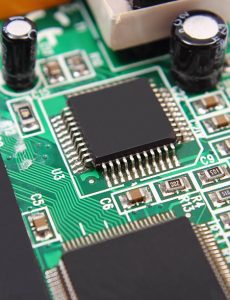
Choosing cost-effective materials that meet electrical requirements is also important. For example, not every impedance-controlled PCB requires premium high-frequency materials. Selecting the right substrate according to application requirements can significantly reduce material expenses.
For companies requiring complete solutions from prototype development to production, professional PCB Prototype Assembly services can help optimize material selection and reduce unnecessary engineering costs during early development stages.
Production efficiency has a direct impact on PCB manufacturing costs. Improving equipment utilization, optimizing production scheduling, and reducing unnecessary waiting time can effectively lower the cost per PCB unit.
A detailed production plan should be created according to order quantity, delivery requirements, and manufacturing complexity. Proper scheduling ensures that processes such as drilling, imaging, lamination, surface finishing, and testing can operate smoothly without delays.
Regular maintenance of production equipment is also essential. Preventive maintenance reduces unexpected machine downtime and improves manufacturing stability.
Advanced manufacturing management systems can further improve production efficiency by monitoring production progress, identifying bottlenecks, and optimizing workflow.
For customers with different production requirements, selecting the right manufacturing model is also important. For example, Low Volume PCB Assembly is suitable for product testing, engineering verification, and small-batch production, helping companies control inventory costs and reduce financial risks.
Reducing waste is another effective way to control Impedance PCB Manufacturing costs. During PCB production, unnecessary material consumption can increase manufacturing expenses and reduce overall profitability.
Manufacturers can improve material utilization by optimizing panel layout and cutting designs. Proper PCB nesting allows more boards to be produced from each production panel, reducing raw material waste.
In addition, production engineers should continuously analyze manufacturing processes to identify unnecessary consumption. For example, improving drilling accuracy, optimizing solder mask processes, and reducing defective products can help minimize material losses.
Recycling and reusing suitable production leftovers can also improve resource efficiency. Proper waste management not only reduces costs but also supports environmentally responsible manufacturing practices.
Labor efficiency is an important factor affecting PCB manufacturing costs. Skilled employees can improve production speed, reduce operational errors, and minimize rework caused by incorrect processing.
Regular technical training helps operators better understand impedance control requirements, equipment operation procedures, and quality inspection standards.
A reasonable performance management system can also encourage employees to participate in cost-control activities. When production teams focus on efficiency, quality, and waste reduction, companies can achieve continuous improvement.
Professional PCB suppliers with experienced engineering teams can provide additional technical support, helping customers optimize designs before production and avoid expensive manufacturing issues.
Optimizing manufacturing processes is one of the most effective long-term strategies for reducing costs.
Manufacturers should regularly review existing workflows and eliminate unnecessary production steps. Combining similar processes, improving automation levels, and introducing advanced manufacturing technologies can shorten production cycles and reduce labor requirements.
For impedance-controlled boards, early engineering optimization is especially important. Proper PCB design, stack-up planning, and signal integrity analysis can prevent redesign costs and production delays.
Professional PCB Assembly Services providers can support customers with integrated solutions including PCB fabrication, component sourcing, assembly, testing, and final product delivery.
By combining PCB design optimization with efficient manufacturing processes, companies can achieve better cost control and faster time-to-market.
Working with an experienced manufacturing partner can significantly reduce overall project costs. A reliable supplier can provide comprehensive services from PCB fabrication to assembly, testing, and final integration.
Integrated manufacturing reduces communication costs between multiple suppliers and improves production consistency.
Services such as SMT PCB Assembly, through-hole assembly, component procurement, and quality testing help simplify the entire supply chain and improve production efficiency.
A professional PCB manufacturer should also provide strict quality management systems, advanced inspection equipment, and engineering support to ensure every impedance-controlled PCB meets customer requirements.
Reducing impedance PCB manufacturing costs requires a comprehensive approach rather than focusing on a single factor. Companies can achieve better cost efficiency by optimizing material purchasing, improving production efficiency, reducing manufacturing waste, strengthening employee management, and upgrading production processes.
At the same time, selecting an experienced PCB manufacturing and assembly partner can help companies reduce development risks, improve product reliability, and accelerate market delivery.
Through continuous optimization and advanced manufacturing strategies, businesses can maintain high-quality Impedance PCB Manufacturing while achieving competitive production costs in the global electronics market.