Measuring Equipment PCB Price Guide 2025: Real Cost
Measurement instruments such as digital multimeters, oscilloscopes, pressure sensors, and calibration equipment depend on one hidden hero: the measurement equipment PCB. This board is the electronic core that collects, amplifies, and processes the tiny analog signals a measurement must capture. Its design quality directly decides how accurate the reading is, how stable the instrument runs over years of service, and how quickly the device responds. As demand grows for higher-precision and more compact instruments in 2025, understanding the real cost of a measurement equipment PCB has become critical for engineers and procurement teams. This guide explains the cost factors, realistic price ranges, design trade-offs, and supplier choices that keep both accuracy and budget under control.
What Is a Measurement Equipment PCB?
A measurement equipment PCB is a printed circuit board designed specifically for precision measurement systems. It carries the signal-conditioning front end, analog-to-digital converters, microcontrollers, and output stages that turn physical phenomena into accurate numbers. Whether the instrument measures voltage, current, temperature, pressure, or frequency, the PCB determines how faithfully the signal survives from the probe to the display.
Measurement boards must suppress noise far more aggressively than consumer electronics boards. A tiny ground bounce that a phone board ignores can turn into a serious error in a laboratory multimeter. That is why these designs use dedicated analog and digital sections, careful grounding, shielding, and high-quality materials around sensitive inputs. Understanding the cost of such a board helps companies allocate budget correctly during both the design and procurement phases, balancing precision performance with a competitive product price.
Key Factors That Affect Measurement Equipment PCB Price
Several variables dominate the price of a measurement device circuit board, and knowing them makes quotations much easier to compare.
Board material. Standard FR-4 offers the best value and suits most general-purpose instruments. When the design needs high-frequency stability, low dielectric loss, or tight tolerance control, specialty laminates such as Rogers or low-loss hydrocarbon materials raise material cost by roughly 30 to 50 percent.
Layer count. Simple two-layer boards run about $0.80 to $1.20 per board. Six-layer boards, which provide dedicated power and ground planes plus clean routing for analog and digital domains, cost $2.50 to $5.00 per board. Higher layer counts improve signal integrity but add lamination cycles and testing.
Surface finish. HASL is the economical default, while ENIG immersion gold adds roughly $0.30 to $0.80 per board. ENIG improves flatness and solderability for fine-pitch components and resists oxidation on boards that may sit on a shelf before assembly.
Production volume. Volume is the strongest price lever. Moving from a 50-piece trial run to a 1,000-piece production order typically reduces unit price by 25 to 40 percent as setup and tooling costs spread across more boards.
Testing. Functional testing adds about $0.10 to $0.30 per board, but for measurement instruments this is not optional cost: it is the step that verifies the board actually measures within specification.
2025 Measurement Equipment PCB Price Ranges
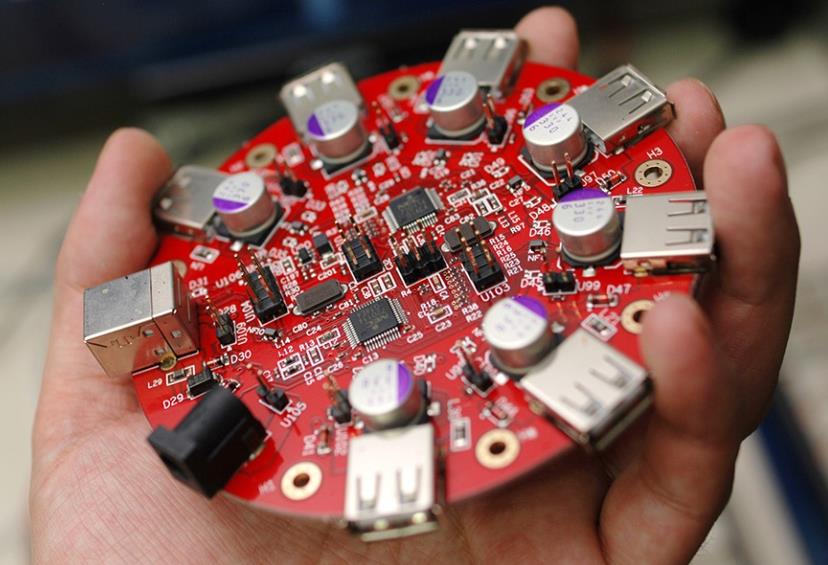
Realistic 2025 pricing depends on board class and quantity. Prototype boards of two to four layers in lots of five to ten pieces typically cost $30 to $100 per batch, which reflects engineering setup plus quick-turn service. Small production runs of 50 to 100 boards in two to six layers run $1.00 to $2.50 per board. High-volume production above 1,000 boards in four to eight layers falls to $0.80 to $1.50 per board. Flexible and hybrid boards for compact handheld instruments start around $2.50 to $5.00 per board at quantities above 50 pieces.
These ranges reflect average Chinese manufacturing data in 2025, combining material quality with efficient production. Instruments built for medical, automotive, or industrial environments may sit at the upper end because of stricter testing and documentation requirements.
Calculating the True Cost of a Measurement PCB
Unit price is only part of the real cost picture. A complete project budget must include the following items. Tooling and process setup fees of $20 to $50 apply during the prototype phase. Electrical and functional testing adds $0.10 to $0.30 per board. International shipping and protective packaging typically add 5 to 10 percent of the total order value. Expedited production with 24 to 48 hour delivery carries an additional fee of roughly $10 to $25 per order.
Adding these items explains why a very cheap per-board quote can still produce an expensive project. Professional buyers calculate total landed cost, including engineering communication time and the risk of rework, rather than comparing only the bare-board number. A supplier that provides itemized quotations makes this calculation straightforward and keeps the budget predictable from the first order to full production.
How PCB Design Affects the Price
Design complexity is one of the largest controllable cost factors. Narrower trace widths and smaller drill holes demand tighter process capability and more expensive tooling. A high number of vias increases drilling time and reduces panel yield. Controlled impedance requirements, common near ADC inputs and digital buses, add testing and material constraints.
Design-for-manufacturability rules can reduce cost by roughly 20 percent. For example, a standard four-layer measurement board with sensible trace spacing, generous annular rings, and panel-friendly dimensions prices near $1.20 per board. The same design with dense routing and tight tolerances can climb to $2.20 per board. Reviewing the layout with the factory before release, rather than after, is the fastest way to capture these savings.
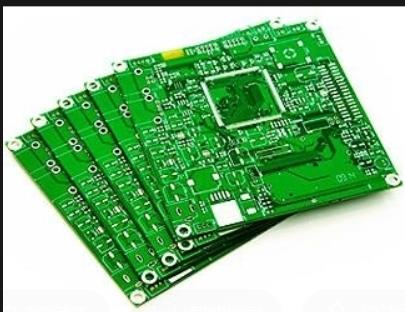
Materials and Surface Finish Choices for Measurement Boards
Material selection deserves its own attention in measurement design because it directly affects both accuracy and price. Standard FR-4 remains the most economical option and is adequate for general-purpose instruments operating at low to moderate frequencies. Its stable, mature supply chain keeps lead times short and cost predictable.
For instruments that measure high-speed signals, oscilloscopes with wide bandwidth inputs, or RF test equipment, designers step up to low-loss laminates. Materials such as Rogers and hydrocarbon ceramic substrates hold their dielectric constant across temperature, which preserves measurement repeatability. The price difference is significant, typically 30 to 50 percent above FR-4, but the performance requirement leaves little alternative.
Surface finish also carries measurable cost and reliability consequences. HASL is inexpensive and works well for through-hole-heavy designs, but its uneven coating can hurt fine-pitch solder joints. ENIG provides a flat, oxidation-resistant surface ideal for fine-pitch ADCs, amplifiers, and repeated rework cycles, which is why precision instruments favor it. Some designs use immersion silver or OSP as middle-ground options. Matching the finish to the assembly process avoids both over-spending and field failures in the delicate analog front end.
China’s Price Advantage for Measurement Equipment PCBs
China remains the most cost-effective PCB manufacturing base because of its mature supply chain, automated production lines, and large engineering talent pool. For a four-layer measurement board, Chinese factories typically quote $1.00 to $1.80 per board with three to five day lead times. US suppliers range from $3.50 to $5.50 per board with seven to ten day schedules. European suppliers run $4.00 to $6.50 per board with seven to fourteen day lead times.
The quality gap has narrowed to the point where precision instrument manufacturers around the world routinely source from Chinese factories with ISO and RoHS certification. High-accuracy manufacturing, 100 percent electrical testing, and fast prototype service make the choice practical for everything from handheld meters to laboratory-grade systems. For brands that also need assembly, combining fabrication with PCB assembly in one workflow removes an entire layer of logistics complexity.
Measurement Equipment PCB Manufacturing Services
A capable measurement PCB supplier should cover one to twenty layers across rigid, flexible, and hybrid constructions. Precision matters most: look for ±0.075 mm tolerance capability, controlled impedance production, and 100 percent electrical testing on every board. Rapid prototype service with 24 to 48 hour turnaround accelerates design iterations, while global delivery and responsive technical support keep production schedules intact.
Typical 2025 reference pricing from an efficient Chinese partner includes ten four-layer prototype boards at about $45 per batch, six-layer small-series production at $1.80 per board for 100 pieces, and eight-layer high-volume production at $0.90 per board for 1,000 pieces. These figures assume standard FR-4, ENIG where required, and complete electrical testing. The engineering team supporting PCB manufacturing at gopcb follows this kind of process, with PCBA testing built into every production flow.
How to Request an Accurate Quotation
A precise quotation starts with complete information. Prepare the Gerber files and design parameters, specify board layers, materials, and quantity, and state the required delivery time and testing standard. With these details, most suppliers reply within 24 hours with an itemized USD quotation.
Reference examples make expectations clear. Ten four-layer FR-4 prototype boards might quote at $45 per batch with 48 hour delivery. One hundred six-layer ENIG boards might land near $1.90 per board with five day delivery. One thousand eight-layer boards could reach $0.95 per board with seven day delivery. Cost optimization tips that work consistently include combining small orders from different projects into one batch, using standard FR-4 where performance allows, and consolidating volume to capture discounts of up to 30 percent.
2025-2026 Measurement PCB Price Trends
Prices for standard four-to-six layer measurement boards are expected to hold in the $0.80 to $2.50 per board band through 2026. Copper and copper-clad laminate prices are rising about 3 to 5 percent, which puts modest upward pressure on material content. At the same time, AI-assisted smart manufacturing is reducing production costs by 10 to 15 percent through better yield and fewer defects. Flexible PCB demand keeps growing for compact instruments, with pricing steady at $3.00 to $5.00 per board.
Overall, Chinese market pricing should remain stable and globally competitive. Buyers who lock in annual agreements and forecast their orders early can avoid spot-market swings and protect their margins as raw material prices drift upward.
How to Choose the Right Measurement PCB Partner
A high-quality measurement equipment PCB averages $0.90 to $2.50 per board in 2025 depending on layer count and volume, so the supplier decision has a large financial impact. Evaluate candidates on transparent USD quotations, fast delivery of two to five days for prototypes, and volume pricing starting around $0.80 per board. Confirm the factory’s documented PCB capabilities and its quality management system before sharing sensitive designs.
Precision instrument projects reward long-term partnerships. A supplier that has produced boards for meters, analyzers, and sensors understands analog layout concerns and can flag issues during the DFM review. With the right partner, you keep high-accuracy performance while reducing the overall project cost, turning PCB procurement into a strategic advantage for your measurement product line.
Frequently Asked Questions
Q1. How much does a four-layer measurement equipment PCB cost? Around $1.00 to $2.00 per board at production volume, depending on material, finish, and testing requirements.
Q2. How long does prototype delivery take? Most qualified suppliers deliver prototypes within 24 to 72 hours with expedited service.
Q3. Are flexible measurement PCBs more expensive? Yes, flex and hybrid boards typically cost 20 to 40 percent more, averaging $3 to $5 per board.
Q4. How do I request a quotation? Send the Gerber files and specification to the supplier; a formal quotation usually arrives within 24 hours.
Conclusion
In 2025 a quality measurement equipment PCB costs about $0.90 to $2.50 per board depending on layers, materials, and quantity. Precision does not have to mean premium pricing. With smart design-for-manufacturability, transparent suppliers, and consolidated volume, instrument makers can achieve laboratory-grade accuracy at a competitive cost, keeping their products reliable, affordable, and ready for the market.