Car Infotainment PCB Price Guide 2025: Everything You Need
By 2025, in-car entertainment has stopped being a luxury option and become standard equipment on most modern vehicles. The center console display, navigation maps, audio system, and connectivity features all depend on one critical component: the car infotainment PCB. This board links the display, processor, audio module, and wireless communication chips into a single reliable platform. Because it operates inside a hot, vibrating vehicle cabin for a decade or more, it must meet far stricter standards than consumer electronics. This guide explains what a car infotainment PCB costs in 2025, which factors move the price, how regional suppliers compare, and how to buy automotive-grade boards without blowing the project budget.
What Is a Car Infotainment PCB?
A car infotainment PCB is the main circuit board behind a vehicle’s multimedia and information systems. It integrates GPS navigation, Bluetooth and Wi-Fi radios, touchscreen display drivers, audio processing, USB connectivity, and increasingly, smart cockpit functions into one electronics platform. In modern electric and connected vehicles, the same board may also interface with cameras, voice assistants, and over-the-air update modules.
Unlike a tablet PCB, an infotainment board is designed for the automotive environment from the start. It must tolerate under-hood-adjacent heat, constant vibration, wide temperature swings from winter cold starts to summer sun exposure, and electrical noise from the vehicle’s power systems. These requirements shape every decision, from base laminate selection to solder joint design, and they are the main reason automotive boards cost more than equivalent consumer designs.
The board also plays a growing role in vehicle safety and user experience. When navigation, backup cameras, or driver assistance displays freeze, the problem is often traceable to the PCB. That is why automotive brands treat infotainment PCB reliability as a non-negotiable quality target rather than an optional extra.
Key Factors That Affect Car Infotainment PCB Price
The 2025 price of a car infotainment PCB depends on several dominant factors, and each one can shift the quotation by tens of dollars.
Material selection. Standard FR-4 boards for simpler audio and display modules run about $15 to $25 each. When the design demands high-frequency materials for 5G, V2X, or high-speed display interfaces, or heat-resistant laminates for severe thermal environments, the material cost climbs to $30 to $60 per board. Thermally improved base materials are common in infotainment because the processor generates significant heat inside a sealed dashboard unit.
Layer count. A four-layer board typically prices at $20 to $35. Six-to-eight-layer designs, which separate high-speed video, audio, and control signals with dedicated planes, run $35 to $80. Complex ten-to-twelve-layer boards for flagship head units with multiple high-resolution displays and advanced driver monitoring reach $90 to $150.
Component density. Every additional feature adds assembly complexity. More memory, extra display outputs, Wi-Fi modules, and amplifier stages increase component count and soldering operations, typically adding $10 to $30 per board compared with a minimal design.
Automotive certification. Boards produced under ISO 9001 or IATF 16949 quality systems carry 5 to 10 percent higher pricing because of documentation, traceability, and stricter process control. That premium is really an investment in avoiding recalls and field failures, which are dramatically more expensive than the certification itself.
2025 Price Ranges for Car Infotainment PCBs
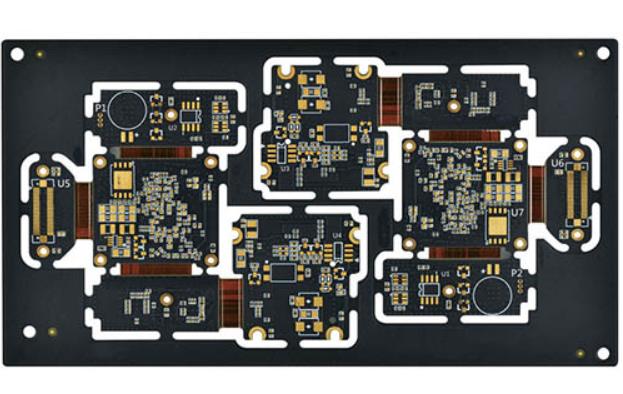
Realistic 2025 market pricing for car infotainment circuit boards falls into clear bands. Basic four-layer prototypes start around $15 to $30 per board. Conventional six-to-eight-layer boards run $35 to $80 per board. Advanced ten-to-twelve-layer designs for premium head units reach $90 to $150 per board. Volume production typically prices 20 to 30 percent below prototype samples because setup and tooling costs are spread across thousands of units.
These figures cover bare boards and assume automotive-grade materials and electrical testing. Fully assembled infotainment modules, including the applications processor, memory, and radio modules, cost considerably more because the bill of materials dominates the finished price. When budgeting a program, separate the bare-board cost from the assembled module cost early so there are no surprises at quotation stage.
Regional Price Comparison
Where you manufacture infotainment PCBs significantly affects cost. Chinese factories quote roughly $20 to $70 per board thanks to scale, mature automotive supply chains, and efficient automated lines. US suppliers range from $50 to $120 per board, driven by higher labor and compliance costs. European pricing sits somewhat above China with an emphasis on environmental standards and full material traceability.
Cross-border buyers should also account for logistics and tariffs, which can add 5 to 15 percent to the total. Despite those charges, sourcing from China remains attractive because the manufacturing base is large, certification levels are high, and engineering support is responsive. Many global Tier-1 automotive suppliers already produce their control and infotainment boards in Asia for exactly this reason.
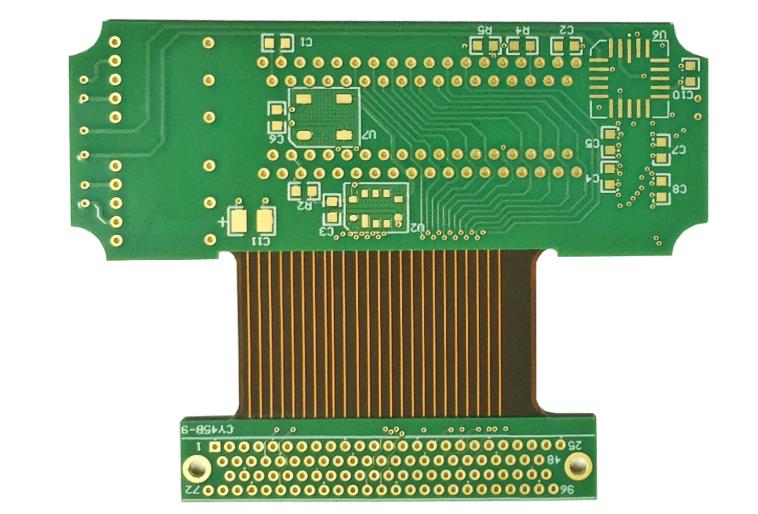
As a practical example, a North American head-unit maker ordering 2,000 six-layer boards per month from China would typically land at $38 to $48 per board including ENIG finish, impedance testing, and IPC Class 3 inspection, against $60 to $75 from a US supplier with the same specification. The difference funds component buffer stock and expedited logistics, which shortens the overall supply chain and reduces the risk of line-down events at the assembly site.
Cost Structure of an Infotainment Board
Breaking the total price into categories helps buyers negotiate and plan. Raw materials, including laminate, copper foil, and surface finish chemistry, account for roughly 30 to 40 percent of a typical board cost, or $5 to $40 depending on layer count and material class. Manufacturing and assembly represent the largest share at 35 to 45 percent, around $10 to $60, because multilayer lamination, drilling, plating, and component placement are process-heavy steps. Testing and quality inspection add 10 to 15 percent, or $5 to $20, covering automated optical inspection, impedance verification, and electrical testing on every board. After-sales support and warranty reserves account for the final 5 to 10 percent, roughly $3 to $15.
Understanding this structure is practical, not academic. When a supplier quotes a surprisingly low price, ask where testing and traceability sit in the breakdown. Automotive programs should never trade away electrical testing to save a few dollars per board, because a single field failure in a head unit can cost more than an entire production batch.
Design Considerations That Protect Reliability
Reliability in an infotainment board is engineered, not tested in at the end. Thermal design comes first. The applications processor and display drivers generate concentrated heat, so boards use thermal planes, heat-spreading copper pours, and thermal vias that conduct heat toward the metal chassis of the head unit. A design that ignores heat may work in the lab but fail after a summer of dashboard exposure.
Signal integrity is the second pillar. High-speed interfaces such as LVDS or MIPI display links, PCI Express for storage, and USB 3.0 require controlled impedance, matched trace lengths, and clean reference planes. The layout must keep these fast signals away from switching power supplies and radio modules, which would otherwise inject noise into the picture or audio path. Careful stack-up planning at the beginning of the project prevents expensive board revisions later.
Power integrity deserves equal attention. Audio amplifiers draw sudden current peaks, and the display backlight adds further load. Decoupling strategies, properly sized power planes, and stable voltage regulator placement prevent dips that could reset the processor or produce audible pops. Finally, mechanical robustness matters in a vehicle: component placement must respect vibration stress, heavy components need support, and board edges near mounting points require adequate clearance. These design disciplines explain why two functionally similar boards can have very different field performance, and why experienced suppliers review them before production. Engineering teams that validate these points during the DFM review, alongside a full PCB manufacturing feasibility check, bring a design to production with far fewer surprises.
How to Reduce Car Infotainment PCB Cost
Several proven strategies keep infotainment PCB cost down while preserving automotive-grade quality.
Choose the right supplier tier. Work with a factory that holds automotive certifications and offers prototype pricing starting near $20 per board. A single partner that handles both fabrication and PCB assembly reduces logistics, communication overhead, and qualification effort.
Optimize the design. Simplifying the layout and reducing layer count can save $10 to $25 per board. Challenge every unnecessary high-speed pair, question surplus display outputs, and combine power domains where possible before the layout is locked.
Consolidate volume. Moving from prototype to high-volume production typically reduces unit price by 20 to 30 percent. A board quoted at $50 in samples can land at $35 to $40 at scale.
Commit to long-term agreements. Suppliers prioritize pricing and delivery for stable programs. Annual forecasts, committed capacity, and early material planning all unlock better rates and protect against component shortages.
Choosing a Reliable Infotainment PCB Manufacturer
The right manufacturer for car infotainment boards combines automotive experience with genuine process discipline. Look for ISO 9001, IATF 16949, and RoHS compliance, plus production capability for high-layer-count boards with controlled impedance. Confirm that testing covers AOI, X-ray for hidden joints, and full electrical test, and ask how the factory manages part traceability from material lot to finished board.
A capable partner also supports the entire lifecycle: prototype samples from five to ten boards, small-series validation, and large-scale production. Reviewing the supplier’s documented PCB capabilities and quality management system before sharing a design saves time later. Engineering support that reviews stack-up, thermal design, and manufacturability at the quoting stage is a strong signal of a long-term partner rather than a board broker.
2025 Trends Shaping Infotainment PCB Demand
Several trends are reshaping infotainment PCB specifications in 2025. Software-defined vehicles push more processing into the cockpit, increasing layer counts and memory density. Electric vehicles integrate infotainment with battery and thermal management displays, demanding boards that communicate over high-speed automotive networks. Connectivity upgrades to 5G and V2X bring high-frequency materials into dashboard electronics. Over-the-air updates require reliable memory interfaces and power management on the same board.
These trends raise the technical bar, but they also reward manufacturers with advanced multilayer experience. Factories that control both board fabrication and PCBA testing in-house can qualify new materials and processes faster, keeping lead times short for automakers that must hit strict launch schedules.
Frequently Asked Questions
Q1. What is the minimum order quantity for car infotainment PCBs? Most manufacturers accept prototype orders of five to ten boards and scale to large production volumes for mature programs.
Q2. Are infotainment PCBs more expensive than ordinary automotive PCBs? Yes, because they use more layers, higher component density, and more complex high-speed routing than simpler body or lighting boards.
Q3. How much does a custom prototype cost? Custom samples generally run $20 to $50 per board depending on design complexity, layer count, and materials.
Q4. Can volume orders lower the price significantly? Yes, volume production typically reduces unit price by about 30 percent compared with sample quantities.
Q5. Which quality standards apply? ISO 9001, IATF 16949, and RoHS are the common references for automotive infotainment electronics.
Conclusion
Car infotainment PCB price in 2025 ranges from roughly $15 to $150 per board depending on layers, materials, and order volume. The cheapest quote is rarely the cheapest project. By understanding the cost structure, working with an automotive-qualified manufacturer, and consolidating volume, vehicle brands and Tier-1 suppliers can secure reliable infotainment boards at a predictable cost, keeping both quality and launch schedules under control.