Fitness Tracker PCB Guide: Design, Manufacturing and Cost
Fitness trackers have become daily health companions for tens of millions of people. From heart rate monitoring and sleep analysis to step counting and blood oxygen measurement, these small devices depend on a component that users never see: the fitness tracker PCB. Acting as the heart and nervous system of the wearable, the board keeps sensors accurate, manages battery power efficiently, and moves data to the phone without interruption. Designing and manufacturing such a board is a discipline of its own, balancing extreme miniaturization with durability against sweat, water, and constant bending. This guide explains what a fitness tracker PCB is, how it is built, what it costs, and how to choose a manufacturing partner for a successful wearable product.
What Is a Fitness Tracker PCB?
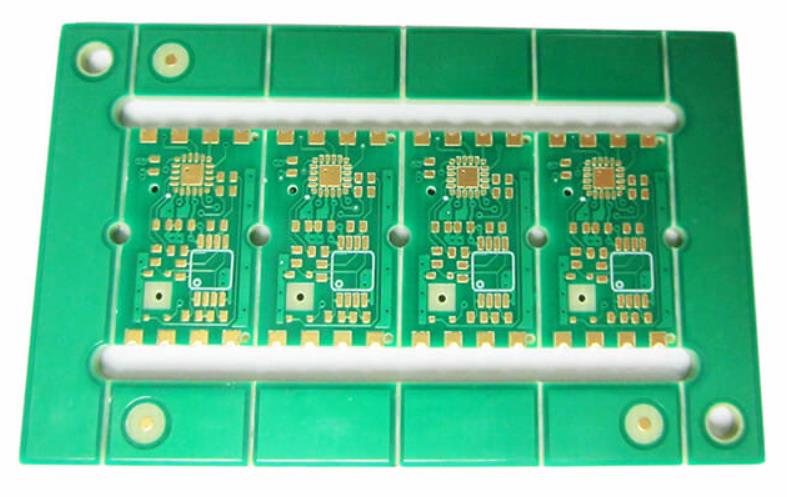
A fitness tracker PCB is a circuit carrier designed specifically for wearable fitness devices. It integrates sensors, a microcontroller, and communication modules onto a small, thin, and durable board that fits inside a wristband-sized enclosure. Unlike boards in larger electronics, a fitness tracker PCB must be exceptionally compact, often flexible, and resistant to the sweat, moisture, and repeated flexing that come with daily wear.
Without this board, a fitness tracker cannot collect data, distribute power, or transmit information. The PCB is what makes the device smart: it carries the optical heart rate sensor, the accelerometer that counts steps, the Bluetooth radio that syncs with a phone, and the power management circuitry that lets the device run for days on a small battery.
Designing for this environment changes every engineering decision. Components are chosen for size and current draw, materials are selected for biocompatibility and bend resistance, and the layout is optimized so the antenna still performs when wrapped around a wrist. The result is a product that tracks a workout accurately, survives a swim, and stays comfortable through months of daily use.
Core Functions of a Fitness Tracker PCB
The fitness tracker board does far more than connect components together. Power distribution keeps the lithium polymer battery at a stable voltage and extends run time through careful sleep-mode management. Sensor integration supports optical heart rate monitoring, accelerometers, temperature sensing, blood oxygen measurement, and ECG modules on advanced models. Data processing and communication move health information over Bluetooth, Wi-Fi, or NFC to a smartphone or cloud service. Signal transmission quality determines whether the reported heart rate and step counts are accurate or noisy.
Each function places its own demands on the layout. The optical heart rate sensor needs controlled LED drive current and clean analog signal paths. The radio requires a properly tuned antenna area that is not blocked by the battery or metal case. The processor needs decoupling and stable supply rails. Bringing all of these together in a board that fits a slim band is the real craft of wearable PCB engineering.
Common PCB Types Used in Fitness Trackers
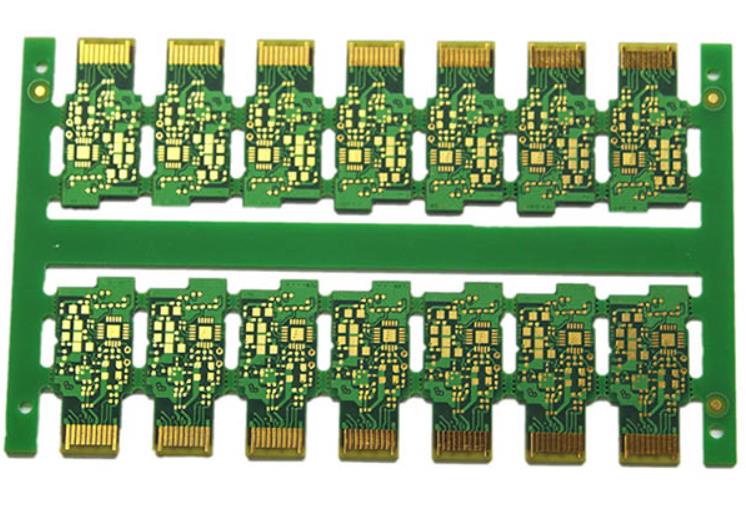
Fitness trackers use three board constructions depending on the product design. Rigid PCBs are strong and cost-effective but inflexible; they suit simple, boxier devices where the board can stay flat. Flexible PCBs are light and bendable, which makes them the mainstream choice for slim wristbands and compact fitness bands. Rigid-flex PCBs combine rigid islands for components with flexible bridges that fold around the enclosure, offering both stability and design freedom.
The choice of board type influences performance, durability, and cost. A rigid board is cheapest but may force a larger product. A full flex design maximizes comfort but demands careful dynamic bending design. Rigid-flex offers the best of both worlds at a higher manufacturing price. Most successful fitness trackers use flex or rigid-flex construction, which is why wearable manufacturers place such high value on flexible PCB capability in their suppliers.
Materials and Design Considerations
High-performance fitness tracker PCBs follow strict material and design rules. The stack-up is kept thin and multilayer where needed to satisfy the compact space budget. Biocompatible materials such as polyimide are preferred because the device sits against skin for long periods. Waterproof and heat-resistant coatings protect against sweat corrosion and the heat of continuous operation. Miniaturized surface-mount packages keep the footprint small while allowing automated assembly.
Power management deserves its own design pass because battery life is a headline feature of every fitness tracker. The board uses multiple low-power rails, always-on domains for the sensor hub, and aggressive sleep states that wake only when movement is detected. Charging circuitry must handle the small battery safely, with accurate current limits and temperature protection. When these elements are laid out cleanly, a tracker can run for a week or more between charges; when they are not, the device drains overnight and users abandon it.
Designers must also plan for manufacturing reality. Trace widths, via sizes, and flex bend radii must respect the capabilities of the fabrication line. The antenna area needs clearance from ground planes and components. The optical sensor window requires precise placement so the LEDs and photodiode align with the case opening. Catching these issues during design, before tooling, is what separates smooth wearable launches from painful revisions.
Manufacturing Process for Fitness Tracker PCBs
Production of a fitness tracker board follows several precise stages. Circuit design and simulation optimize miniaturization and signal efficiency while the product is still virtual. Rapid prototyping then produces small batches used to validate sensor accuracy and power management on real hardware. Once the design is proven, multilayer boards move into volume production with dedicated tooling. Assembly and surface-mount technology place the sensors, chips, and connectors, followed by reliability testing that includes waterproof checks, pressure tests, and bending cycles.
Reliability testing is where flexible wearables earn their reputation. Samples are bent thousands of times, exposed to humidity, and subjected to thermal cycling to confirm the flex layers and solder joints will survive real use. A factory with in-house test capability and experience in wearables will run these validations as standard practice, supported by the PCBA testing procedures that certified manufacturers follow.
Fitness Tracker PCB Cost
Fitness tracker PCB cost depends mainly on design complexity, materials, and production scale. Prototype batches are expensive because engineering setup is spread over a handful of boards, typically running $80 to $200 per board for complex flex designs. Volume production changes the picture completely: at scale, per-board cost falls to $2 to $10 depending on layer count, sensor configuration, and assembly complexity.
Key cost drivers include the number of layers, the choice of flexible materials, the density of sensor integration, and the assembly process. Rigid-flex boards cost more than rigid boards because lamination and processing are more complex. For startups, working with an experienced Chinese manufacturer keeps these costs manageable while maintaining quality, because mature production lines and established supply chains reduce waste and rework.
Benefits of a High-Quality Fitness Tracker PCB
Investing in board quality pays back across the whole product lifecycle. Accurate data is the first benefit: stable signal routing reduces measurement errors in heart rate and step counting. Longer battery life follows from efficient power management on a well-laid-out board. Comfort and durability improve because flexible construction fits the wrist better and survives bending without cracking. Lower return rates come last but matter most financially, since field failures generate warranty cost and damage brand trust.
Consumers forgive many flaws in a fitness tracker, but not wrong heart rate readings or a band that breaks after three months. A quality board protects the two things a wearable brand cannot afford to lose: trust and margin.
Design Challenges in Fitness Tracker PCBs
Engineers face recurring challenges when developing fitness tracker boards. Miniaturization is the first: fitting optical sensors, an accelerometer, a radio, and power circuitry into a space measured in millimeters demands constant trade-offs. Signal interference is second, because Bluetooth and other radios must work cleanly beside fast digital circuits. Durability is third, with the board needing to resist sweat corrosion, bending, and drop impact. Cost control is fourth, because wearable hardware competes at aggressive retail prices.
Solving these challenges requires early partnership between the product team and the board manufacturer. A manufacturer that reviews the layout, proposes alternative materials, and warns about bend radius violations during the design stage saves weeks of later rework. Before sending files, check the factory’s documented PCB capabilities and quality management system to confirm it can actually deliver what wearable designs demand.
Choosing a Reliable Fitness Tracker PCB Manufacturer
The right manufacturing partner for fitness tracker PCBs combines flexible board expertise with genuine quality discipline. Look for demonstrated experience in wearable products, flex and rigid-flex production lines, and quick-turn prototype service of five to seven working days. Ask how the factory handles water resistance testing, bend-cycle validation, and sensor calibration support. Volume pricing that reaches $2 per board or below is realistic from efficient Chinese suppliers, and OEM and ODM support helps international brands bring products to market faster.
Equally important is assembly capability. A partner that also runs PCB assembly can place the optical sensors and radio modules, reducing the number of vendors and the risk of interface problems between board and assembly.
Future Trends in Fitness Tracker PCB Technology
Fitness tracker boards are evolving with the wearables market. Ultra-thin flexible PCBs are making devices lighter and more comfortable. AI integration is adding on-board chips that analyze health data locally instead of sending everything to the cloud. Eco-friendly materials are gaining ground as brands respond to recycling requirements. Wireless charging optimization is improving the user experience by supporting induction charging coils on the same flexible substrate.
Each trend raises the engineering bar while opening new product possibilities. Brands that keep pace with flexible PCB innovation and partner with suppliers investing in new materials will hold an advantage in a market that rewards freshness as much as accuracy.
Frequently Asked Questions
Q1. What is the average price of a fitness tracker PCB? Prototype boards cost about $80 to $200 each, while volume production pricing can fall to $2 to $10 per board.
Q2. Are flexible PCBs better for fitness trackers? Yes, flexible and rigid-flex boards are thin, durable, and comfortable for wrist-worn devices, which makes them the standard choice.
Q3. How long does it take to produce a custom fitness tracker PCB? Rapid prototypes typically take five to seven working days, and volume production two to four weeks.
Q4. Can manufacturers support sensor integration? Yes, experienced wearable suppliers integrate heart rate, accelerometer, and temperature sensors during assembly and test them before shipping.
Q5. Do fitness tracker PCBs support waterproofing? Yes, combined with proper enclosure design and conformal coating, the PCB can be built to withstand sweat, rain, and swimming conditions rated for the product’s IP class.
Conclusion
The fitness tracker PCB is the core of the wearable, deciding accuracy, battery life, comfort, and durability. From flexible material selection to cost optimization, every stage shapes the final user experience. Working with a reliable manufacturer that combines flex capability, fast prototyping, and quality control lets brands deliver high-performance fitness trackers at a price the market accepts, turning a thin piece of circuitry into a genuine competitive advantage.