Smart Plug PCB Cost Guide 2025: Price Ranges and Factors
The smart home market keeps expanding, and one product quietly sits in nearly every connected household: the smart plug. It lets users switch appliances on and off from a phone, schedule power, monitor energy use, and talk to voice assistants. Inside that compact white enclosure, a small circuit board makes all of it possible. The smart plug PCB carries the relay, microcontroller, and wireless module that turn a dumb outlet into a connected device. Because the board determines functionality, reliability, and safety, its cost directly shapes the final retail price of the product. This guide breaks down smart plug PCB cost in 2025, the factors that move it, the price differences between regions, the hidden costs buyers forget, and the strategies that keep unit pricing competitive.
What Is a Smart Plug PCB and Why Does Cost Matter?
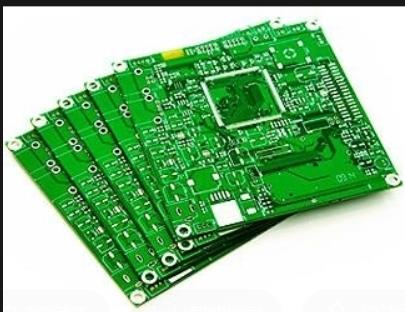
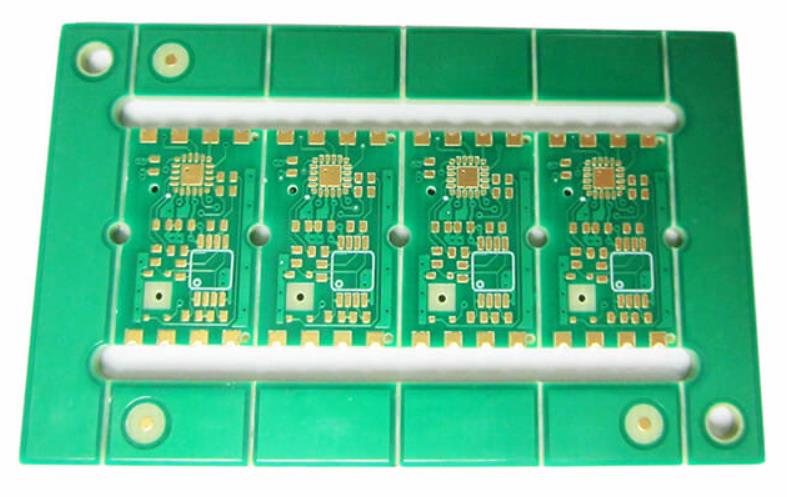
A smart plug PCB is the core circuit platform inside a smart plug. It connects the relay that switches the mains load, the microcontroller that runs the firmware, the Wi-Fi or Bluetooth module that provides connectivity, and the power supply that converts mains voltage into a safe low-voltage rail for the electronics. On more advanced models the board also carries current and voltage sensing circuits that report energy consumption back to the app.
The board enables the three features consumers expect from a modern smart plug: remote switching control, usage monitoring, and voice assistant compatibility with Alexa, Google Home, or Apple HomeKit. None of these work without a properly designed and manufactured PCB.
Cost matters because the PCB is one of the largest single components in the product. A smart plug retails for $10 to $30, so every cent of board cost affects margin. At the same time, this board handles mains power, which means cutting corners on clearance, relay quality, or certification can create fire or shock hazards. Understanding the cost structure lets brands optimize the board intelligently instead of simply buying the cheapest quotation.
2025 Smart Plug PCB Price Ranges
Smart plug PCB pricing in 2025 spans a wide band depending on complexity. Single-layer boards run $0.50 to $1.20 per board. Two-layer boards, the most common choice for basic Wi-Fi plugs, range from $0.80 to $2.50. Four-layer boards for models with energy monitoring and stronger wireless performance run $1.50 to $3.80. Flexible boards used in unusual form factors range from $2.50 to $5.00. In practice, most smart plug PCBs land between $0.50 and $5.00 per board at production volume.
These figures assume standard FR-4 material, a conventional relay, and normal certification requirements. Custom designs with special components, thick copper for high-current outlets, or compact layouts sit at the upper end of each band. The per-board number also depends heavily on quantity, which is why procurement strategy matters as much as design.
Key Factors That Drive Smart Plug PCB Cost
Several forces determine the final price of a smart plug circuit board, and experienced buyers watch all of them.
Design complexity. Finer traces, denser layouts, and extra sensing circuits increase tooling and fabrication difficulty. A basic two-layer control board is straightforward; adding true power monitoring, a bigger power supply, and an antenna area raises cost with every added feature.
Material selection. Standard FR-4 with 1 oz copper is the economical default. Higher copper weight for 10-amp or 16-amp switching, better solder mask for moisture resistance, and high-temperature laminates for compact designs all add cost. Most smart plugs balance performance and price with 2 to 4 layers of standard FR-4.
Component configuration. The relay, microcontroller, and wireless module dominate the assembled cost. Wi-Fi modules with certification built in cost more than raw radio chips but save certification time. Higher-spec relays rated for more switching cycles increase both component price and reliability.
Production process. Surface-mount technology suits high volumes and keeps per-unit assembly cost low, while through-hole assembly is reserved for connectors and the relay’s power pins. A board designed primarily for SMT is cheaper to scale than a mixed-technology design.
Quantity. Volume is the strongest lever of all. Prototype batches cost several times more per board than mass production, and the gap can reach 80 percent between small samples and 5,000-piece orders.
Testing and certification. UL, CE, and RoHS compliance add roughly $0.10 to $0.30 per board once the testing and documentation overhead is amortized. For a mains-connected product these costs are mandatory, not optional.
Regional Price Comparison: China, US, and Europe
Manufacturing location creates meaningful price differences for smart plug PCBs. Chinese factories quote $0.50 to $3.00 per board, offering the world’s most competitive combination of scale, mature process technology, and short lead times. US suppliers typically charge $2.00 to $6.00 per board because labor and compliance costs are higher. European manufacturers range from $2.50 to $6.50 per board, reflecting stricter environmental regulation and full traceability requirements.
For most smart home brands, Chinese manufacturers remain the most cost-effective choice. The quality gap has narrowed considerably: ISO-certified Chinese factories routinely pass the same UL and CE audits as Western plants. The key is supplier selection, not geography. A factory with experience in smart home products understands the safety clearance rules and relay drive circuits that generic board shops may miss.
How Layer Count and Thickness Affect Price
Layer count and board thickness are two controllable variables with direct price consequences. One-to-two-layer boards range from $0.50 to $2.00 per board and handle most basic plug designs. Four-to-six-layer boards run $2.00 to $4.50 and provide better power integrity and cleaner wireless performance for monitoring models. Eight-layer and above designs reach $4.50 to $6.00, but they are rare in smart plugs because the mechanical space does not justify the cost.
Board thickness also matters. A standard 1.6 mm board costs about $0.20 to $0.50 more than a thin 0.8 mm board because of material volume, yet most plug enclosures are designed around the standard thickness anyway. Specifying unusual thicknesses purely for cost reasons usually backfires; follow the mechanical design and keep the stack-up conventional.
Prototype vs Volume Pricing
The price gap between prototyping and mass production surprises many new hardware teams. Prototype orders of 10 to 50 boards typically cost $5.00 to $12.00 per board because engineering setup, tooling, and small-batch processing are amortized over very few units. Medium batches of 500 to 1,000 boards drop to $1.00 to $2.50 per board. High-volume production above 5,000 boards reaches $0.50 to $1.20 per board.
In other words, moving from prototype to full production can reduce unit price by up to 80 percent. That is why smart home brands validate carefully during the prototype phase and then commit volume confidently: the design is tested on a few expensive boards, then manufactured efficiently on thousands of inexpensive ones.
Hidden Costs in Smart Plug PCB Procurement
Unit price is not the whole story. Buyers who compare only per-board quotations miss the expenses that follow. Freight and logistics add roughly $0.05 to $0.50 per board depending on shipping method and destination. Customs duties and import taxes typically run 5 to 15 percent of the order value. Testing and certification fees add $0.10 to $0.30 per board. Together, these hidden costs can raise the landed price by 10 to 20 percent.
A professional quotation should itemize these components so the buyer can compare total landed cost rather than factory-gate price. Working with suppliers that handle export documentation smoothly and offer DDP options removes a large administrative burden from smaller brands.
Cost-Saving Tips for Smart Plug PCB Procurement
Several proven techniques push smart plug PCB cost toward the bottom of the range without sacrificing safety or reliability. First, partner with an experienced Chinese smart home PCB manufacturer to capture both lower production cost and design support. Second, optimize the design by removing unnecessary layers and simplifying the power section. Third, use standard material thicknesses and conventional copper weights instead of special builds. Fourth, consolidate orders into large batches to earn volume discounts. Fifth, review the design for manufacturability with the factory before release, because a DFM fix at the file stage costs nothing compared with a revision after tooling.
Brands that follow these steps routinely reach per-board pricing near $0.50 at scale while keeping UL, CE, and RoHS compliance intact. The engineering support for such optimization is a standard part of the PCB manufacturing service at gopcb, where design review, fabrication, and assembly are handled in one facility.
Choosing a Smart Home PCB Manufacturer
The right manufacturer for smart plug boards combines mains-voltage design awareness with genuine process control. Look for experience in smart home applications, UL and CE documentation support, and full electrical testing on every batch. Because smart plugs sit between the wall and expensive appliances, the factory must verify relay drive circuits, creepage distances, and power supply isolation during inspection. Confirm that AOI, X-ray for power components, and high-potential testing are part of the standard flow.
A complete supplier also handles PCB assembly, including relay soldering and module placement, then runs the finished board through PCBA testing before shipping. Reviewing the partner’s documented PCB capabilities and its quality management system early protects the program from unpleasant surprises during certification audits.
Future Outlook for Smart Plug PCB Prices
Demand for smart plug PCBs will keep growing as IoT adoption spreads through households and commercial buildings. Despite that growth, prices should remain near the $0.50 to $5.00 band because automation and supply-chain efficiency are improving steadily. Copper and chip price fluctuations can cause short-term increases, especially for the wireless modules, but the long-term trend is stable. Products that add energy metering accuracy or Matter protocol support will use slightly more complex boards, partially offsetting the efficiency gains.
Buyers who plan annual forecasts and build relationships with suppliers will ride out the commodity cycles more smoothly. The smart plug market rewards consistent quality and predictable cost, which are exactly what a disciplined manufacturing partnership provides.
Frequently Asked Questions
Q1. What is the lowest price for a smart plug PCB? In mass production, prices can reach about $0.50 per board for a simple two-layer design.
Q2. How does order quantity affect the price? Prototype pricing runs $5 to $12 per board, while high-volume orders drop below $1.20 per board.
Q3. Are Chinese-made smart plug PCBs reliable? Yes, established Chinese suppliers deliver high-quality, low-cost boards that meet international certification standards such as UL, CE, and RoHS.
Q4. What is the average production lead time in 2025? Standard production takes 7 to 15 days, with expedited orders shipped in as little as 3 to 5 days.
Q5. Which certification does a smart plug PCB need? Common requirements include UL and CE for safety plus RoHS for materials; the certification scope depends on the target market.
Conclusion
In 2025, smart plug PCB price ranges from roughly $0.50 to $12.00 per board depending on type, layers, and order volume, with most production boards landing between $0.50 and $5.00. The difference between a profitable smart plug and a money-losing one often comes down to board design and supplier selection. By understanding the cost factors, planning volume, and working with an experienced manufacturer, brands can deliver connected, certified, and affordable smart plugs to a growing global market.