Industrial Ultra-Thick Multilayer PCB: Design and Manufacturing Guide
An industrial ultra-thick multilayer PCB must carry many signals, distribute high current, and remain stable in equipment that runs for years in harsh factory conditions. Industrial automation depends on programmable logic controllers, motion controllers, robot control units, motor drives, sensors, and power electronics that communicate continuously and respond to changing production data. The circuit board inside each of these systems has to support high layer counts, precise signal routing, reliable power delivery, and strong protection against electrical noise. An industrial ultra-thick multilayer PCB is built for exactly these requirements.
This type of board is not simply a thicker version of a standard multilayer board. It combines a carefully designed stackup, heavier copper where necessary, controlled impedance, and robust materials to survive high vibration, large temperature swings, and powerful electromagnetic interference. Engineers who understand the design, material, and manufacturing trade-offs can specify an ultra-thick multilayer board that performs well without paying for unnecessary complexity.
What Is an Industrial Ultra-Thick Multilayer PCB?
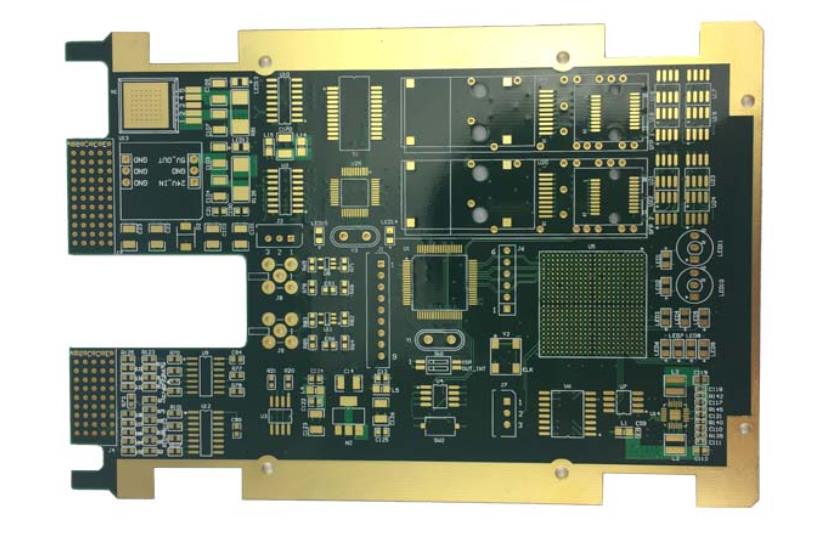
An industrial ultra-thick multilayer PCB usually contains ten or more conductive layers, and some advanced designs use several tens of layers. The outer layers carry critical control and sensor signals, while internal layers are assigned to power distribution and grounding. This separation is important because a machine floor contains many sources of electrical noise, including motors, frequency converters, relays, and high-power switching circuits.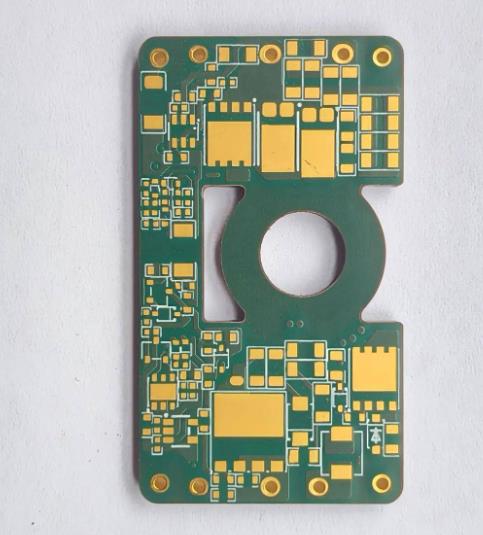
The inner power planes supply stable voltage to processors, drivers, and interface circuits. Dedicated ground planes reduce return-current problems and shield sensitive traces from interference. Vias connect the layers so that signals and current can travel through the board without excessive resistance or delay. A good stackup assigns each layer a clear function and keeps signal layers close to a reference plane.
How Ultra-Thick Multilayer PCBs Improve Signal Reliability
Factory equipment can create strong electromagnetic interference. Large motor starts, solenoid switching, and high-frequency drives produce noise that may couple into nearby circuits. A standard board with poor layer planning may transmit corrupted data or lose communication under these conditions. An industrial ultra-thick multilayer PCB isolates signal, power, and ground layers so that sensitive traces are protected by continuous reference planes.
The extra layers also allow designers to route hundreds of signals without crossing critical pairs in a harmful way. In a complex control system, one board may handle temperature, pressure, speed, position, and safety signals at the same time. If these signals interfere with one another, the system may receive incorrect readings or generate false alarms. A well-designed multilayer board keeps clean signals away from noisy power paths and reduces the risk of crosstalk.
Controlled impedance is another advantage. High-speed communication links between controllers, drives, and field devices need predictable trace impedance. The ability to place internal ground and power planes close to signal layers helps the board maintain stable impedance across production batches. This is especially valuable for industrial Ethernet, servo communication, and other networks used in automated lines.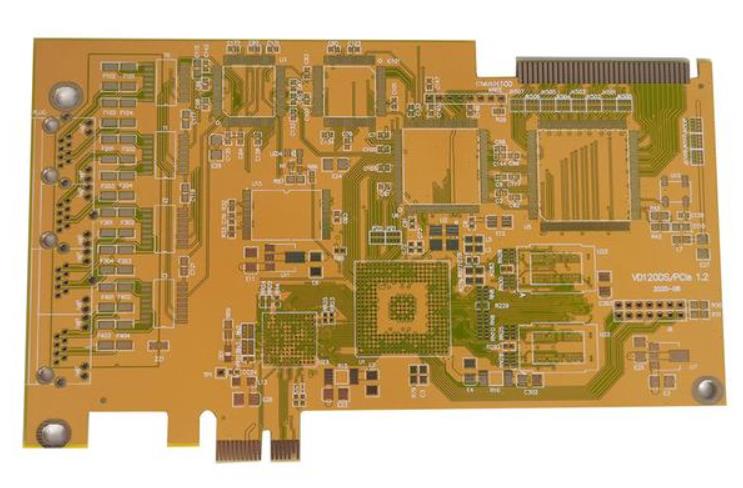
High Current and Thermal Management
Many industrial applications carry more current than a typical consumer device. Motor drives, power supplies, welding controllers, and charging systems may need thick copper traces or planes to reduce resistance and avoid overheating. An ultra-thick multilayer PCB can combine standard signal layers with heavier copper on power layers, allowing one board to serve both sensitive control electronics and high-current switching circuits.
Copper is also an effective heat spreader. When high-power components are mounted close to thick copper planes, heat moves away from the component and into the board more evenly. This lowers hot-spot temperature and makes it easier for the enclosure, heatsink, or fan to cool the system. In continuous industrial operation, better thermal behavior improves reliability and may extend the life of power semiconductors and control chips.
Thermal vias are often used with thick copper structures to move heat from the top side of the board to lower layers. The number, size, and placement of these vias must be matched to the power dissipated by the components. A complete design review should consider current density, acceptable temperature rise, ambient temperature, and the airflow available in the final equipment.
Mechanical Strength and Vibration Resistance
Industrial machines are not static. Robotic arms accelerate and decelerate quickly, presses generate impact, conveyors create continuous vibration, and mobile equipment may be exposed to rough roads or uneven floors. The PCB inside these systems must keep components and solder joints intact under mechanical stress.
Ultra-thick multilayer boards are normally made with high-strength base materials and increased glass reinforcement to improve bending resistance. The board stackup should also be balanced around the center to prevent bow and twist. When components are large or heavy, designers may use thicker copper pads, stronger solder joints, and underfill or conformal support to protect the connection between the part and the board.
Thermal cycling can create stress between materials with different expansion rates. Material selection and lamination pressure must be controlled carefully so that copper, prepreg, and substrate layers move together over many heating and cooling cycles. A supplier with experience in industrial PCBs will review hole copper, annular rings, and board thickness tolerances before production begins.
Materials for Industrial Ultra-Thick Multilayer PCBs
The base laminate must provide stable electrical insulation, mechanical strength, and the ability to withstand the temperatures generated inside an industrial enclosure. High-Tg FR-4 is common for control boards because it keeps dimensional stability at higher operating temperatures. Polyimide or other high-performance materials may be selected for extreme thermal environments, while specialty laminates are used when high-speed or high-frequency signals require lower dielectric loss.
Heavy copper boards require special attention to copper foil weight, etching capability, and plating uniformity. When inner layers carry high current, the copper thickness must be designed for the actual current path and ambient temperature. A supplier that can combine standard outer-layer circuitry with thicker internal power planes gives engineers more flexibility than a supplier limited to one type of board.
Surface finish should be matched to the assembly process. ENIG, immersion silver, and other finishes affect solderability, shelf life, and resistance to environmental attack. The final choice should also consider whether the board will be cleaned, conformally coated, or installed in an area with high humidity, dust, or chemical exposure.
Manufacturing Processes That Matter
An industrial ultra-thick multilayer PCB demands precise layer registration because even a small misalignment can cause opens between internal planes and vias. Each layer should be checked before lamination, and the stackup should be designed for the shrinkage behavior of the selected materials. This is particularly important when inner copper layers are thick.
Drilling and plating must produce reliable connections through a thick board. Deep holes require uniform copper plating so that the barrel can carry current and survive thermal stress. Microvias may be used for high-density signal routing, while larger plated through holes connect power and ground layers. The supplier should inspect hole walls after plating and confirm that annular ring requirements are met.
Electrical testing is essential for a complex multilayer board. Automated test fixtures or flying probe testers check for opens and shorts across all nets. For high-speed industrial communication, impedance test coupons can verify that critical differential pairs match the target. Final inspection should also cover board thickness, bow and twist, surface quality, and any special requirements for heavy copper.
Applications in Programmable Logic Controllers and Motion Control
PLC systems collect data from sensors, execute control logic, and send commands to actuators throughout a production line. An industrial ultra-thick multilayer PCB inside a PLC must handle many inputs and outputs while maintaining fast and reliable communication. The board may include processor circuits, memory, analog input stages, communication interfaces, and isolation barriers in one assembly.
Robot and motion controllers face similar demands. A robot controller must process position feedback and command servo drives with low latency. High layer counts allow the designer to route high-speed feedback lines, control signals, and power together while keeping them properly separated. This supports smooth movement, accurate positioning, and consistent operation across the working life of the machine.
CNC machines, packaging equipment, assembly systems, and test machines also rely on industrial control boards. In each case, the main challenge is the same: manage many signals in a noisy electrical environment while maintaining a compact, serviceable design.
Power and Energy Applications
Industrial ultra-thick multilayer boards are widely used in power electronics such as motor drives, inverters, uninterruptible power supplies, and high-voltage frequency converters. These products combine low-power control electronics with high-power switching stages. A single board may carry gate drive signals, voltage and current sensing, communication, and heavy copper paths for the power stage.
The board must resist voltage stress, conduct heat away from switching devices, and remain stable during sudden load changes. A thick multilayer stackup with separate power planes gives the design a predictable return-current path and reduces loop inductance in critical switching circuits. This helps the equipment maintain efficiency and reduces the risk of electromagnetic emissions that could disturb nearby controls.
Energy storage, charging, and smart-grid monitoring systems use similar technology. Battery management, protection, and communication circuits may be assembled on a board that also connects to high-current terminals. The same principles of material selection, copper planning, and thermal design apply when the equipment must run outdoors or in industrial substations.
Automation, Logistics, and Smart Systems
Automated warehouses, conveyors, sorting machines, and intelligent transportation systems depend on reliable control boards. A stacker crane or sorting robot may need to read position sensors many times per second while sending commands to motors and drives. Communication errors can cause missed picks, incorrect routing, or collisions.
An industrial ultra-thick multilayer PCB helps these systems maintain precise timing because the signal path is short and predictable. When the board is produced with controlled impedance and clean power delivery, the control unit can respond to sensor changes with less jitter. This is important for high-speed logistics and for safety-related functions in automated equipment.
Industrial IoT gateways and edge controllers add another requirement: the board must support networking, data processing, and local control in a compact module. Designers can use multilayer routing to place Ethernet, USB, wireless, and processor functions on one board while reserving internal layers for stable power distribution.
Selecting a Manufacturing Partner
Not every PCB factory can produce an industrial ultra-thick multilayer board with the same quality. The supplier should understand stackup design, heavy copper processing, controlled impedance, and industrial reliability testing. Ask for capability data, microsection reports, and examples of boards used in automation or power equipment.
During development, PCB design and layout review can catch stackup, clearance, and manufacturing issues before expensive tooling is created. A partner that provides PCB manufacturing services can also advise on material availability, copper weight limits, and realistic tolerances for thick boards.
After the board is fabricated, prototype PCB assembly is useful for validating the complete control unit with real components. When production ramps, turnkey PCB assembly and component procurement can reduce the number of suppliers and improve traceability for industrial products.
Conclusion
An industrial ultra-thick multilayer PCB is a critical foundation for modern automation, power electronics, robotics, and intelligent industrial systems. It provides the layer count needed for complex control logic, the copper capacity needed for high current, and the shielding needed to operate beside motors and switching equipment.
Success depends on a complete engineering approach: select the right material, plan the stackup, assign signal and power layers carefully, and choose a manufacturer with real experience in thick multilayer boards. When these elements are managed correctly, the finished PCB can deliver the long-term stability that industrial equipment requires.