High Frequency Circuit Board Manufacturer: Capabilities and Guide
A high frequency circuit board manufacturer must control materials, impedance, and process quality more carefully than a standard PCB supplier. Communication systems, radar, satellite equipment, aerospace electronics, and medical instruments depend on boards that can carry high-frequency signals with low loss and predictable behavior. As 5G, IoT, and artificial intelligence create more wireless and high-speed applications, high frequency PCB technology has become essential to modern electronic design.
Choosing the right manufacturer requires understanding not only the board fabrication process but also RF engineering, material behavior, and testing. This guide explains the capabilities that a high frequency circuit board manufacturer should provide and how to evaluate a supplier for your next project.
Why High Frequency PCBs Are Different
At high frequency, the electrical behavior of a circuit board changes. Signal loss increases, impedance variations become more visible, and small differences in material thickness can affect performance. A board that works well at low frequency may not meet the requirements of a 5G radio or radar module.
The dielectric constant and dissipation factor of the laminate determine how fast signals travel and how much energy is lost. Low-loss materials are used when the operating frequency is high or the signal path is long. The manufacturer must choose materials that match the target frequency and environment.
High frequency boards also require precise etching and layer alignment. A small change in trace width changes impedance. Uneven copper or rough surface finish can increase attenuation. Process consistency is therefore more important in high frequency PCB production than in general-purpose boards.
Material Selection and RF Performance
High frequency circuit board manufacturers use several types of RF materials. PTFE-based laminates offer very low loss but require special handling. Hydrocarbon ceramic materials provide stable performance at reasonable cost. Rogers and similar high-frequency products are used for demanding applications that require predictable dielectric properties.
The material must also be compatible with the assembly process. Some high-frequency laminates absorb moisture, expand more than FR-4, or require plasma treatment before plating. The manufacturer should know how to prepare, drill, and laminate each material correctly.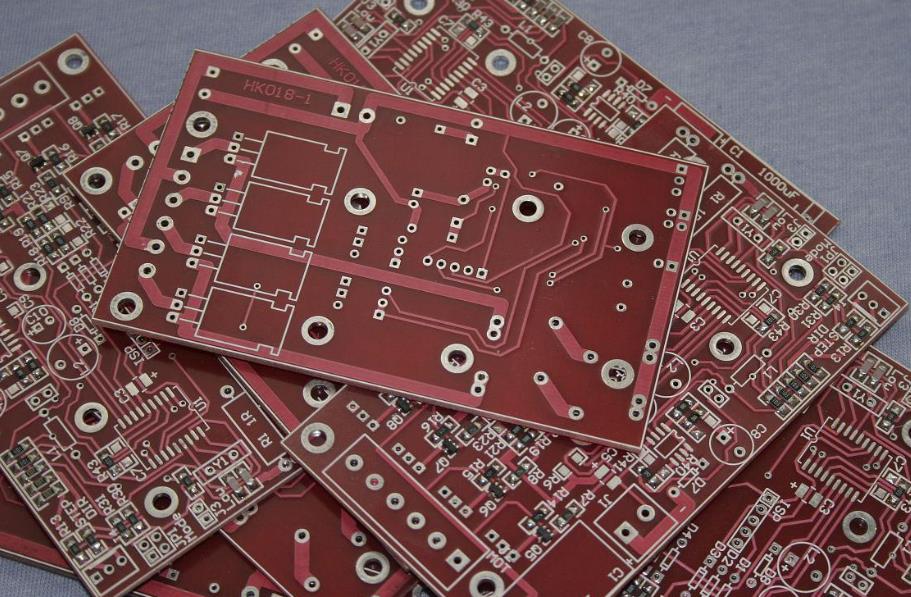
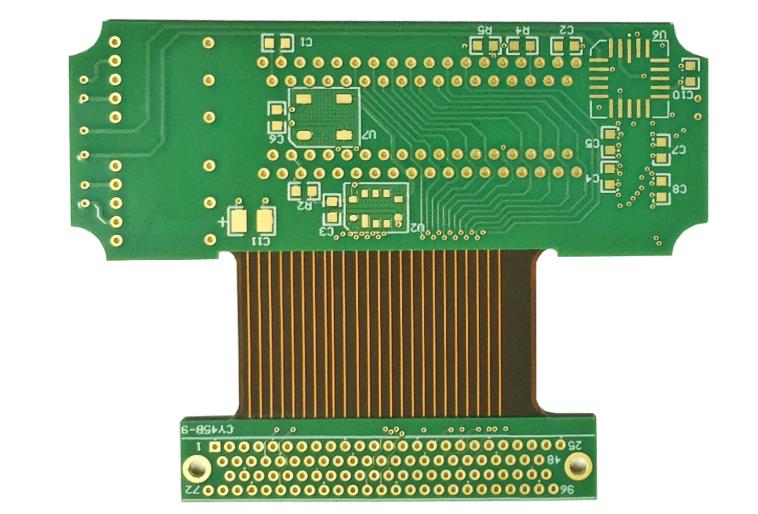
For mixed-signal boards, a hybrid stackup may combine high-frequency material in the RF section with FR-4 in the digital section. This reduces cost while preserving RF performance. The manufacturer must be able to laminate different materials together without delamination or excessive warp.
Controlled Impedance Design
High frequency circuits need controlled impedance for every critical trace. The characteristic impedance is determined by trace width, dielectric thickness, and the distance to the reference plane. The designer specifies the target impedance, and the manufacturer builds a stackup that can achieve it.
Impedance depends on the dielectric constant of the material. If the material varies from lot to lot, impedance also varies. A reliable manufacturer should use consistent material sources and measure impedance with test coupons or on the finished board.
Microstrip and stripline structures are common in RF and high-speed boards. The design team should work with the manufacturer to choose the correct structure, prepreg thickness, and copper weight before layout. This avoids expensive changes after the files are released.
Technical Capability and Full-Process Control
A high frequency circuit board manufacturer should have a complete technical system that connects material selection, design review, process control, and testing. This is important because RF board quality cannot be improved at a single step if earlier processes are not controlled.
Process capability includes high-resolution imaging, precise drilling, uniform plating, and controlled lamination. Laser direct imaging helps create fine traces with accurate dimensions. Advanced drilling equipment creates clean via holes in high-frequency materials.
Thick copper, resin plugging, controlled-depth drilling, and back-drilling are special processes often used in high-frequency and high-speed boards. The manufacturer should be able to recommend the right process for the design and demonstrate that it can be repeated consistently.
5G and Millimeter-Wave Applications
5G networks use higher frequencies than earlier mobile systems. Base station radios, antennas, and remote radio units carry millimeter-wave signals that require low-loss materials and careful layout. A high frequency circuit board used in these systems must maintain signal quality over a wide temperature range.
The board may include RF filters, power amplifiers, transceivers, and digital control circuits. Hybrid construction can separate the RF section from the high-speed digital section. The manufacturer must control both material behavior and registration in the mixed stackup.
As 5G evolves, more components will operate at higher frequency. Suppliers that can produce boards with stable impedance and low loss will help equipment makers deliver faster, more reliable wireless service.
Radar, Aerospace, and Defense Applications
Radar systems detect objects by transmitting and receiving high-frequency signals. The PCB must preserve signal phase and amplitude so that the system can calculate distance and speed accurately. Low-loss laminates and precise manufacturing are essential.
Aerospace and defense products often operate in extreme temperatures, vibration, and sometimes radiation. The manufacturer should use qualified materials and document every process step. Boards may require stricter inspection and longer reliability testing than commercial products.
Satellite communication and navigation equipment also depend on high frequency PCBs. The board must remain stable during launch vibration and in the space environment. Material traceability and process control help reduce the risk of failure after deployment.
Mixed High-Speed and High-Frequency Circuits
Many modern systems combine RF signals with high-speed digital signals. A 5G radio may contain a digital modem, Ethernet, memory, and RF front end on the same board. The design team must keep high-speed digital traces from interfering with sensitive RF paths.
A high frequency circuit board manufacturer should understand both areas. The RF section may use low-loss laminate, while the digital section uses standard high-speed FR-4. Grounding and isolation between the sections must be planned carefully.
Layer count, via structure, and stackup affect both RF and digital performance. Working with a supplier that can review mixed-signal designs reduces the risk of signal integrity problems discovered late in development.
Prototype and Small-Batch Production
High frequency boards are often needed in small quantities for product development, field trials, and certification testing. A manufacturer that can deliver fast, reliable prototypes helps teams validate RF performance before committing to volume.
Prototype orders should include clear impedance and material requirements. The supplier should produce test coupons and electrical measurements so the design team can verify the actual board. If a revision is needed, the manufacturer should be able to make changes quickly.
Small-batch production is also common for high-end communication and industrial equipment. The supplier should maintain consistent quality between prototype and production lots. Changes in material, process, or testing must be communicated clearly.
Quality Control and RF Testing
Visual inspection and basic electrical testing are not enough for high frequency boards. The manufacturer should check impedance, signal loss, and dimensional accuracy. Automated optical inspection can find trace defects, while X-ray inspection verifies internal structures.
Microsection analysis is used to inspect plated holes and layer connections. High-frequency materials require careful handling, so the factory should also control storage and process conditions. Environmental testing may include thermal cycling and humidity to verify reliability.
When the board is used in a radar, medical, or aerospace system, test records provide confidence that every lot meets the specification. The customer should request test reports and material certificates for critical programs.
Common Applications
High frequency circuit boards are used in wireless base stations, routers, antennas, radar systems, satellite equipment, test instruments, and medical imaging devices. They also appear in automotive radar and advanced driver assistance modules.
Industrial and power electronics may use high frequency boards for switching power supplies, motor drives, and communication interfaces. The board must handle both the RF/control signals and the power environment of the equipment.
Because each application has different frequency, temperature, and reliability requirements, the manufacturer should help customers select materials and processes based on the actual end use.
Selecting a High Frequency PCB Supplier
Start by reviewing the supplier’s material qualifications and process capability. Ask which RF laminates it supports, what maximum frequency it has tested, and how it controls impedance. Request examples of similar high frequency boards and the test data associated with them.
PCB design and layout support is valuable during stackup selection and RF layout review. After the design is released, PCB manufacturing must combine material knowledge with precise process control to produce the finished board.
gopcb provides high frequency PCB manufacturing services that can be combined with prototype PCB assembly for RF modules. For larger programs, turnkey PCB assembly and component procurement support a complete supply chain.
Customers should also compare how each supplier manages material sourcing, engineering communication, and special process documentation. A consistent lot-to-lot process, reliable test data, and responsive support are as important as the specification of the first prototype.
Conclusion
A high frequency circuit board manufacturer must combine RF material expertise, precise processing, controlled impedance, and complete testing. The success of a 5G radio, radar system, or aerospace product often depends on the quality of its circuit boards.
By selecting a supplier with the right technical capabilities and working together during design, engineers can produce high frequency boards that perform consistently and reliably in the field.