Industrial Control PCB Manufacturer: Capabilities and Quality Guide
An industrial control PCB manufacturer does more than fabricate circuit boards. It must support engineers who build machines, control systems, power electronics, and monitoring equipment for factories, energy plants, transportation networks, and other demanding environments. Industrial control PCBs act as the nervous center of automation systems, carrying sensor data, control commands, power, and communication signals. If the board is unreliable, the entire machine can fail, stop a production line, or create a safety risk.
Choosing the right manufacturer requires more than comparing price. The supplier should provide responsive engineering, precise process control, short prototype cycles, complete testing, strong materials, and dependable after-sales support. This guide explains the capabilities that separate a genuine industrial control PCB manufacturer from a general circuit board shop.
What Makes Industrial Control PCBs Different
Industrial electronics must survive conditions that consumer products rarely face. A control board inside a machine may operate beside motors, drives, solenoids, and power converters. It can be exposed to high temperature, vibration, humidity, dust, power surges, and electromagnetic noise. The PCB must keep signal integrity while carrying enough current for relays, drivers, and processors.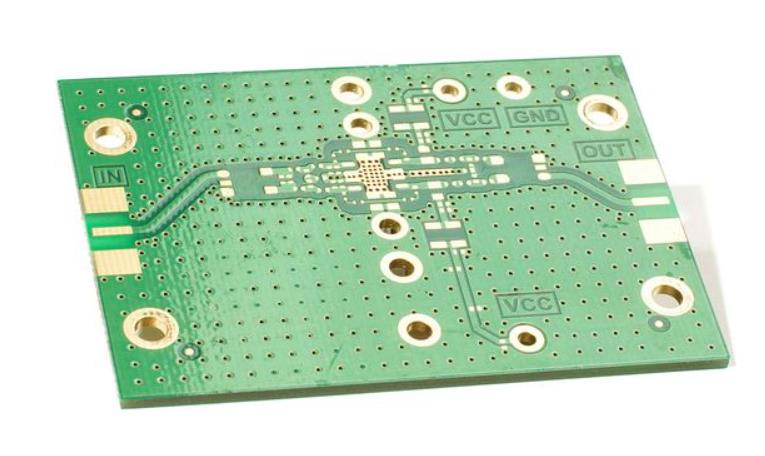
Industrial designs often use more layers, heavier copper, wider clearances, and stronger materials than consumer boards. They may include redundant grounding, conformal coating, or reinforced mechanical construction. A manufacturer that only optimizes for speed and low cost may not understand these requirements or may not have the equipment needed to produce the board reliably.
Because each industrial application is different, the manufacturer must be able to translate a customer’s performance requirements into a manufacturable stackup. Questions about operating temperature, vibration level, current load, environmental exposure, and expected service life should be answered during the design review, not after a failure in the field.
Engineering and Custom Response
Industrial customers rarely order one standard board that fits every machine. One project may need a board that fits into an existing enclosure with a specific size and connector layout. Another may require high-temperature material for an engine room, while a third may need enhanced protection for mining or offshore equipment. A good manufacturer can respond quickly to these custom requirements.
The design phase should include a manufacturing feasibility review. The factory checks minimum trace width, hole size, layer alignment, copper balance, and the compatibility of the selected material. It also looks for potential problems such as inadequate clearance, thermal issues, or difficult plating structures. This early collaboration reduces the number of revisions and shortens the path to production.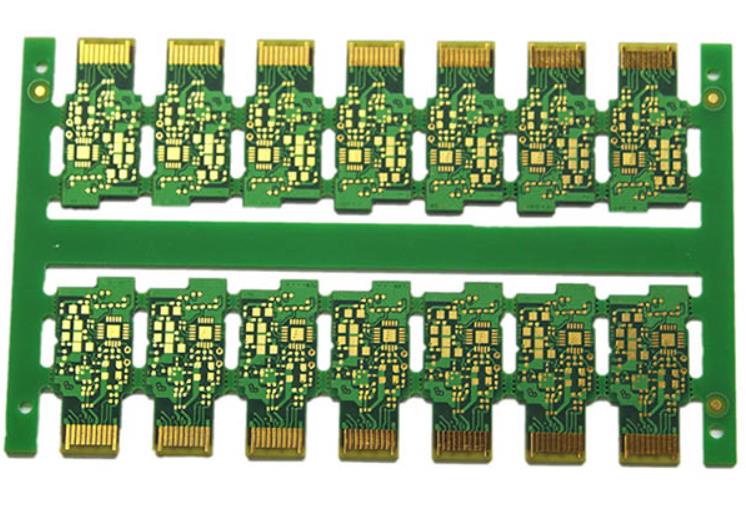
For harsh environments, the supplier may recommend reinforced structures, thicker board materials, special surface finish, or higher ingress protection after assembly. Customization should not mean ignoring standard manufacturing rules. The goal is to meet the application requirement while keeping the board reproducible and cost-effective.
Precision Manufacturing Capabilities
Industrial control PCB designs are becoming denser and more complex. High-performance controllers may use blind and buried vias, HDI structures, and fine traces to fit more functionality into the same space. The manufacturer must have precision equipment to hold tight tolerances through the whole process.
Laser drilling is needed for small microvias, while high-accuracy imaging maintains fine line widths and good registration between layers. Advanced plating lines keep copper thickness consistent through deep holes and microvia structures. When a board contains ten, twenty, or more layers, every step must be controlled carefully to avoid opens, shorts, or misregistration.
A capable industrial control PCB manufacturer can produce small holes around 0.1 mm and line widths and spacing around 3/3 mil when the design requires it. More important, it knows when a less aggressive specification is better for yield and reliability. The factory should recommend a balance between density and manufacturability.
Prototype Speed and Production Flexibility
Machine builders and system integrators often need samples quickly. A new control module may be tested for only a few weeks before the customer requires production quantities. The ability to turn a design into a prototype in days, rather than weeks, helps the engineering team verify the board and correct problems early.
An efficient manufacturer manages both small prototype batches and larger production runs. Research and development orders are often small and varied, while mature products may require high volumes over many months. A flexible factory can switch between different specifications without sacrificing quality or delivery time.
For urgent sample requests, some suppliers can complete selected PCB production within about 72 hours. This speed is useful when a design revision has to be tested before a scheduled machine trial. Even in fast-turnaround situations, the manufacturer should still inspect critical dimensions and run electrical tests before shipping.
Complete Quality Control Chain
Quality in industrial PCBs begins before production. Incoming materials such as copper foil, resin, glass fabric, and prepreg must meet the agreed specification. A reliable supplier checks material lots and stores them under proper conditions so that lamination and electrical properties remain stable.
During production, the factory should monitor key process parameters and inspect boards at critical stages. Optical inspection catches pattern defects, automatic testing finds opens and shorts, and layer registration checks ensure that internal connections will align correctly. Final visual inspection confirms that surface finish, solder mask, silkscreen, and dimensions meet the drawing.
Reliability testing is especially important for industrial products. Boards used in coastal wind power, offshore platforms, or other humid environments may need salt spray testing to prove corrosion resistance. Thermal cycling, high-temperature aging, vibration testing, and other checks can reveal weaknesses before the board enters service. A manufacturer that documents these tests gives customers greater confidence in long-term performance.
Failure Analysis and Continuous Improvement
Even a well-designed industrial control PCB can fail if a process issue was not detected during production. When a failure occurs, the manufacturer should be able to find the root cause rather than simply replacing the board. Cross-section analysis can show poor plating, separation between layers, or incomplete filling in vias. Signal integrity testing can locate noise or reflection problems caused by the design or manufacturing process.
Failure analysis results should feed back into process controls and design recommendations. If a certain via structure has a low plating yield, the factory can change its drilling or plating parameters. If a material is sensitive to moisture, incoming storage and baking procedures can be adjusted. This cycle of analysis and improvement makes each production batch more stable.
Materials and Supply Chain Management
Industrial control boards often require high-performance base materials. For equipment near motors, power supplies, or engines, the PCB may need a high-Tg laminate that keeps dimensional stability at elevated temperatures. Materials with a Tg value above 170 degrees Celsius are common for demanding industrial applications.
Copper foil, resin systems, prepreg, solder mask, and surface finish all influence the final performance. The manufacturer should have relationships with established material suppliers and should verify that each incoming batch is consistent. When a customer needs a specific material qualification, the factory should provide certificates and traceability records.
Inventory planning also matters. If the factory keeps commonly used laminates and prepreg in stock, it can begin production sooner and respond to urgent orders. For large programs, the supplier should manage material forecasts to reduce the risk of supply interruption during a critical delivery window.
Technical Support and After-Sales Service
Industrial products remain in service for many years, so support does not end when the PCB is shipped. The manufacturer should provide clear documentation, including stackup, test reports, and material certificates. If the customer has questions during assembly or commissioning, the technical team should be able to explain board behavior and recommend adjustments.
Some industrial projects require on-site support. A machine builder may need an engineer to help debug a control module during installation. A manufacturer with after-sales service can send support staff, analyze returned boards, and recommend corrections to the design or process. Fast failure response is especially important when a customer’s production line is stopped.
Traceability is another valuable service. By recording the material lot, production date, process parameters, and test results for each batch, the manufacturer can trace a specific board back to its origin. This makes recalls, audits, and quality investigations easier for the customer.
Industry 4.0 and Smart Factory Readiness
Modern PCB factories use data systems to improve quality and delivery. Production planning software can schedule jobs based on material availability, equipment capacity, and promised delivery dates. Real-time process monitoring helps operators react quickly when a parameter moves outside its control range.
Automated optical inspection, electrical test logging, and traceability systems generate data that can be used to improve yields. A factory that understands Industry 4.0 can provide better reporting and more consistent output because every step is connected to a controlled process. This is especially important for industrial customers who audit their suppliers regularly.
The same digital approach can support customer collaboration. Engineers should be able to submit design files, receive feasibility feedback, track production status, and review test reports through an organized workflow. Clear communication reduces delays and helps both teams make decisions based on accurate information.
Applications Served by Industrial Control PCB Manufacturers
Industrial control PCBs are used in programmable logic controllers, CNC controllers, robot control systems, servo drives, motion controllers, and human-machine interfaces. They appear in automated assembly lines, packaging equipment, machine tools, conveyors, and inspection systems. The boards may also be part of power supplies, inverters, battery management, and smart-grid monitoring equipment.
Beyond the factory floor, industrial-grade boards support intelligent buildings, water treatment, energy distribution, mining, agriculture, and transportation. In each environment, the common need is reliability: the system must keep working under heat, vibration, electrical noise, and changing loads.
Because applications vary so widely, the manufacturer should be able to provide PCB manufacturing support for standard high-layer boards and PCB design and layout review for more complex HDI or mixed-signal designs. A clear view of the customer’s end use helps the factory choose the right material and test level.
How to Select the Right Manufacturing Partner
Start by defining the operating environment and reliability requirements for the product. Ask the manufacturer for process capability data, layer count experience, minimum hole and trace specifications, material options, and available quality tests. Request samples or small prototype batches before committing to a large production program.
Review how the supplier handles communication and documentation. A good partner will ask about thermal, electrical, and mechanical requirements instead of quoting a generic price. It will also explain what happens if a board fails during testing or after delivery.
During product development, prototype PCB assembly can help validate the complete control module. For larger industrial programs, turnkey PCB assembly and component procurement reduce handoffs and improve traceability from bare board to finished product.
Conclusion
The right industrial control PCB manufacturer combines responsive engineering, precision manufacturing, flexible production, complete quality testing, and dependable support. Industrial automation cannot tolerate boards that work for a short time and then fail under real machine conditions.
By choosing a partner that understands control systems and their operating environment, engineers can reduce development risk, improve delivery time, and build equipment that performs reliably for years. A true industrial control PCB manufacturer treats every board as part of a critical system, not just a commodity part.