Power Supply PCB Manufacturer: Selection and Manufacturing Guide
A power supply PCB manufacturer must understand more than standard circuit board production. Power supply boards carry current, switch voltage, manage heat, and control electromagnetic interference. The PCB directly affects the efficiency, stability, and lifetime of the power supply. If the board is designed poorly or manufactured without enough copper, the power supply may run hot, lose regulation, or fail under load.
Selecting the right manufacturer is especially important for companies that build chargers, adapters, industrial power supplies, inverters, battery chargers, LED drivers, and power modules. A professional power PCB factory can help with material selection, stackup, heavy copper processing, thermal design, and prototype validation.
What Makes a Power Supply PCB Different
A power supply PCB has to manage much higher current than a typical signal board. The copper traces and planes must have enough cross-sectional area to carry the current without excessive temperature rise. Thick copper is often used for power stages, while signal layers carry control and feedback circuits.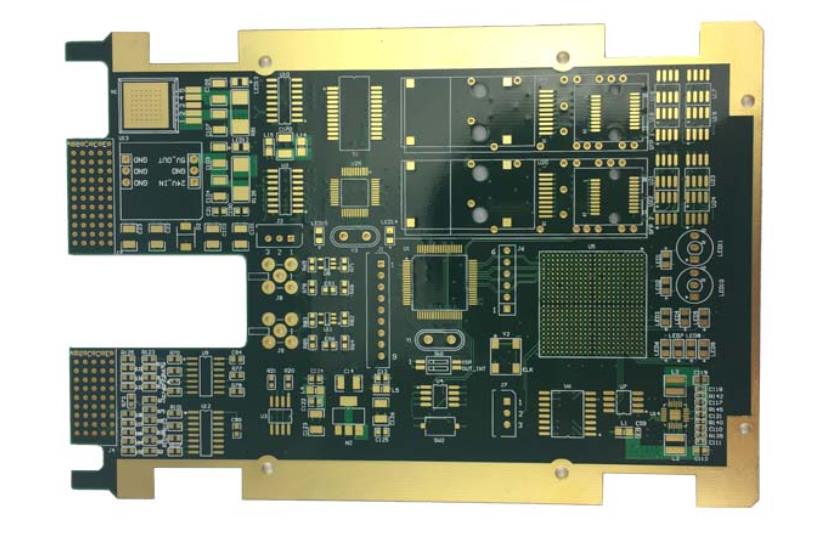
Power supplies also switch current rapidly. High-frequency switching creates noise that must be controlled through careful layout, filtering, and shielding. The PCB may need to separate the primary side from the secondary side, maintain creepage and clearance distances, and provide stable grounding.
Thermal management is another major difference. Components such as MOSFETs, diodes, inductors, and transformers generate heat. The PCB must spread this heat and connect it to heatsinks or other cooling structures. Copper planes, thermal vias, and thermally conductive materials all contribute to the thermal path.
Technical Capabilities Needed by a Power PCB Supplier
A capable power supply PCB manufacturer should understand different power architectures. Power supplies may use flyback, forward, half-bridge, full-bridge, LLC, or other converter topologies. The board layout requirements change with the topology, switching frequency, and power level.
The manufacturer should also understand input voltage, output current, isolation requirements, and applicable safety standards. This knowledge affects copper spacing, insulating distance, material thickness, and the placement of slots or barriers. If the factory only follows a generic PCB checklist, it may miss critical power design requirements.
In electric vehicle and industrial applications, power boards may operate at high voltage and high current. The supplier needs experience with wide spacing, thick copper, and materials that resist partial discharge and thermal stress.
Heavy Copper PCB Manufacturing
High-current power paths often require copper heavier than the 1 oz or 2 oz used in ordinary boards. Common power boards may use 3 oz, 4 oz, or even higher copper weight on selected layers. Heavy copper reduces resistance and allows the board to carry more current without overheating.
Heavy copper also improves heat spreading. A thick copper plane can move heat from a power component across a wider area before it reaches a heatsink. This lowers the temperature of the hottest point on the board and improves long-term reliability.
Manufacturing heavy copper boards requires special etching, imaging, and plating processes. Thick copper is harder to etch accurately, so the supplier must control line width and spacing carefully. Plated through holes in a heavy copper board also need sufficient copper in the barrel to carry current between layers.
Material Selection for Power PCBs
The base material of a power supply PCB must withstand the heat generated by the power stage. High-Tg laminates resist deformation and maintain their insulation properties at elevated temperatures. Some power products use materials with higher thermal conductivity to improve heat removal.
High-frequency power converters may require laminates with stable dielectric behavior for transformer and gate-drive circuits. The material should also have good mechanical strength and resistance to moisture. For outdoor or industrial products, moisture absorption and chemical resistance are important.
The manufacturer should recommend materials based on the real operating conditions of the product. A power adapter inside a sealed plastic case needs a different material strategy than an industrial power module attached to a metal heatsink.
Thermal Design and Heat Dissipation
Power supply PCBs often use multiple methods to remove heat. Large copper planes spread heat away from components, while thermal vias transfer it from one side of the board to the other. A metal-core board or metal-backed structure may be used when the power density is very high.
The layout should keep hot components separated from sensitive control circuits. An overheating controller can shift its reference voltage or produce timing errors. By placing power components near the edge or near a heatsink, the designer can create a more direct cooling path.
Thermal simulation during design helps identify hot spots before the board is manufactured. The manufacturer can then confirm that the copper weight, via pattern, and board construction support the expected power loss.
Layout and EMC Considerations
A clean power PCB layout starts with a defined current path. High-current loops should be as small as possible to reduce inductance. The gate-drive circuit should be kept close to the power switch, and the sense circuit should connect to the output at the correct point.
Electromagnetic compatibility is a common challenge in power supplies. Switching circuits generate noise at the switching frequency and its harmonics. Careful grounding, filtering, and shielding reduce the noise that reaches the input or output of the power supply.
The PCB manufacturer can provide design feedback about trace width, spacing, layer arrangement, and via placement. Working with a supplier that reviews power layouts helps prevent problems that are expensive to fix after assembly.
Quality Control During Production
A reliable power supply PCB manufacturer should inspect materials when they arrive. Copper foil, laminate, prepreg, solder mask, and surface finish chemicals must meet their specifications. Rejecting poor materials at the start avoids hidden defects later.
During production, automated optical inspection can detect etching defects, solder mask misalignment, and other visible problems. X-ray inspection is useful for verifying thick copper structures and hidden vias. Electrical testing checks the final board for opens and shorts.
Power boards should also be tested under simulated operating conditions when possible. Thermal cycling, humidity, and high-temperature aging can reveal failures that a simple electrical test cannot find. The level of testing should match the reliability required by the product.
Surface Finish and Solderability
The surface finish of a power supply PCB affects solderability and long-term reliability. ENIG is common for boards that need a flat surface and good corrosion resistance. Immersion silver and OSP are used for some cost-sensitive designs, while hard gold may be used on contact areas.
The finish must withstand the assembly process and the environment of the final product. A power board inside a sealed adapter may be less exposed than a board in an industrial drive. The manufacturer should select a finish that matches the assembly method and field conditions.
Solder mask also plays a protective role. High-performance solder mask resists high temperature and chemicals, protecting copper traces during reflow soldering and in service.
Prototype and Small-Batch Support
New power supply products need prototype boards to verify the design before volume production. A good power PCB manufacturer can produce small quantities quickly and provide useful feedback about layout and material choices. Prototype testing helps the design team confirm efficiency, ripple, thermal performance, and EMC behavior.
Small-batch production is also useful for pilot products and customer sampling. The factory should be able to scale from a few prototype boards to larger quantities without changing process quality. Consistency is important when a new product moves from sample approval to mass production.
Evaluating Power PCB Manufacturers
Start by asking about heavy copper capability, supported materials, maximum current rating, and experience with your type of power supply. Request examples of similar boards, process capability data, and quality certificates. A manufacturer that cannot explain how it controls thick copper etching may not be a reliable partner.
Communication is another important factor. The supplier should understand the design files, raise practical questions, and provide clear delivery information. Responsive support during development can reduce delays and improve the final result.
For an integrated solution, choose a partner that can combine PCB manufacturing with PCB design and layout support. gopcb offers this combination to help engineers move from schematic to manufactured board with fewer handoffs.
Assembly and Full Turnkey Support
Many power supply products need more than a bare board. Component placement, soldering, testing, and final assembly can all affect performance. A power PCB supplier that also provides assembly services gives the customer a single partner for the entire module.
Prototype PCB assembly helps verify the board with real power components and soldering processes. When the design is ready, turnkey PCB assembly handles component sourcing, assembly, and testing under one agreement.
Component procurement is especially valuable for power products because magnetic components, semiconductors, and high-voltage capacitors may have long lead times. Working with an experienced supply chain partner reduces the risk of delays.
Conclusion
A power supply PCB manufacturer should combine power engineering knowledge with precise manufacturing capability. High current, heat, switching noise, and safety requirements all place demands on the board that a general PCB supplier may not understand.
By selecting the right materials, designing an effective stackup, controlling heavy copper processing, and testing thoroughly, engineers can build power supplies that deliver stable output and long service life. The right manufacturer becomes a true partner in power product development.