Castellated PCB Guide: Half-Hole Design, Cost and Modules
Modular electronics have changed how products are designed. Instead of one large board, engineers now build small modules, such as wireless radios, GPS units, and sensor boards, and solder them onto a motherboard. The feature that makes this possible is the castellated edge, a row of half-holes plated with copper along the side of the module board. This guide explains what a castellated PCB is, why designers choose it, how the cost is built, what the 2025 price ranges look like, and how to source half-hole boards that assemble cleanly and perform reliably.
What Is a Castellated PCB?
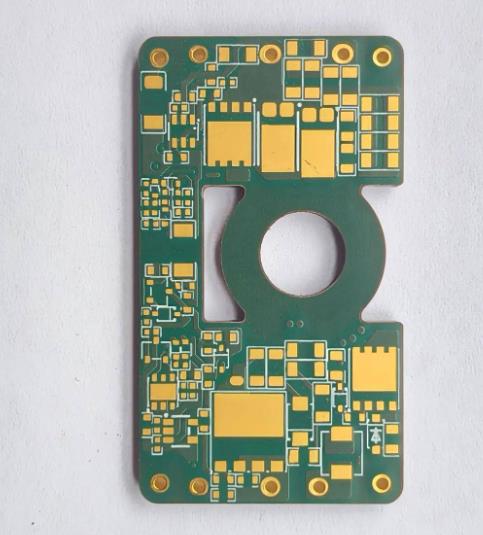
A castellated PCB, also called a half-hole or castellation board, is a circuit board with plated half-circle holes along its edges. The board is manufactured with full round holes drilled at the edge line, and when the panel is routed apart, each hole is cut in half, leaving a series of copper-plated semicircles that look like the battlements of a castle. These castellations let a small module board be soldered directly onto a larger motherboard, creating a strong electrical and mechanical connection without connectors. The design is widely used in wireless modules, Bluetooth and Wi-Fi modules, MCU modules, and sensor boards, where compact, reliable modular assembly matters.
Why Choose a Half-Hole PCB
Modular construction has become popular for good reasons. The design simplifies assembly because a module can be placed on the motherboard like a component and soldered in the same reflow pass, which is why castellations are sometimes called edge-solderable pads. The structure is compact, saving the space that a connector would consume and letting modules sit flat on the host board. Reliability is high because the plated half-holes form solid solder fillets on both the module and the host board. Batch production and testing are straightforward, which suits OEM and ODM projects that need consistent quality across thousands of units. For a design team, castellated modules also make upgrades easy: a new radio or sensor module can replace an old one without redesigning the motherboard.
Cost Structure of Castellated PCBs
The price of a half-hole board is assembled from familiar building blocks. Substrate cost depends on the material, from economical FR-4 to premium Rogers or ceramic boards for RF modules. Copper thickness and layer count follow the circuit requirements, with double-sided boards being common and four or more layers used where routing density demands it. Minimum hole size and trace width set the processing difficulty, because smaller holes and finer lines need more precise drilling and plating. Surface finish matters as well, with ENIG costing more than HASL or OSP. Finally, order quantity and lead time shape the unit price, since prototype runs spread setup cost over few boards and volume orders amortize it completely.
Key Cost Factors in Detail
Several factors move the price more than others. Material type is first: FR-4 keeps boards cheap, while high-frequency materials such as Rogers and ceramic substrates multiply the cost for RF modules. Board thickness and layer count come next, because thicker boards and multilayer stackups require more material and more process steps. Surface finish adds its own increment, with ENIG gold providing the best shelf life and solderability at a higher price than HASL. The density of the half-holes matters technically: smaller, tighter-spaced castellations demand accurate drilling and uniform edge plating, and any burr or uneven copper shows up as a solder defect on the assembly line. Order volume remains the most powerful lever, with batch pricing capable of cutting the unit cost by more than half.
Manufacturing Capability Checklist
Not every factory produces clean castellations, so capability matters. A serious supplier handles one to twelve layer half-hole boards, board thicknesses from 0.2 to 3.2 millimeters, and minimum hole diameters around 0.25 millimeters with uniform plating and burr-free edges. High-precision positioning keeps the half-holes aligned with the board edge, and controlled edge plating ensures every castellation has a consistent solderable surface. Finishes such as ENIG, immersion tin, and OSP give designers the choice between shelf life, cost, and solderability. Quick-turn prototypes of one to three days and volume production in five to seven days keep development schedules moving, and international shipping experience matters for global customers.
2025 Half-Hole PCB Price Ranges
Current pricing for a standard double-layer FR-4 castellated board with ENIG finish falls into clear bands. A prototype run of five boards typically costs 25 to 40 dollars in total, since engineering and tooling dominate. A small batch of one hundred boards lands at 1.5 to 2.5 dollars per board. Volume production above one thousand boards drops to 0.8 to 1.2 dollars per board. Four-layer designs or boards built on high-frequency materials run higher, typically 3 to 6 dollars per board. These numbers make castellated boards one of the most economical ways to build modular electronics, especially when the alternative is a connector that costs more than the board it replaces.
How to Reduce Castellated PCB Cost
Cost reduction follows standard rules applied to half-hole designs. Optimize the layout to reduce unnecessary vias and layers, because every layer adds process cost. Choose the cheapest surface finish that meets the requirement, with HASL as the low-cost default and ENIG reserved for long shelf life or fine-pitch assembly. Consolidate orders so volume pricing applies, which can cut the unit price to about 40 percent of the prototype rate. Source from a competitive manufacturing region, which can save 15 to 30 percent overall for the same quality. Use standard board sizes and shapes to avoid the extra tooling of special outlines, and verify the half-hole requirements early so the factory can panelize efficiently.
Regional Price Comparison
Where the board is made has a measurable effect on cost. American suppliers typically charge 3 to 5 dollars per double-layer FR-4 board because of higher labor costs, while European factories run 2.5 to 4.5 dollars with stricter compliance overhead. Chinese manufacturers offer the lowest pricing at 0.8 to 1.5 dollars per board for the same specification, supported by mature supply chains and efficient high-volume lines. For module makers who ship globally, the Chinese option delivers equivalent quality at a fraction of the cost, which is why so many wireless and IoT module designs are manufactured there and exported around the world.
Why Buyers Choose an Experienced Supplier
Beyond price, experience shows in the details that determine yield. A factory with years of half-hole work understands the plating parameters that prevent edge pull-back, the routing sequence that avoids burrs, and the inspection criteria that catch defects before assembly. Strict IPC-based inspection verifies hole quality and edge finish on every batch. Engineering support matters during the design review, when a supplier can point out that a castellation row needs more clearance or that the half-hole plating will be cleaner with a different finish. For OEMs, an experienced partner also provides complete PCB assembly services, including BGA soldering, functional testing, and full inspection reports, so the module arrives ready to solder onto the customer motherboard.
Assembly and Soldering Considerations
The quality of a castellated module is only visible after it is soldered to a host board, and that step needs planning. On the motherboard, the footprint must include the castellation pads with the correct pitch, and the solder paste stencil should open slightly larger than each pad so enough paste flows into the half-hole to form a strong fillet. During reflow, the module and the motherboard heat together, so the thermal mass of the module should be reasonable for the profile; large ground planes on the module can delay heating and cause cold joints if the profile is not adjusted. For hand assembly or rework, each castellation can be soldered individually with a soldering iron, which makes prototype builds and field repairs practical. Designers should keep a clean keep-out area around the castellation row on both boards so neighboring components do not interfere with solder flow, and they should verify that the module weight is supported by the number of castellations used.
Design Tips for Castellated Modules
A little design care makes half-hole modules assemble cleanly. Keep the castellations on straight board edges where possible, because corner features complicate routing and plating. Provide adequate spacing between the half-holes and nearby components so solder does not wick into the module. Specify the finish and hole size early, since changing either late affects cost and lead time. Add orientation marks and pin one identification so the module cannot be placed backward, and keep the footprint documentation clear for the customer who will integrate the module. These practices belong in the PCB design and layout phase and prevent the assembly surprises that turn a good module into a field problem.
Reliability and Testing
Because castellations are both the electrical and mechanical connection, they deserve specific testing. Continuity testing verifies that every half-hole is plated through to its net, because a single missing castellation disables the pin it serves. Visual and automated optical inspection checks the edge quality, looking for plating pull-back, burrs, and uneven copper that would create weak solder joints. Shear and pull testing on sample modules quantifies how strongly the module stays attached to the host board, and thermal cycling confirms that the solder joints survive temperature swings without cracking. For radio modules, RF testing after assembly verifies that the module still performs with its ground castellations connected, because the edge plating is often part of the antenna ground. These checks are easiest when the module supplier offers fast prototype PCB assembly and full inspection, so the design team validates the half-hole geometry before committing to volume production.
Frequently Asked Questions
Q1. What products use castellated PCBs? Half-hole boards are common in wireless modules, Bluetooth and Wi-Fi modules, IoT devices, GPS units, and communication modules that solder onto a host board.
Q2. What is the minimum half-hole size? Experienced manufacturers produce minimum hole diameters around 0.25 millimeters with uniform copper plating and clean edges.
Q3. How is a castellated PCB different from a normal PCB? A castellated board has plated half-holes on the edge that act as solderable pads, enabling direct module-to-motherboard assembly instead of connectors.
Q4. How long does prototyping take? Standard prototypes take one to three working days, and volume production about five to seven days.
Q5. Do you support overseas shipping? Yes, manufacturers serving global customers ship by DHL or UPS to the United States, Europe, and Asia on a regular schedule.
Conclusion
The castellated PCB is the quiet workhorse of modular electronics, turning a small circuit into a solderable building block that any motherboard can host. Its half-hole edges deliver compact size, reliable connections, and economical assembly, which is why wireless, IoT, and sensor products rely on them. Understanding the cost factors, price ranges, and design rules helps engineers and buyers source half-hole boards that assemble perfectly, and a partner with proven PCB manufacturing and PCBA testing capability delivers modules that work the first time, every time.