IPC Class 2 PCB Class 3 PCB: Key Differences and Standards
What Are IPC Class 2 and Class 3 PCBs?
IPC PCB classifications are used to define different levels of performance, reliability, and acceptance requirements for electronic products.
The two commonly referenced categories are IPC Class 2 PCB and IPC Class 3 PCB.
The primary difference is the level of reliability required by the end application. Class 2 is generally intended for products where continued performance and extended service life are important, while Class 3 applies to products where uninterrupted operation and a higher level of reliability are required.
Therefore, choosing between Class 2 and Class 3 is not simply a matter of selecting a higher-quality PCB. The classification should be determined by the product’s intended application, operating environment, expected service life, and consequences of failure.
What Is an IPC Class 2 PCB?
An IPC Class 2 PCB is generally used for dedicated-service electronic products where continued performance and extended product life are important.
Typical applications may include:
- Telecommunications equipment
- Commercial and industrial electronics
- Complex business equipment
- Measurement and test instruments
- Consumer products requiring extended service life
For Class 2 products, occasional defects that do not affect the functional or long-term reliability requirements may be acceptable under the applicable IPC acceptance criteria.
However, this does not mean that Class 2 PCBs can be manufactured without strict quality controls. The board still needs to meet the applicable requirements for materials, fabrication, soldering, conductor geometry, holes, plating, cleanliness, and other characteristics.
What Is an IPC Class 3 PCB?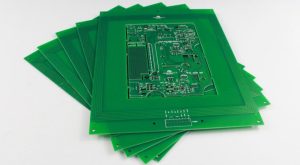
An IPC Class 3 PCB is intended for high-performance or high-reliability electronic products where continuous operation is critical.
Typical applications can include:
- Medical equipment
- Life-support systems
- Aerospace electronics
- Critical industrial control systems
- High-reliability communications equipment
- Other mission-critical electronic systems
For these applications, PCB defects that might be acceptable under Class 2 may become unacceptable under Class 3 because even a small defect can potentially affect long-term reliability or system availability.
Class 3 therefore generally imposes more demanding acceptance requirements and tighter control over manufacturing quality.
IPC Class 2 vs. Class 3: What Is the Difference?
The fundamental difference can be summarized as reliability requirements and consequences of failure.
| Category | IPC Class 2 | IPC Class 3 |
|---|---|---|
| Product type | Dedicated-service electronics | High-performance/high-reliability electronics |
| Reliability requirement | High | Very high |
| Expected service life | Generally extended | Generally extended and reliability-critical |
| Operating continuity | Normal operation is expected | Continuous operation is often critical |
| Environment | Typical operating environments | May involve harsh or demanding environments |
| Acceptable defects | Some defects may be acceptable if permitted by the applicable IPC criteria | More restrictive acceptance requirements |
| Typical applications | Telecom, industrial, commercial electronics | Medical, aerospace, mission-critical systems |
The exact acceptance requirements should always be determined from the applicable IPC standard and product specification rather than from the class designation alone.
How Does IPC Classification Affect PCB Quality?
The IPC class directly affects how certain PCB characteristics are evaluated during manufacturing and inspection.
1. Copper Conductors
Trace width, conductor spacing, conductor integrity, and other characteristics are evaluated against the requirements applicable to the selected class.
For high-reliability products, defects that reduce conductor cross-section or create potential reliability concerns may require more stringent evaluation.
2. Plated Through-Holes and Vias
Hole quality is particularly important in multilayer PCBs because plated through-holes provide electrical and mechanical connections between layers.
Inspection may consider factors such as:
- Plating integrity
- Hole wall condition
- Copper thickness
- Voids
- Cracks
- Annular ring
- Registration
Class 3 applications generally require tighter control because failures in plated interconnections can have serious consequences.
3. Solder Joints
Solder joints are evaluated for characteristics such as:
- Solder coverage
- Wetting
- Voids
- Component alignment
- Lead and pad conditions
- Solder defects
The acceptance criteria depend on the component type, assembly technology, and applicable IPC assembly standard.
4. Solder Mask and Silkscreen
Solder mask coverage, registration, clearance, and other surface conditions also need to meet the requirements applicable to the product class.
Silkscreen should not interfere with solderable areas or critical electrical features.
5. Surface Finish
The selected surface finish must provide the required solderability, contact performance, and durability for the intended application.
High-reliability products may require tighter process control and qualification of the selected finish.
6. Material and Manufacturing Control
The higher the reliability requirement, the more important process control becomes.
Material selection, lamination, drilling, plating, etching, solder mask application, surface finishing, inspection, and testing all contribute to final PCB reliability.
Why Can’t Class 2 and Class 3 Be Judged by Appearance Alone?
One common misunderstanding is that an IPC Class 3 PCB should simply “look better” than a Class 2 PCB.
In reality, IPC classification involves more than visual appearance.
Two PCBs can look almost identical while having different acceptance requirements for internal construction and manufacturing characteristics.
For example, a cross-section may reveal conditions that cannot be identified through normal visual inspection, including:
- Internal copper thickness
- Plated hole integrity
- Interlayer registration
- Lamination quality
- Hole-wall defects
- Internal separation or cracking
Therefore, PCB acceptance should be based on the applicable IPC requirements, manufacturing specifications, drawings, and inspection methods rather than appearance alone.
Which IPC Class Should You Choose?
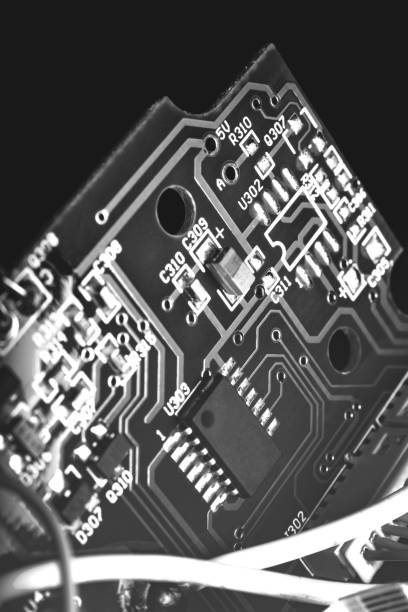
The appropriate class should be determined by the application.
Class 2 May Be Suitable When:
- The product operates in a conventional environment.
- Occasional service interruptions do not create critical safety risks.
- Long service life is important but uninterrupted operation is not mission-critical.
- The product is used in commercial, industrial, or telecommunications applications with appropriate reliability requirements.
Class 3 May Be Required When:
- Continuous operation is essential.
- Product failure could create significant safety or operational consequences.
- The equipment must operate reliably in demanding environments.
- The product has strict long-term reliability requirements.
- The application involves medical, aerospace, defense, or other mission-critical systems.
However, the final classification should be established in the project documentation and purchasing specifications.
IPC Class Is Not the Same as PCB Grade
It is also important to distinguish IPC product classes from general terms such as “high-quality PCB.”
IPC Class 3 does not simply mean that every aspect of the PCB is automatically superior to Class 2.
Instead, the class establishes different acceptance criteria for the intended application.
A PCB manufactured to Class 2 requirements can be completely appropriate for its intended product. Manufacturing it to Class 3 requirements when the application does not require that level of reliability may increase manufacturing cost without providing a meaningful product benefit.
The correct approach is to match the PCB class to the actual reliability requirements of the product.
How to Verify an IPC Class 2 or Class 3 PCB
When receiving a PCB, engineers and quality teams should review the applicable documentation and inspection results.
A practical acceptance workflow includes:
- Confirm the specified IPC class
- Verify the applicable IPC standards
- Check PCB drawings and fabrication specifications
- Review material and stackup requirements
- Inspect conductor and solder mask characteristics
- Verify hole and plating quality
- Check surface finish
- Perform dimensional inspection
- Conduct electrical testing when required
- Use cross-section analysis or other verification methods for critical characteristics
For production PCBs, acceptance criteria should be agreed upon before manufacturing rather than determined only after the boards are delivered.
For more information about PCB fabrication processes and quality requirements, see GOPCBA PCB Manufacturing.
IPC Class 2 vs. Class 3: Quick Decision Guide
| Application Requirement | Recommended Consideration |
|---|---|
| Standard commercial electronics | Class 2 may be appropriate |
| Industrial control equipment | Class 2 or Class 3 depending on reliability requirements |
| Telecommunications equipment | Class 2 or Class 3 depending on application |
| High-reliability industrial systems | Class 3 may be appropriate |
| Medical equipment | Often Class 3 for reliability-critical applications |
| Aerospace and mission-critical electronics | Class 3 is commonly considered |
| Safety-critical systems | Class 3 requirements may be necessary |
The final decision should always be based on the product specification, applicable IPC standards, customer requirements, and risk associated with failure.
Conclusion
The difference between IPC Class 2 and Class 3 is primarily related to product reliability requirements, operating conditions, and the consequences of failure.
Class 2 is intended for dedicated-service electronic products where reliable and extended operation is important. Class 3 is designed for applications requiring a higher level of reliability and performance, particularly where continuous operation is critical.
For engineers, the most important point is that IPC classification should be established before PCB manufacturing begins. The PCB class should be reflected in the design documentation, fabrication specifications, inspection criteria, and quality-control process.
For complex PCB projects, combining the correct IPC class with appropriate GOPCBA PCB Design & Layout, fabrication, inspection, and testing requirements helps create a more reliable transition from design to production.