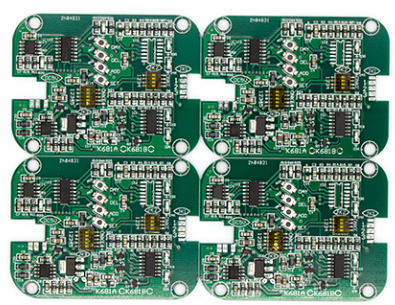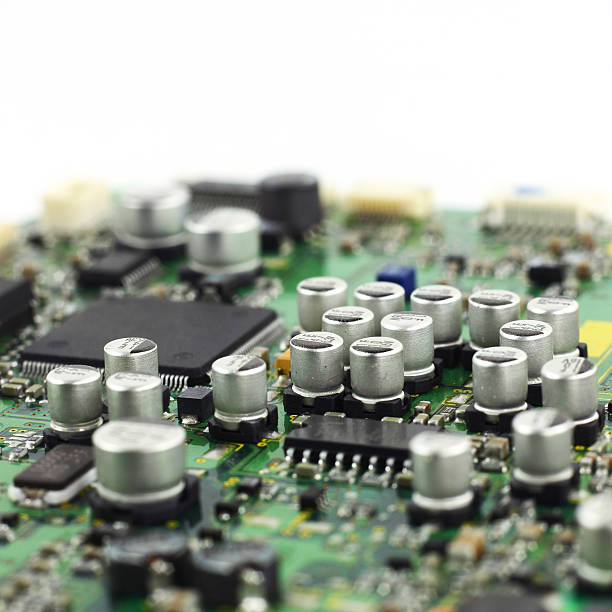
PCBA Production vs SMT Assembly: From Component Placement to Complete Electronics Manufacturing
In modern electronics manufacturing, PCBA Production and SMT Assembly are often used interchangeably, but they actually describe different levels of the manufacturing process.
SMT is a critical assembly technology used to mount surface-mount components onto a printed circuit board. PCBA production, on the other hand, covers a much broader manufacturing process that can include PCB preparation, SMT assembly, through-hole assembly, soldering, inspection, functional testing, and final product assembly.
Understanding the difference between SMT and PCBA can help electronics companies select the right manufacturing process, control production risks, and improve product quality.
What Is the Difference Between PCBA Production and SMT Assembly?
What Is SMT Assembly?
SMT Assembly, or Surface Mount Technology assembly, is a PCB assembly process in which surface-mount components are placed directly onto solder pads on a printed circuit board.
Typical SMT components include:
- Resistors and capacitors
- Integrated circuits
- BGA components
- QFN and QFP packages
- Small-outline ICs
- Other surface-mount devices
A typical SMT process includes solder paste printing, component placement, solder reflow, and automated optical inspection.
SMT focuses primarily on the precise and efficient placement and soldering of surface-mount components.
For projects requiring both surface-mount and through-hole components, Mixed Technology PCB Assembly can integrate multiple assembly technologies within the same production process.
What Is PCBA Production?
PCBA Production refers to the complete process of manufacturing a functional printed circuit board assembly.
Depending on product requirements, a complete PCBA process may include:
- PCB manufacturing
- SMT assembly
- Through-hole component insertion
- Wave or selective soldering
- Manual soldering and rework
- AOI inspection
- X-ray inspection
- Functional testing
- Programming
- Final assembly
- Packaging and delivery
Therefore, SMT can be considered an important part of PCBA production, while PCBA production represents the broader manufacturing workflow.
In simple terms:
SMT focuses on component placement and soldering, while PCBA production focuses on delivering a complete and tested electronic assembly.
PCBA Production vs SMT Assembly: Key Differences
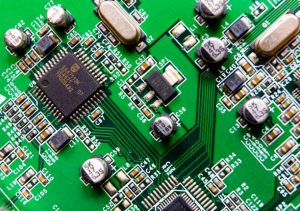
The differences between the two processes can be understood from several perspectives.
1. Process Scope
SMT is a specific assembly technology. It primarily handles surface-mount components and relies heavily on automated equipment.
PCBA production covers a wider range of manufacturing activities. In addition to SMT, it can include Through-Hole PCB Assembly, soldering, inspection, testing, and final assembly.
This makes PCBA production suitable for products containing different component packages and assembly requirements.
2. Manufacturing Objective
The primary objective of SMT is accurate, high-speed component placement and reliable soldering.
PCBA manufacturing has a broader objective: producing a fully functional, reliable, and tested electronic assembly that is ready for integration into the final product.
This means PCBA production requires coordination between multiple manufacturing stages rather than focusing on a single assembly operation.
3. Quality Control
SMT quality control typically focuses on solder paste printing, component placement accuracy, solder joints, and reflow conditions.
PCBA quality control covers the entire manufacturing chain.
Depending on the product and production requirements, inspection and testing may include:
- Solder paste inspection (SPI)
- Automated optical inspection (AOI)
- X-ray inspection
- Visual inspection
- In-circuit testing
- Functional testing
- Electrical testing
A complete quality system helps identify defects at different stages instead of relying solely on final inspection.
4. Component Compatibility
SMT is optimized for surface-mount components, while PCBA production can accommodate both surface-mount and through-hole components.
Through-hole components are commonly used where mechanical strength, high current handling, connectors, switches, or other special requirements are involved.
For products that combine SMT and THT components, an integrated assembly process can reduce manufacturing complexity and improve process coordination.
How Does a Complete PCBA Manufacturing Process Work?
A typical PCBA Manufacturing workflow can involve several interconnected stages.
Step 1: PCB Design and Engineering Review
The process begins with PCB design files, schematics, component data, and manufacturing requirements.
An engineering review can identify potential manufacturing issues before production begins, such as:
- Inadequate component spacing
- Difficult-to-solder pads
- Incorrect footprints
- Thermal management problems
- Component availability issues
- Assembly orientation problems
Early engineering analysis can reduce production risks and avoid expensive redesigns.
Step 2: PCB Manufacturing
The bare PCB is manufactured according to the approved design files.
PCB fabrication may involve multilayer stack-up production, drilling, copper plating, solder mask application, surface finishing, electrical testing, and other processes.
Integrating PCB fabrication with assembly can simplify supply-chain management and improve coordination between the board and assembly processes.
Step 3: SMT Assembly
During SMT assembly, solder paste is printed onto the PCB pads.
Automated placement equipment then accurately places surface-mount components onto the solder paste.
The board passes through a reflow oven, where controlled thermal profiles melt the solder and form reliable solder joints.
After reflow, automated inspection can identify component placement and soldering defects.
Step 4: Through-Hole Assembly
If the PCB contains through-hole components, they are inserted after or alongside the SMT process depending on the product design.
Through-hole assembly may use:
- Manual insertion
- Automated insertion
- Wave soldering
- Selective soldering
- Hand soldering
The appropriate method depends on component types, PCB design, production volume, and thermal requirements.
Step 5: Inspection and Testing
After assembly, the PCBA should be inspected and tested according to its quality requirements.
Inspection can verify component placement, solder joints, polarity, and assembly quality.
Electrical and functional testing can further confirm whether the finished board operates according to its design specifications.
Step 6: Final Assembly and Delivery
For turnkey manufacturing projects, PCBA production may continue beyond PCB assembly.
Additional services can include programming, cable and wire harness assembly, mechanical integration, enclosure assembly, labeling, packaging, and final product testing.
This approach allows customers to consolidate multiple manufacturing processes with a single supplier.
Why Choose Integrated PCBA Production?
Better Process Coordination
When SMT, through-hole assembly, inspection, testing, and other processes are managed within one manufacturing system, communication between different production stages becomes easier.
This can reduce handoff errors and simplify production management.
Improved Quality Control
A complete PCBA manufacturing process allows quality controls to be implemented at multiple stages.
Instead of checking only the final product, manufacturers can monitor solder paste printing, component placement, soldering, inspection, and electrical performance throughout production.
Reduced Supply Chain Complexity
Working with multiple suppliers for PCB fabrication, SMT assembly, component sourcing, testing, and final assembly can increase coordination costs.
An integrated manufacturing solution can consolidate these processes and provide a more streamlined production workflow.
Suitable for Different Production Volumes
Different electronic products have different production requirements.
Prototype and small-batch products may require rapid engineering feedback and flexible production, while larger production runs require stable processes, repeatability, and efficient production management.
A flexible Rapid PCBA Prototyping process can help engineers validate designs before moving into larger production volumes.
SMT Assembly or Complete PCBA Production: Which Do You Need?
The right choice depends on the requirements of your project.
If you only need surface-mount components placed and soldered onto an existing PCB, SMT assembly may be sufficient.
If your project requires PCB fabrication, SMT, through-hole components, soldering, inspection, testing, component sourcing, and final assembly, a complete PCBA manufacturing solution is more appropriate.
For example:
| Requirement | SMT Assembly | Complete PCBA Production |
|---|---|---|
| Surface-mount components | Yes | Yes |
| Through-hole components | Limited | Yes |
| Soldering | Yes | Yes |
| PCB fabrication | Usually separate | Can be integrated |
| Component sourcing | Optional | Can be integrated |
| Inspection | Yes | Yes |
| Functional testing | Optional | Available depending on project |
| Final assembly | Usually not included | Can be included |
| Turnkey manufacturing | No | Yes |
For projects requiring both PCB fabrication and assembly, PCB Manufacturing can be coordinated with the assembly process to create a more integrated manufacturing workflow.
How GOPCBA Supports Complete PCBA Manufacturing
GOPCBA provides integrated electronics manufacturing solutions covering different stages of the PCB and PCBA production process.
Depending on project requirements, customers can combine PCB manufacturing, SMT assembly, through-hole assembly, component sourcing, inspection, testing, and other manufacturing services.
The goal is not simply to place components onto a PCB, but to establish a controlled manufacturing process from engineering review through final product delivery.
For customers looking for a reliable PCB Assembly partner, integrating multiple manufacturing processes under one supplier can simplify project management while improving production consistency.
Conclusion
SMT assembly and PCBA production are closely related but should not be considered the same process.
SMT Assembly is a core technology for placing and soldering surface-mount components. PCBA Production covers a much broader manufacturing workflow that can include SMT, through-hole assembly, soldering, inspection, testing, and final assembly.
For simple surface-mount projects, SMT may meet the manufacturing requirements. For complex electronic products requiring multiple assembly technologies and integrated quality control, a complete PCBA manufacturing solution provides greater flexibility and process coordination.
By combining engineering support, PCB manufacturing, component sourcing, assembly, inspection, and testing, GOPCBA helps customers move from PCB design to finished electronic assemblies through a more streamlined manufacturing process.