Energy Storage PCB Guide: How Much Does an ESS Circuit Board Cost?
Energy storage systems now stand behind solar plants, wind farms, EV charging networks, and grid peak-shaving projects around the world, and every one of those systems depends on a reliable energy storage PCB to manage power safely. If you are an engineer, purchasing manager, or project owner asking how much an energy storage circuit board costs, the answer depends on materials, layer count, copper weight, testing, and order volume. This energy storage PCB guide explains what these boards do, why their price ranges vary so widely, and how to budget accurately before you request a quotation from a PCB manufacturing partner.
What Is an Energy Storage PCB?
An energy storage PCB is the control circuit board used inside energy storage systems (ESS). It is the core of the battery management system (BMS), inverter control modules, and other power electronics that keep a battery bank balanced, monitored, and protected. These boards regulate charge and discharge rates, watch cell temperatures, manage state-of-charge reporting, and shut the system down safely if anything goes wrong.
A typical energy storage system circuit board must handle far more than a consumer electronics board. ESS boards carry switching currents from battery cells, interface with high-voltage power stages, and run in enclosures where heat builds up quickly. That is why most designs use multilayer construction, heavy copper, and carefully planned thermal paths instead of a simple two-layer layout. From a 2-layer BMS board in a small portable battery to a 12-layer inverter control board in a utility-scale container, the product family is broad, and so is the price range.
How Energy Storage PCBs Differ from Ordinary Boards
Three characteristics separate an energy storage PCB from a standard digital board. First is current capacity: battery packs can deliver tens or hundreds of amps, so traces, copper planes, and connectors must carry high current without overheating. Second is thermal management: heat sinks, copper-filled vias, and large copper pour areas are common so that heat from MOSFETs and inductors moves away quickly. Third is reliability: an ESS is expected to operate for a decade or more, so the board uses high-Tg laminates, robust solder joints, and protective finishes that resist humidity and temperature cycling.
Because of these demands, material selection matters more than in ordinary products. FR-4 with a high glass transition temperature covers most designs, while aluminum-base boards and polyimide boards appear when thermal performance or mechanical flexibility is critical. Buyers who compare quotes should always confirm the substrate grade, copper weight, and thermal construction, because two boards that look identical on paper can differ substantially in real cost and performance.
Key Cost Factors for Energy Storage PCBs
When a manufacturer prices an energy storage PCB, it balances several variables. Material type is usually the first: FR-4 is the economical default, while aluminum-base and polyimide substrates cost more but improve heat transfer. Layer count drives cost as well; more layers mean more lamination steps, drilling, and inspection. Copper weight is another significant factor, because 2 to 4 ounce copper boards cost noticeably more than the standard 1 ounce version used in consumer electronics.
Thermal management and testing add a further 10 to 20 percent to production cost, since advanced thermal solutions and impedance testing require extra process steps and equipment time. Finally, assembly complexity affects the total: SMT components, through-hole power devices, and dense BMS circuits all increase placement and soldering effort. Understanding these factors helps you compare supplier quotes fairly instead of simply choosing the lowest number.
Manufacturing Processes and Typical Board Prices
Energy storage boards are usually quoted per board, and the price climbs with capability. The ranges below reflect typical current market pricing for a standard production board.
- Single-layer PCB for simple energy storage applications: roughly $0.80 to $1.50 per board.
- Double-layer PCB for standard BMS circuits: about $1.20 to $2.50 per board.
- Multilayer PCB from 6 to 12 layers for complex BMS and inverter control modules: $3.00 to $8.00 per board.
- HDI or thick-copper PCB for high-current, high-density ESS boards: $5.00 to $12.00 per board.
Choosing the right manufacturing tier is a balancing act between cost and performance. A residential battery pack rarely needs an HDI board, while a grid-scale storage module with high switching frequencies often does. Describing the operating environment and electrical requirements clearly when requesting a quote lets the factory recommend the most economical process that still meets the specification.
Surface Finish Options and Their Cost Impact
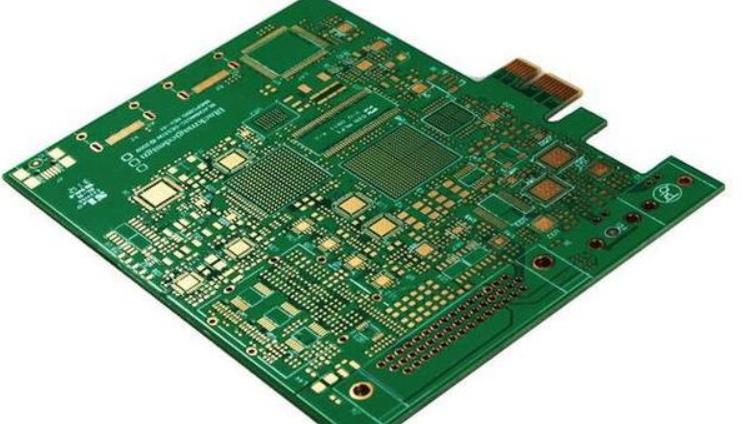
Surface finish protects the copper traces and guarantees solderability, and it is a line item buyers often overlook. HASL lead-free is the economical standard at about $0.80 to $1.50 per board, but its uneven surface is a poor fit for fine-pitch BMS devices. ENIG offers flat pads and high durability for $2.00 to $4.00, and ENEPIG supports gold wire bonding at $5.00 to $8.00. OSP is environmentally friendly at $0.90 to $1.80 but has a short shelf life, while immersion silver or tin sits in the middle at $1.50 to $3.00 with balanced cost and performance.
In energy storage applications, ENIG and immersion silver are the most widely used because of their thermal stability and long-term reliability. The finish choice should be locked early in the project, because changing it later can affect solderability, contact resistance, and the board price by several dollars per unit on larger formats.
Assembly and Component Costs
Bare board price is only part of the picture, because an energy storage system PCB must be populated before it can do anything. Assembly typically adds $0.02 to $0.05 per SMT component and $0.10 to $0.30 per board for through-hole parts such as connectors and power terminals. The bill of materials is usually the biggest line: MOSFETs, driver ICs, capacitors, current sensors, and monitoring ICs commonly add $5.00 to $15.00 per board for a BMS, before labor, solder paste, and inspection are included.
This is why pairing bare-board production with SMT PCB assembly and components procurement in one contract makes sense for ESS projects. A single accountable supplier can source genuine parts, manage the assembly process, and run functional tests, which removes coordination overhead and protects the schedule when a component lead time changes.
Realistic Energy Storage PCB Price Ranges by Product Type
Combining the factors above produces fairly predictable ranges for common product types. A 2 to 4 layer prototype board for design validation runs about $1.20 to $2.80 per board, while a 6-layer board in medium volume sits at $2.50 to $4.50. High-performance BMS boards with 8 to 12 layers cost $5.00 to $8.00, and flexible or aluminum-base boards are quoted from $3.00 to $6.00 depending on the configuration. Once an order reaches 1,000 boards or more, unit costs typically fall 20 to 30 percent as setup and engineering charges spread across the batch.
Global Price Comparison for Energy Storage PCBs
Where you manufacture also influences the number on the quotation. Chinese manufacturers typically quote $0.80 to $3.50 per board for ESS products, combining mature supply chains with competitive labor. American fabricators range from $3.00 to $8.00 with higher material and labor costs, European shops sit at $2.50 to $7.00 with strong quality systems, and India is an emerging option at $1.00 to $4.00. For volume ESS programs, factory-direct sourcing from China remains the most cost-effective route, which is why global OEMs increasingly work directly with manufacturers such as gopcb that support international export.
How to Reduce Energy Storage PCB Cost
Cost reduction for an ESS board starts in engineering. Swapping polyimide for high-Tg FR-4 where the thermal requirement allows it can cut material cost roughly in half, and simplifying the layout by removing unnecessary vias and tightening the routing saves $0.50 to $1.00 per board. A disciplined PCB design and layout review catches most of these opportunities before fabrication starts.
Engaging the factory early through a design-for-manufacturing review prevents expensive rework, because DFM feedback arrives before tooling is cut instead of after a failed first run. Consolidating orders is equally powerful: purchasing 1,000 boards at once instead of several small batches typically saves 20 to 30 percent, which can mean $1.00 to $3.00 per board on a multilayer ESS design. Taken together, these measures often reduce total project cost by 15 to 30 percent without compromising safety or cycle life.
Energy Storage PCB Price Trends and Market Outlook
Demand for renewable energy and electric vehicles keeps pushing ESS board complexity upward, and that shows in pricing. HDI and thick-copper boards are becoming standard in high-capacity storage products, with pricing stabilizing in the $5.00 to $12.00 per board range as factories invest in dedicated lines. Raw laminate prices have moved moderately, and compliance costs for UL, RoHS, and ISO certification add roughly $0.50 to $1.00 per board, while testing and quality control add another $0.20 to $0.50. The most effective levers in 2026 remain volume consolidation, early DFM collaboration, and buying directly from the factory.
Why Choose gopcb for Energy Storage PCB Manufacturing
gopcb builds energy storage system PCBs for battery and inverter customers worldwide, with experience across BMS, power conversion, and high-current modules. The factory supports 1 to 14 layers, HDI, thick copper, aluminum-base, and flexible boards, with board pricing typically from $0.80 to $3.50 depending on the layer count and specification. Quick-turn prototyping, volume production, full electrical and impedance testing, and ISO and UL aligned quality systems are all available under one roof. For energy customers that need populated modules as well, the energy PCBA service combines board fabrication with assembly and testing so the complete ESS control module arrives ready to install.
Energy Storage PCB FAQ
Q1: What is the minimum order quantity for an energy storage PCB? gopcb supports low-MOQ prototype orders starting from as few as 5 boards, which keeps early validation affordable for startups and R&D teams.
Q2: How long does ESS PCB manufacturing take? Standard production lead time is 5 to 7 working days, and expedited service is available when a project is time-critical.
Q3: Can I get a custom quotation for my energy storage system PCB? Yes. Submit your Gerber files or design specification through gopcba.com, and the engineering team returns a free quotation, usually within 24 hours, with DFM notes included.
Q4: Does gopcb support both prototype and volume production? Yes, the same team handles samples and mass production, so quality stays consistent when a design moves from validation to ramp.
Q5: Which tests are performed on energy storage boards? AOI, ICT, and functional testing are available, and impedance testing can be added for controlled impedance designs, with reports supplied for each batch.
Conclusion
The cost of an energy storage PCB depends on material, layer count, copper weight, surface finish, assembly content, and production volume. A simple two-layer BMS board and a 12-layer utility-scale control board are different products with different budgets, so the smartest approach is to define the specification first, then optimize the stack-up and layout before asking for quotes. With the right design decisions and an experienced manufacturing partner, ESS projects can hit their reliability targets without paying for capability they never use.