OLED PCB Guide: Types, Applications and Manufacturing Costs
OLED technology has reshaped the display industry, appearing in smartphones, tablets, laptops, televisions, automotive dashboards, and wearables. Behind every bright, thin OLED panel sits a carefully engineered circuit board that delivers power and data to the display. The OLED PCB is not an ordinary board: it must be thin, precise, thermally aware, and often flexible. This guide explains what an OLED PCB is, how it is built, which types exist, what applications it serves, how much it costs in 2025, and how to choose a manufacturer for rigid, flexible, or rigid-flex designs.
What Is an OLED PCB?
A OLED PCB is a printed circuit board designed specifically for organic light-emitting diode displays. It carries the driver circuits, connectors, and power management that feed each pixel of the panel with precise voltage and current. Unlike boards for ordinary electronics, OLED boards are optimized for high resolution, thin mechanical profiles, and clean signal delivery, because display quality depends directly on how consistently power and data reach the panel.
The board also manages the physical interface between the display and the host device. Connectors and pads must align with fragile panel tails, and the layout must keep high-speed display signals free of interference. Whether the product is a phone with a folding screen or a television with a fixed panel, the OLED PCB determines how cleanly the image is driven and how reliably the display performs over its lifetime.
Key Components of an OLED PCB
The substrate is the foundation of every OLED board. Rigid designs use standard FR-4 for stable, economical construction, while flexible OLED boards use polyimide films that bend thousands of times without cracking. The conductive layer is copper, patterned into traces that move power and signals with minimal loss and heating. Circuit design integrates the driver layout so that interference stays low and brightness remains uniform across the whole panel.
Connectors and solder pads complete the structure, linking the board to the OLED panel and the main processor. Because OLED panels are thin and sensitive, connector alignment and solder joint quality are critical: a marginal connection that works at room temperature can fail after thermal cycling or mechanical flexing. Every component on the board is chosen with the display electrical and mechanical demands in mind.
How an OLED PCB Works
The board acts as the electrical bridge between the device processor and the OLED panel. It supplies each pixel with the voltage and current it needs and controls signal timing so the image updates smoothly. A well-designed OLED PCB prevents signal attenuation, screen flicker, and brightness non-uniformity, while an optimized layout improves power efficiency and extends the life of both the board and the display.
Power integrity is especially important in OLED products. Brightness across a large panel depends on uniform current delivery, so the board power planes and decoupling must be planned carefully. Thermal behavior matters too, because OLED panels are temperature sensitive and the driver electronics generate heat. Boards that combine clean power distribution with sensible thermal paths keep colors accurate and the display stable during long use.
Types of OLED PCBs
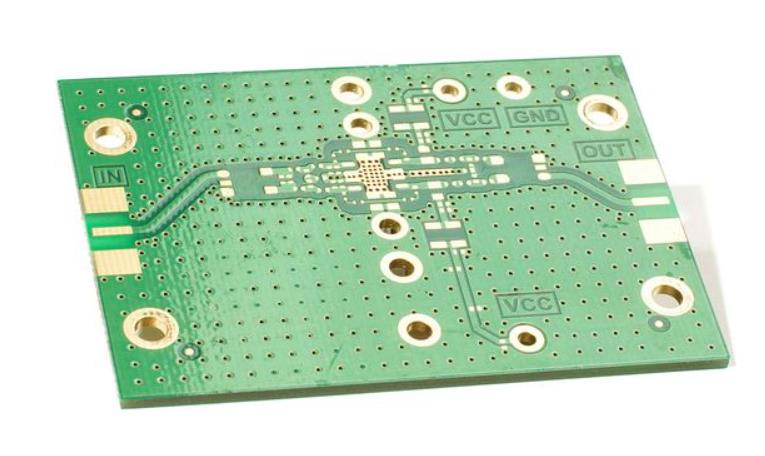
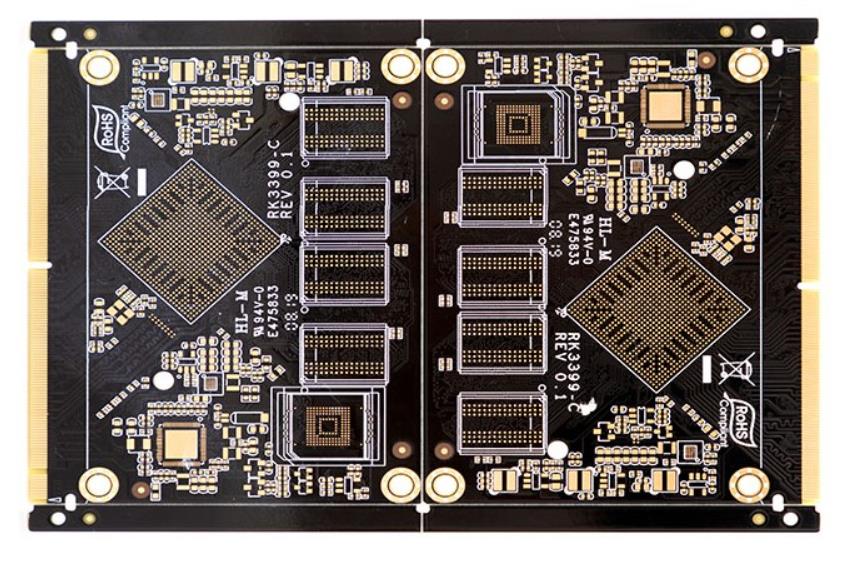
OLED boards come in three main constructions. Rigid OLED PCBs serve televisions, monitors, and devices with flat, stationary displays, offering reliable performance at the lowest cost. Flexible OLED PCBs use polyimide substrates and support folding phones, wearables, and curved screens, enabling product designs that rigid boards cannot. Rigid-flex OLED PCBs combine both technologies in one assembly, providing stable mounting zones for components alongside bendable sections for compact devices.
The type follows the product mechanical needs. A smartwatch strap display needs a flexible board that wraps around the case, while a desktop monitor benefits from a rigid board with robust connectors. Foldable phones often use rigid-flex constructions so that the rigid zones carry the processor and drivers while the flex zones survive repeated folding. Each construction trades cost, reliability, and design freedom differently.
Advantages of OLED PCB Technology
OLED boards support the properties that make OLED displays attractive. They enable ultra-thin devices by using thin substrates and low-profile components, and they support high resolution by keeping high-speed display signals clean across dense layouts. Flexible OLED PCBs make foldable and curved electronics possible, and optimized power distribution reduces energy consumption, which improves battery life in portable products.
For manufacturers, the technology also simplifies system integration. Because the driver and power circuits sit on a dedicated board, the display module can be tested independently before final assembly, catching defects early. Uniform brightness and accurate color depend on the board electrical consistency, which is why display brands invest in high-quality OLED PCB manufacturing rather than treating the board as a commodity part.
Common Applications of OLED PCBs
OLED boards appear wherever high-quality displays are used. Smartphones and tablets rely on them for high-refresh-rate screens and HDR performance. Televisions and monitors use rigid OLED boards to drive 4K and 8K panels with wide color gamut. Automotive displays, including digital instrument clusters, infotainment screens, and head-up displays, demand boards that survive temperature extremes and vibration. Wearables such as smartwatches and fitness trackers use flexible OLED PCBs for small, curved, high-resolution screens, and medical devices use them for diagnostic displays and health monitoring products.
The common thread is display quality in constrained spaces. Each application adds its own requirements: automotive boards need high reliability grades, wearables need extreme thinness, and televisions need large-area uniformity. Manufacturers that understand these differences can recommend the right substrate, layer count, and finish for each product category.
OLED PCB Manufacturing Flow
Production follows a disciplined sequence. Design and prototyping start with CAD layout that matches the display electrical specifications and mechanical envelope. Material selection then fixes the substrate, copper thickness, and surface finish based on whether the design is rigid, flexible, or both. Assembly uses SMT to place the driver ICs, connectors, and passive components precisely, followed by testing that covers continuity, thermal behavior, and display function. Final inspection verifies that each board meets the reliability and performance standards of the target application.
Flexible designs add process considerations at every step. Handling, lamination, and cover-layer alignment must protect the polyimide base, and solder mask on flex circuits needs tuned materials that bend without cracking. Rigid-flex boards require even tighter registration between their rigid and flexible zones. These factors make experienced manufacturing partners valuable, since subtle process errors in flex construction appear only after months of use.
2025 Market Trends for OLED PCBs
The OLED PCB market is expanding quickly with demand from consumer electronics, automotive displays, and wearables. Flexible OLED PCBs are the fastest-growing segment as foldable phones and curved screens move into the mainstream, and manufacturers are developing thinner, higher-density boards with better heat spreading and efficiency. Industry forecasts point to roughly 12 percent annual growth for the global OLED PCB market through 2025 and beyond.
For buyers, the trend means more capable suppliers and falling costs over time. Panel makers and ODMs are consolidating their board suppliers around partners that can handle flexible and rigid-flex construction at scale, because display roadmaps increasingly depend on mechanical flexibility. Teams planning new OLED products should qualify suppliers that already ship the board type their roadmap requires.
OLED PCB Price Factors and Ranges
Price depends on material, layer count, complexity, and volume. Flexible boards and polyimide substrates cost more than rigid FR-4, multilayer and high-density designs add manufacturing steps, and larger quantities lower unit cost. As a 2025 reference, rigid OLED PCBs typically cost USD 0.8 to 2.5 per board, flexible OLED PCBs range from USD 3 to 10, and rigid-flex constructions run USD 5 to 15 depending on complexity.
The premium for flexible construction is real but usually justified by the product design it enables. A foldable phone cannot exist with a rigid board, and a curved automotive display looks and performs differently with a flex solution. Buyers should compare the board cost within the context of the full display module and product value, rather than against the cheapest rigid board possible.
Choosing an OLED PCB Manufacturer
Supplier selection starts with certifications: ISO quality systems, RoHS compliance, and UL recognition confirm that processes and materials meet international requirements. Lead time matters for display programs, since panel availability and product launches are tightly scheduled, so prototype speed and production capacity should be verified before commitment. Custom capability is the third factor: the ideal partner builds rigid, flexible, and rigid-flex boards to specification and supports design changes during development.
For high-volume brands, additional factors matter. Yield on flexible boards, handling care during fabrication, and test coverage all affect delivery and field performance. A PCB manufacturing partner that also offers SMT PCB assembly simplifies the chain, and flexible-specific assembly experience reduces the risk of damage during placement and reflow. Ask for case studies in displays and wearables, because proven experience predicts success better than any brochure.
OLED PCB FAQ
Q1: How long does an OLED PCB last? Typical lifetime is 8 to 10 years under normal use, depending on operating environment and material quality, with display panels usually the first component to age.
Q2: Are OLED PCBs more expensive than standard PCBs? Yes, especially flexible versions, because polyimide materials and their processing cost more than rigid FR-4 construction.
Q3: Can small projects order custom OLED boards? Yes. Most manufacturers accept prototype and small-batch orders, with minimum batch pricing often starting near USD 50 for simple rigid designs.
Q4: Which finish should an OLED board use? ENIG is common for fine-pitch driver connections, while HASL suits cost-sensitive rigid designs; the choice depends on assembly process and reliability needs.
Q5: Do OLED boards need special testing? Display products benefit from continuity, thermal, and functional display testing, and flexible boards should also pass flex-cycle validation for folding products.
Conclusion
The OLED PCB is the quiet foundation of modern display quality, delivering clean power and precise signals to panels in phones, televisions, cars, and wearables. Rigid, flexible, and rigid-flex constructions each serve different products, and 2025 pricing reflects material and complexity differences that are easily justified by the designs they enable. Success depends on choosing the right board type, qualifying a manufacturer with proven display experience, and testing thoroughly before volume. Working with a partner experienced in both flex PCB assembly and PCBA testing turns OLED concepts into reliable products with vivid, stable images that customers trust.