Power Converter PCB Cost Guide: 2025 Manufacturing Breakdown
Why Power Boards Cost What They Cost
Power electronics are under constant pressure to deliver higher efficiency and reliability: EV chargers, solar inverters, industrial switch-mode power supplies and laptop adapters all depend on circuits that switch large currents at high voltage. The power converter pcb at the heart of these systems determines current-carrying ability, thermal performance, safety isolation and, increasingly, the largest controllable share of the BOM. Engineers and program managers therefore need a transparent cost model that explains why one quote is three times another. This guide provides a complete 2025 cost breakdown for power converter PCBs, with real price ranges and practical optimization levers.
Core Design Requirements That Drive Cost
Power boards are held to much tougher standards than ordinary digital or IoT boards, and every requirement translates into manufacturing difficulty. High-current converters routinely carry 10-200 amps, which forces copper weights of 2 oz, 3 oz, 4 oz or even 6 oz; thick copper requires more complex etching, plating and processing, and prices climb accordingly. High-voltage designs for AC-DC, EV and photovoltaic systems need proper creepage and clearance, isolation slots and reinforced insulation that meet UL, IPC-2221 and IEC 60950 or 62368, which adds inspection steps. Thermal management is next: heat is the primary failure driver in converters, so thermal via arrays, thick copper heat planes, aluminum or copper MCPCBs and ceramic-filled FR-4 appear in the stack. Each of these choices extends fabrication time and raises the quote.
Materials and Stack-Up Choices
Material selection maps directly to application and price. Plain FR-4 is the low-cost choice for low-power converters; high-Tg FR-4 improves thermal stability for industrial switch-mode supplies at moderate cost; Rogers plus FR-4 hybrid stacks suit high-frequency resonant converters and SiC or GaN designs where low loss matters; and MCPCB constructions serve LED drivers and MOSFET modules that need strong heat spreading. Specialty laminates such as Rogers or ceramic-filled FR-4 can cost three to seven times more than standard FR-4, so the material decision deserves engineering justification rather than habit. Layer count follows the same logic: more layers and more lamination cycles push the price up, which is why designers should prove that every layer earns its place in the stack.
Copper Weight and Manufacturing Difficulty
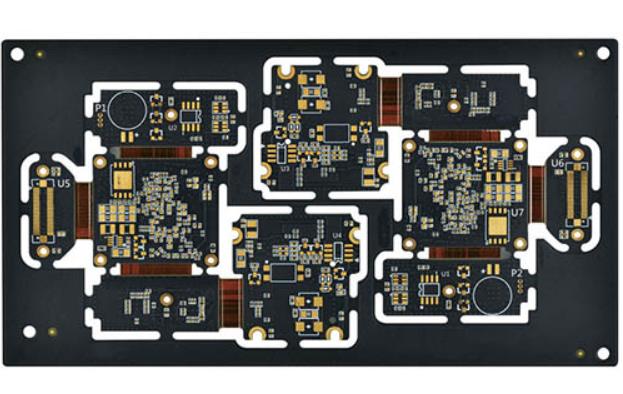
Copper thickness is the defining cost variable in power converter pcb work. Above 2 oz the price rises visibly because etch precision becomes harder to hold, plating passes multiply, and scrap rates climb; heavy-copper boards commonly cost two to four times a standard construction. Uniform plating of 4-6 oz copper, drill wear during processing, warpage control on large panels, high-potential testing and precise thermal control all add cost at this level. Designers can often avoid extreme copper by routing several parallel traces or widening copper instead of jumping to 4 oz, a trick that reduces cost while keeping resistance low.
Surface Finish and Compliance
Surface finish choice follows the environment and the assembly process. OSP is the cheapest option and fits low-cost consumer products; HASL sits in the middle for conventional power boards; ENIG is the standard for industrial, EV and photovoltaic boards because it resists corrosion and keeps flat pads for fine-pitch control ICs; immersion silver occupies a middle-high position for the same applications. Certification adds another layer of cost: UL recognition, IPC Class 3 workmanship and automotive AEC-Q qualification require extra visual inspection, dielectric withstand testing and reliability validation that push up both price and lead time.
2025 Price Ranges by Board Type
Realistic 2025 pricing spans a wide band depending on layers, copper and finish. A standard two-layer FR-4 board with 1 oz copper at about 100 x 80 mm with HASL runs USD 0.8-2.2. A two-layer heavy-copper board with 3 oz copper at 120 x 100 mm costs USD 1.8-4.0 with HASL or ENIG. A general-purpose four-layer power board with 1 oz copper and ENIG lands at USD 4.5-12, while a six-layer industrial power module with 2-4 oz copper reaches USD 18-45. Single-layer aluminum MCPCBs for LED drivers span USD 1.2-5.8. By application, consumer power supplies run USD 0.8-3, photovoltaic inverter and energy-storage boards USD 10-35, EV charging and automotive power modules USD 15-45, and industrial SMPS and automation boards USD 12-50.
Low, Medium and High Power Compared
Power level organizes the whole cost story. Low-power converters from 5-100 W use FR-4 with 1-2 oz copper and cost roughly USD 1-4 per board. Medium-power designs from 100 W to 1 kW typically use two to four layers with 2-3 oz copper and run USD 5-15. High-power industrial converters above 1 kW need six layers, 3-6 oz copper, isolation slots and heavy-copper construction, landing at USD 18-50 or more. Matching the construction to the actual power class is the fastest way to avoid paying industrial-board prices for a consumer application, or under-specifying a board that must carry real current for years.
Global Pricing and Lead Times in 2025
Where the board is made still matters. Chinese manufacturers offer the lowest cost with 3-7 day lead times and the strongest price position in heavy-copper, MCPCB and high-volume work. US suppliers charge more with 10-20 day lead times and are strong in aerospace programs, while European production is the most expensive at 12-25 days with strict environmental regulation. A concrete comparison: a four-layer 2 oz board at 140 x 100 mm costs about USD 8-12 in China, USD 22-35 in the US, and USD 28-45 in Europe. For most power electronics programs the supply chain answer is a qualified Asian manufacturer with documented capability and certifications.
Engineering Cost Optimization Strategies
Cost control in power converter pcb design is mostly specification discipline. Use four layers when four will do instead of six. Avoid 4 oz copper by habit when parallel traces or wider copper can carry the current. Prefer thermal via arrays over premium MCPCB constructions unless the heat flux demands a metal base. Optimize panelization, because a small outline change can save 10-25 percent on material use. And resist over-tight tolerances, which raise scrap and inspection cost without improving the product. An early PCB design and layout review against these rules is the cheapest insurance in the project.
Choosing a Power Converter PCB Manufacturer
Power boards reward suppliers with real high-power experience. Verify heavy-copper capability from 2-6 oz or beyond, high-voltage isolation processing, MCPCB production, and UL and ISO certifications that match your market. Ask how they control warpage on thick-copper panels and whether they run high-potential testing in-house. A full-service partner offering PCB manufacturing, PCBA testing and quality management keeps thermal and electrical validation in the same loop as fabrication, which is exactly where power electronics failures are caught.
Power Converter PCB FAQ
Q1: Are heavy-copper PCBs always more expensive? Yes, etching and plating above 3 oz are far harder, so heavy-copper boards typically cost two to four times standard constructions.
Q2: Which surface finish is cheapest? OSP is cheapest, but ENIG is the durable choice for power products that must resist corrosion and keep stable contacts.
Q3: Why are EV charging PCBs expensive? They combine high-voltage insulation requirements, high current density and automotive-grade testing in one board.
Q4: Is China still the best value in 2025? Yes, especially for heavy copper, MCPCB and high-volume power PCB production, where Chinese factories lead on cost and lead time.
Q5: How can heavy-copper cost be reduced? Use thermal via arrays and parallel copper instead of extreme single-layer thickness where the design allows it.
Conclusion
The power converter pcb turns electrical design into manufacturing cost through copper weight, layer count, material grade, isolation and thermal strategy. Each variable is measurable and controllable, which means teams that understand the cost model can fund real performance instead of paying for unnecessary specification. With an experienced high-power manufacturing partner, converters ship with the efficiency, isolation and reliability that 2025 power electronics demand.