Transportation IoT PCB: Design, Manufacturing and Cost Guide
Boards That Move With the Traffic
Transportation is going through the same digital transformation as every other industry, and the transportation iot pcb is the hardware foundation underneath it. Vehicles, highways, fleets and transit systems now carry connected devices that collect data, talk to control centers and make decisions in real time. Unlike consumer circuit boards, these boards must survive vibration, wide temperature swings, humidity and electromagnetic noise while keeping wireless links stable. This guide explains what makes a transportation IoT PCB different, which applications use it, what the manufacturing process involves, what certifications apply and what it costs in 2026.
Why IoT PCBs Matter in Transportation
An IoT PCB is the data and control core of intelligent transportation equipment. It appears in smart traffic management systems, vehicle control and condition monitoring, fleet logistics tracking with remote positioning, and urban traffic data platforms. As industrial IoT and intelligent transportation networks grow, the demand for high-reliability transportation IoT PCBs keeps rising, because every connected vehicle, roadside unit and charging station depends on a board that can be trusted in the field.
What Makes a Transportation IoT PCB Special
A transportation IoT PCB is a board designed specifically for intelligent transportation devices. It performs data acquisition and wireless communication, connects sensors to control systems, and supports remote monitoring and fault management. Where it differs from consumer boards is in reliability: transportation boards need a wider operating temperature range, shock and vibration resistance, longer lifecycles and support for 5G, RF, GPS and Bluetooth communication modules. That combination of wireless capability and automotive-grade durability is what sets them apart.
Typical Applications
IoT PCBs for transportation appear across the whole mobility ecosystem: vehicle remote monitoring and connected vehicle systems, smart highway and traffic light control, EV charging equipment with real-time data collection, autonomous driving and ADAS systems, GPS and GNSS fleet management, and intelligent rail and urban transport infrastructure. Each application stresses different parts of the design, from wireless antenna performance in moving vehicles to power integrity in roadside enclosures, but all of them share the same need for dependable connectivity and long service life.
Core Requirements for Transport Boards
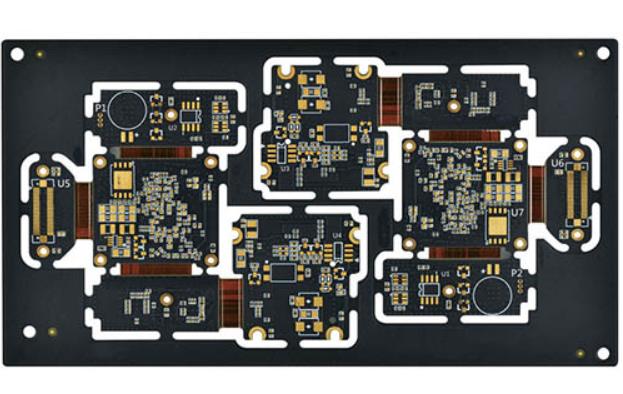
Intelligent transport and vehicle systems set strict expectations. Boards must resist vibration, jitter and electromagnetic interference, support high temperature, humidity and outdoor operation, deliver automotive-grade communication, and stay stable through long operating hours. Typical wireless configurations include 5G and LTE, NB-IoT and LoRa for low-power wide-area links, WiFi and Bluetooth for local connectivity, and GPS or GNSS for positioning. The board design has to keep those radio functions isolated from each other while the vehicle moves through changing RF environments.
Key Design Points
Design work on a transportation IoT PCB emphasizes multilayer construction, RF and communication module isolation with signal integrity, low power and power management strategy, and EMI and EMC protection with safety redundancy. Those factors directly determine the stability and lifetime of an intelligent transportation system. Radio sections need clean ground and careful antenna placement, power sections need wide copper and thermal planning, and the whole board needs enough layer count to separate analog, digital and RF domains.
Materials and Board Structure
Material choice follows the environment and the radio frequencies involved. FR-4 and high-Tg FR-4 cover most control and communication boards, while high-frequency laminates such as Rogers appear where 5G or RF performance is critical. Layer counts generally run from four to twelve, with the extra layers used for controlled impedance traces, clean power planes and shielding. Surface finishes such as ENIG, HASL and OSP are selected by reliability need, and assembly integrates MCUs, sensors, 5G, GPS and WiFi modules plus CAN, LIN or industrial communication interfaces. SMT assembly quality matters here, because a single marginal solder joint on a moving vehicle becomes an intermittent failure.
Manufacturing Process
Producing a transportation IoT PCB follows a staged flow. First, material and layer selection locks the stack-up and copper thickness. Then PCB fabrication runs drilling, plating, solder mask and surface finish with tight copper and impedance control. Finally, PCBA assembly places and solders the MCU, sensors and wireless modules, and testing verifies function and radio behavior. Throughout the process the emphasis is on stability, anti-interference and industrial-grade quality, which is why DFM review and in-process inspection are not optional extras.
Certifications and Quality Standards
Transportation hardware must answer to a defined set of standards. IPC-600 and IPC-610 govern PCB and assembly quality, IATF 16949 and AEC-Q200 apply to automotive-grade programs, ISO 9001 covers the factory quality system, and environmental and reliability testing confirms long-term stability. Choosing a supplier that holds these certifications and can release the related documentation makes qualification for vehicle and infrastructure programs dramatically faster.
2026 Cost Ranges
Pricing for transportation IoT boards depends on materials, layer count, assembly scheme, batch size and complexity. As a working reference, prototyping runs USD 30-120 per board, volume production USD 0.8-10 per board, and PCBA soldering adds about USD 0.012-0.25 per component. High-frequency communication and multilayer boards can reach USD 15-60 per piece. The most reliable way to estimate a specific program is a DFM and quote review with the actual stack-up, because wireless and automotive requirements change both material and test cost.
Why Customization Matters
Custom design pays off in ways that catalog boards cannot match. A custom transportation IoT PCB lasts longer in vibration and temperature, integrates exactly the radio modules the product needs, fits the enclosure, and carries only the features that earn revenue. It also allows safety redundancy and EMC hardening to be designed in from the start instead of patched on later. For OEMs that plan years of field service, the small premium of a custom board is repaid many times in lower failure and maintenance cost.
Choosing an IoT PCB Manufacturer
Supplier selection should focus on engineering and customization capability, quality control and test equipment, prototype-to-volume production, and one-stop SMT and PCBA support. Verify that the factory has built connected and vehicle-grade products before, and confirm it can release full test data. A partner offering PCB manufacturing, PCBA testing and design support under one quality system reduces the coordination risk that delays connected hardware programs.
Development programs should plan qualification samples deliberately. A small batch of boards built on the final stack-up with the real wireless modules and test plan is the cheapest way to prove antenna performance, EMC behavior and thermal stability before volume orders. Most programs run 10-50 units through radio, vibration and temperature checks, then freeze the design for production. Suppliers that combine this kind of PCB design and layout support with fast prototyping remove the biggest scheduling risk in connected vehicle projects.
Transportation IoT PCB FAQ
Q1: What makes a transportation IoT PCB different from a consumer board? It needs wider temperature range, vibration resistance, longer life and automotive-grade wireless communication support.
Q2: Which radio modules are typical? 5G, LTE, NB-IoT, LoRa, WiFi, Bluetooth and GPS or GNSS, depending on the application.
Q3: How much does a transportation IoT PCB cost? Prototypes run USD 30-120 and volume boards USD 0.8-10, with higher prices for high-frequency multilayer designs.
Q4: What certifications are expected? IPC standards, IATF 16949 for automotive work, AEC-Q200 components and ISO 9001 manufacturing are the common set.
Conclusion
The transportation iot pcb is quietly powering the shift to connected, automated mobility. It combines wireless connectivity with the durability that vehicles and roadside systems demand, and it must be engineered, built and tested to a higher standard than ordinary electronics. With the right materials, disciplined manufacturing and a partner that understands both RF and automotive reliability, transportation companies get connected hardware they can install and forget.