Advantages of SMT Mounters and Assembly Process
Advantages of SMT mounters explain why surface mount technology has become the standard process in the electronic assembly industry. An SMT mounter places small, leadless, or short-lead components directly on the surface of a PCB before they are soldered in a reflow oven. The process is fast, accurate, and suitable for modern high-density products.
Surface mount technology is often called SMT. It places surface mount components, abbreviated SMC or SMD, onto a printed circuit board and connects them by reflow soldering or another controlled welding process.
This guide reviews the main advantages of SMT mounters and explains the basic SMT assembly process used in a PCBA factory.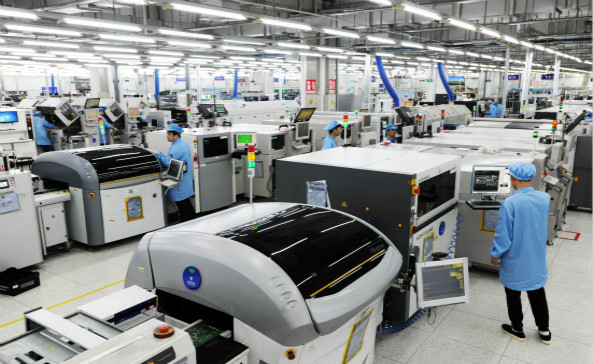
Why SMT Became the Main Assembly Method
SMT developed together with the electronics, information technology, and computer industries. As products became smaller and more complex, manufacturers needed a process that could place thousands of tiny components on a compact board.
Traditional through-hole assembly could not meet the density, speed, and cost requirements of new products. Surface mount components can be placed on both sides of the board and do not need holes for every lead.
The mounter is the machine that makes this process possible. It replaces slow manual placement and provides repeatable accuracy for high-volume production.
SMT is now used in almost every electronic product, from consumer devices to industrial, medical, automotive, and communication equipment.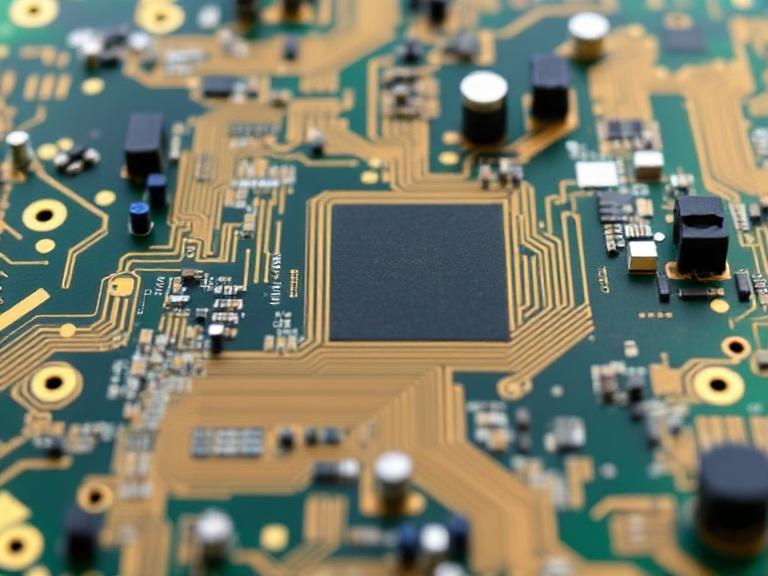
Advantage 1: Automation and Production Efficiency
An SMT mounter is easy to automate. Once the program and feeders are prepared, the machine can place components continuously without stopping for manual alignment.
Automatic feeders present components at a consistent position, and the placement head picks, checks, and places each part according to the program. This reduces cycle time and increases throughput.
The process is also predictable. Every board follows the same placement sequence, so the production output and quality can be planned accurately.
Automation reduces the number of operators needed and allows the factory to run multiple shifts with consistent results.
Advantage 2: High Assembly Density
Surface mount components have no long leads and can be mounted very close together. This increases the assembly density of the board and reduces the size and weight of the final product.
Small components can be placed on both sides of the PCB, making even better use of the board area. A product that once required a large through-hole board can fit into a compact housing.
High density also allows the designer to add more function without increasing the product size. This is important for phones, wearables, sensors, and other portable electronics.
The mounter must maintain tight placement tolerances to support this density. Fiducial marks and machine vision help align components to the correct pad.
Advantage 3: High Reliability
Automatic SMT production provides a reliable connection at every solder joint. The placement position and reflow profile are controlled, so the chance of an open or weak joint is lower than in manual soldering.
Surface mount components are mounted firmly on the PCB surface. Their short connection creates a strong mechanical joint with good impact and vibration resistance.
Because the component body is close to the board, the solder joint is less likely to be damaged during handling and operation.
High reliability reduces field failures and maintenance cost over the life of the product.
Advantage 4: Good High-Frequency Performance
Surface mount devices have no long pins or only short pins. Removing the long leads reduces the distributed inductance, capacitance, and resistance that degrade high-frequency signals.
Because the component is attached close to the PCB surface, the parasitic capacitance and inductance between leads are much smaller than in through-hole construction.
Lower parasitics reduce electromagnetic interference and radio frequency interference. High-frequency circuits can operate with less distortion and better signal quality.
SMT is therefore well suited for RF modules, wireless devices, high-speed digital circuits, and communication equipment.
Advantage 5: Lower Manufacturing Cost
SMT increases PCB wiring density and reduces the number of drilled holes. A smaller board and fewer layers can often perform the same function as a larger through-hole board.
Using less PCB material, fewer holes, and fewer layers lowers the cost of the bare board. Leadless or short-lead components also save lead material and eliminate trimming and bending processes.
Automatic placement reduces labor cost and increases production speed. Better frequency performance can reduce RF adjustment time, and high soldering reliability reduces service and warranty cost.
Smaller product size also lowers packaging, shipping, and housing cost. The total cost of the electronic product is therefore reduced across manufacturing and field service.
Beyond these direct benefits, SMT also improves inventory flexibility because a wide range of standard chip components can be placed on many different board designs. The factory can change the product program without changing the core assembly equipment.
Smaller, more reliable boards also make it easier to add protection, sensors, wireless functions, and power management inside a compact product housing. These indirect benefits are important when a customer needs a complete solution from layout through production.
The Basic SMT Process
The basic SMT process begins with solder paste or red glue printing. The printer uses a stencil to deposit a controlled amount of material onto the PCB pads.
After printing, the board can be checked by AOI or visual inspection. The check verifies that the paste is present, aligned, and within the required volume.
The board then enters the placement step. The mounter places small components first and large components later, according to the optimized program.
High-speed placement machines handle resistors, capacitors, and diodes, while a separate placement step handles large ICs, connectors, and complex packages. Placement inspection follows with AOI or visual check.
Soldering and Inspection
After placement, the board is soldered in a reflow oven. Hot air or nitrogen heats the solder paste until it melts and forms the connection.
Post-reflow inspection can include AOI, X-ray, visual inspection, and functional testing. The inspection method is selected according to the component type and product requirements.
If a defect is found, the board is repaired with a soldering station or a hot-air desoldering station. Rework should be limited so that repeated heating does not damage the board.
After repair, the board may be separated from the production panel by manual depaneling or a depaneling machine. The separated boards are then cleaned, tested, and packed as needed.
Important Equipment in an SMT Line
An SMT line needs three main types of equipment: a solder paste printer, a placement machine, and a reflow oven. Additional equipment may include a wave soldering machine, SPI, AOI, and X-ray systems.
The solder paste printer controls the volume and position of paste on the pads. The mounter places the components, and the reflow oven completes the solder joint.
Wave soldering is added when the product contains through-hole components. SPI, AOI, and X-ray provide inspection between process steps.
Each machine should be calibrated and maintained so the complete line produces consistent quality.
Advanced Surface Mount Packages
The rapid development of bottom-lead IC packages has increased the importance of the mounter and reflow process. BGAs and QFNs have connections on the bottom of the package and cannot be inspected from the top.
These packages require accurate placement because the solder balls must align with the pads on the board. After reflow, X-ray inspection is used to verify the hidden solder connections.
The mounter must be able to handle fine-pitch packages and place them with very small position error. Machine vision and component libraries are essential for this work.
Reflow profiles must also be developed for the package type so that the solder melts completely without damaging the package body.
Process Control for High Efficiency
The benefits of SMT can only be achieved when the process is controlled. Solder paste storage, stencil cleaning, feeder setup, and nozzle maintenance all affect the result.
The mounter program should match the current BOM and board revision. First article inspection should confirm placement accuracy before the full lot is produced.
Reflow data should be recorded for each product. The factory should compare yield data with the process settings to identify improvement opportunities.
Operators should understand the whole flow, not only one machine. This helps them recognize when a defect from one step is caused by an earlier process.
Choosing a Professional Assembly Partner
A capable SMT PCB assembly service should use the right mounter for the product. High-speed machines are used for chips, while multifunctional machines handle connectors, BGAs, and QFNs.
The factory should integrate placement with PCBA testing and inspection so that the advantages of SMT are visible in the final yield.
A complete PCB assembly service should also support solder paste printing, reflow, wave soldering, and rework in one controlled process.
For high-density products, the assembly partner should review the design with the PCB design and layout team so that the pad geometry supports the mounter capability.
Process data, first article reports, and quality management records provide confidence that every board was produced with the same reliable process.
Conclusion
SMT mounters offer automation, high density, high reliability, good high-frequency performance, and lower manufacturing cost. These advantages have made surface mount technology the dominant electronic assembly method.
The basic SMT process links printing, placement, reflow, inspection, rework, and depaneling into one controlled flow. Every step affects the final board quality.
With the right equipment and process control, SMT mounters help manufacturers produce compact, reliable, and cost-effective electronic products.