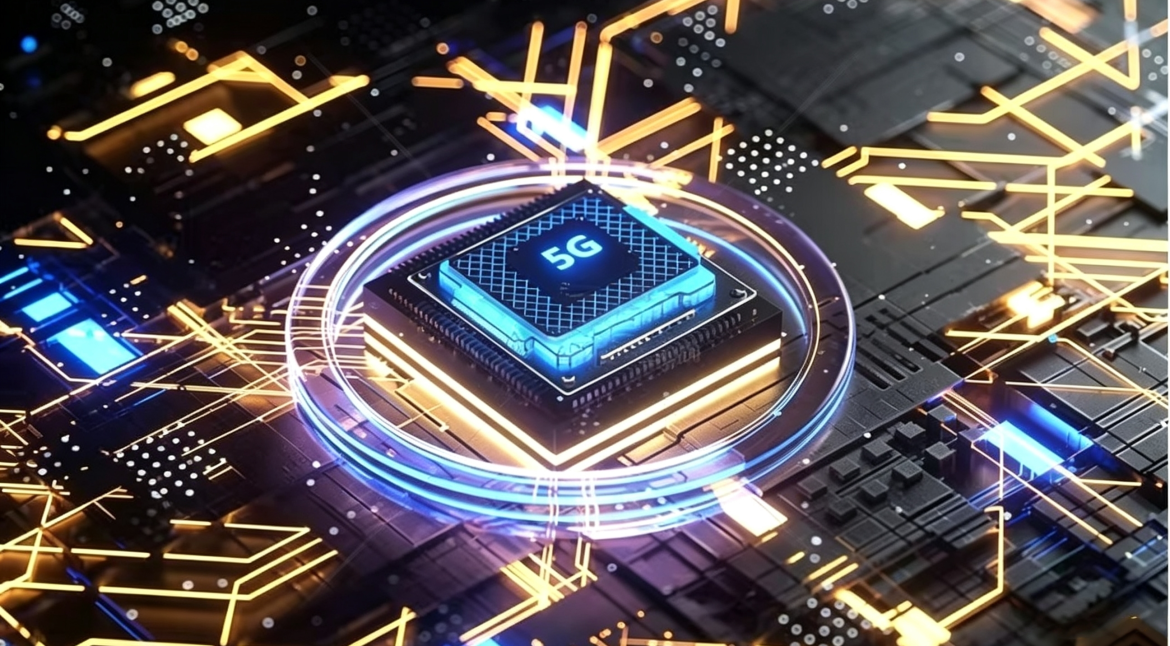
The rapid development of 5G Technology is creating new opportunities for the global electronics industry. With higher data rates, lower latency, greater connection density, and improved network capacity, 5G is accelerating the development of communication infrastructure and a wide range of connected devices.
This transformation is also creating new demand for advanced PCB Manufacturing technologies. From base stations and networking equipment to smartphones, wearable devices, automotive electronics, and industrial systems, the expansion of 5G applications is expected to support long-term growth in both the PCB Industry and the flexible circuit market.
How 5G Technology Is Changing the PCB Industry
Compared with 4G networks, 5G provides significantly higher data transmission speeds, lower latency, and support for a much larger number of connected devices.
These capabilities enable applications such as:
- High-speed mobile communication
- Internet of Things (IoT)
- Cloud computing
- Autonomous and connected vehicles
- Smart factories
- Industrial automation
- Augmented and virtual reality
- Wearable electronics
- Advanced wireless infrastructure
Each of these applications requires increasingly sophisticated electronic hardware. As a result, the requirements for PCB performance, reliability, signal integrity, thermal management, and manufacturing precision are also increasing.
The expansion of 5G infrastructure requires advanced RF circuits, high-frequency materials, multilayer structures, high-density interconnects, and precise impedance control. This creates significant opportunities for manufacturers capable of producing advanced 5G PCB solutions.
5G and the Growth of Advanced PCB Manufacturing
Before the widespread adoption of 5G, consumer electronics such as smartphones, personal computers, and tablets were major drivers of PCB demand. However, growth in some traditional consumer-electronics segments has slowed as these markets have become more mature.
The development of 5G introduces new sources of demand.
5G networks require extensive infrastructure upgrades, including base stations, antennas, RF modules, networking equipment, servers, and data-center hardware. These systems use sophisticated PCB technologies designed to handle high-frequency signals, high data rates, and increased power requirements.
As 5G deployment continues, PCB manufacturers need to address several technical challenges:
- Higher-frequency signal transmission
- Lower signal loss
- Controlled impedance
- Improved signal integrity
- Better thermal performance
- Higher wiring density
- More precise registration
- Advanced multilayer structures
- Reliable high-frequency materials
These requirements are driving the evolution of the PCB Industry toward higher-performance materials and more advanced manufacturing processes.
5G PCB Requirements
A 5G PCB must meet more demanding electrical and mechanical requirements than many conventional circuit boards.
At higher frequencies, even small variations in PCB geometry or material characteristics can affect signal performance. Designers therefore need to carefully control trace width, dielectric thickness, copper roughness, dielectric constant (Dk), dissipation factor (Df), and impedance.
Material selection is particularly important.
For high-frequency applications, low-loss materials can help reduce dielectric loss and maintain signal quality. Smooth copper foil can also reduce conductor loss at high frequencies.
In addition, thermal management becomes increasingly important in high-power RF systems. The PCB must effectively transfer heat away from power amplifiers and other heat-generating components.
Therefore, advanced PCB Manufacturing requires close coordination between material selection, PCB design, fabrication processes, and system-level requirements.
FPC Demand Continues to Grow
The growth of connected electronic products is also creating strong demand for FPC, or Flexible Printed Circuit technology.
Unlike rigid PCBs, Flexible PCB technology can bend, fold, and conform to complex product structures. This makes FPC particularly suitable for compact electronic products where space, weight, and mechanical flexibility are important.
The expansion of FPC applications has been supported by several major trends:
- Smartphone miniaturization
- Wearable electronics
- Automotive electronics
- Medical devices
- Cameras and imaging equipment
- Drones and consumer electronics
- Foldable and flexible displays
As electronic products become smaller and more integrated, manufacturers increasingly need circuit solutions that can occupy limited internal space while maintaining reliable electrical connections.
Smartphones Continue to Drive FPC Applications
Smartphones remain one of the most important applications for FPC technology.
Modern smartphones contain numerous compact electronic modules and require flexible interconnections between displays, cameras, batteries, antennas, sensors, buttons, and main circuit boards.
The continued development of smartphone functions has increased the number and complexity of flexible circuits used inside these devices.
Examples include:
- Fingerprint sensors
- Facial-recognition systems
- Camera modules
- Wireless charging systems
- Flexible OLED displays
- Touch modules
- Battery connections
- Antenna modules
As smartphone manufacturers continue to integrate more functions into increasingly compact designs, the demand for high-density and highly reliable FPC Board solutions is expected to remain strong.
Flexible PCB and Wearable Electronics
Wearable electronics represent another important growth area for Flexible PCB technology.
Smartwatches, fitness trackers, smart glasses, medical wearables, and other compact devices must accommodate electronics within very limited spaces.
FPC provides several advantages for these applications:
- Lightweight construction
- Thin profile
- Excellent flexibility
- Space savings
- Reduced wiring requirements
- Ability to conform to curved structures
- High integration capability
These characteristics make FPC an effective interconnection solution for next-generation wearable devices.
As wearable products become more sophisticated, flexible circuits will increasingly need to support higher circuit density, better reliability, and more complex electrical functions.
Automotive Electronics Create New FPC Opportunities
Automotive electronics are becoming another major growth driver for the flexible circuit market.
The automotive industry is undergoing a major transformation driven by electrification, connectivity, automation, and intelligent vehicle systems.
Modern vehicles increasingly incorporate:
- Advanced driver-assistance systems (ADAS)
- Battery management systems
- Infotainment systems
- Digital instrument clusters
- Cameras and sensors
- Lighting systems
- Vehicle networking
- Electric powertrain systems
- Interior electronic controls
Many of these applications require compact and reliable interconnections.
The flexibility and lightweight characteristics of FPC make it suitable for applications where conventional wiring harnesses or rigid PCBs may be less efficient.
The rapid development of electric vehicles is particularly important because battery packs contain numerous cells and monitoring points that require reliable electrical connections. Flexible circuits can help simplify interconnection structures while reducing space and weight.
5G Applications Expand Beyond Smartphones
Although smartphones are an important driver of 5G adoption, the influence of 5G Technology extends far beyond mobile handsets.
5G is increasingly associated with broader digital infrastructure and connected-device ecosystems.
Potential applications include:
Smart Manufacturing
5G enables low-latency wireless communication between industrial equipment, sensors, robots, and control systems.
Internet of Things
Large numbers of connected sensors and devices require reliable communication infrastructure and compact electronic hardware.
Smart Vehicles
Connected vehicles can exchange information with infrastructure, cloud services, and other vehicles, creating new requirements for high-frequency RF electronics.
Smart Cities
5G networks can support connected transportation systems, surveillance equipment, environmental sensors, public services, and other smart-city infrastructure.
Healthcare
Connected medical devices and remote monitoring systems can benefit from reliable, high-speed wireless connectivity.
Each application contributes to the long-term demand for advanced circuit technologies.
5G Technology and the Future of FPC
The relationship between 5G and FPC is not limited to smartphones.
As more devices become wirelessly connected, manufacturers are increasingly looking for lightweight, compact, and highly integrated circuit solutions.
For example, 5G-enabled wearable devices may require flexible circuits for antennas, displays, sensors, batteries, and communication modules.
At the same time, automotive and industrial applications may require flexible circuits that can operate reliably under vibration, temperature changes, and mechanical stress.
This means future FPC Board technologies will need to provide not only mechanical flexibility but also excellent electrical performance and environmental reliability.
How 5G Drives PCB and FPC Technology Upgrades
The growth of 5G is pushing both rigid and flexible circuit technologies toward higher performance.
For rigid PCBs, major development trends include:
- High-frequency and low-loss materials
- HDI structures
- Fine-line circuitry
- Advanced multilayer designs
- Improved impedance control
- Low-profile and smooth copper
- Enhanced thermal management
For FPC, important trends include:
- Higher circuit density
- Thinner flexible materials
- Smaller bending radii
- Improved dimensional stability
- Higher-frequency signal transmission
- Better reliability
- Greater integration with rigid PCB structures
These developments demonstrate that 5G is not simply a communication technology upgrade. It is also influencing the architecture and manufacturing requirements of electronic hardware.
Kingda’s Role in Advanced PCB and FPC Manufacturing
As 5G applications continue to expand, PCB manufacturers need to provide products that meet increasingly demanding electrical, mechanical, and reliability requirements.
Kingda can support customers with PCB and flexible circuit solutions designed for high-density, high-frequency, and compact electronic applications.
Depending on the product requirements, the manufacturing process may involve advanced multilayer construction, HDI technology, controlled impedance, fine-line circuitry, specialized materials, and strict quality control.
For 5G-related products, manufacturing precision is particularly important because small variations in PCB dimensions, dielectric thickness, copper geometry, or material characteristics can affect high-frequency signal performance.
Working closely with the PCB manufacturer during the design and material-selection stages can therefore help reduce manufacturing risks and improve overall product reliability.
Conclusion
The continued development of 5G Technology is creating new growth opportunities throughout the electronics supply chain. Higher transmission speeds, lower latency, greater connection density, and expanding IoT applications are increasing demand for advanced communication equipment and connected electronic products.
This growth is creating new opportunities for both the PCB Industry and FPC market.
High-frequency communication infrastructure requires advanced 5G PCB technologies with controlled impedance, low signal loss, effective thermal management, and reliable high-frequency materials. Meanwhile, smartphones, wearable devices, automotive electronics, and other compact products continue to expand the application of Flexible PCB technology.
As 5G evolves toward broader industrial, automotive, consumer, and IoT applications, PCB and FPC technologies will continue to advance toward higher density, smaller dimensions, better electrical performance, and greater reliability.
For manufacturers such as Kingda, this trend creates opportunities to support the next generation of connected electronic products through advanced PCB Manufacturing capabilities and flexible circuit solutions.