Computer PCB Price Guide: 2026 Cost Factors and Quotes
Why Computer PCB Pricing Varies So Much
The computer PCB price has no single answer because the boards themselves range from simple two layer Mini PC boards to twenty-plus layer AI server motherboards. A computer PCB carries CPUs, GPUs, memory, chipsets, power stages and interface controllers, and its cost is set by layer count, substrate material, board size, copper weight, surface finish, impedance control, via structures and order quantity. Two boards that look similar can differ in price by an order of magnitude once the stack-up and material are specified.
Buyers who understand these drivers can negotiate from knowledge instead of guessing. This guide breaks down the 2026 price ranges for fabrication and assembly, compares materials and layer counts, and shows where cost can be removed without hurting signal integrity or reliability.
What Sits on a Modern Computer Board
Computer boards span desktop motherboards, laptop motherboards, industrial PCs, Mini PCs, embedded computing platforms, AI server motherboards and networking equipment. The common engineering thread is high speed signaling: PCIe Gen 5 and Gen 6, DDR5, USB4, Thunderbolt, SATA, DisplayPort and high speed Ethernet all demand controlled impedance and clean power delivery, which pushes boards toward multilayer stacks, low loss materials and tight manufacturing tolerances.
These requirements, not the component cost, are what separate a commodity board price from a serious high speed quotation.
Main Cost Drivers
Layer count is the largest single driver. A two layer board is the cost baseline; four layers cost roughly 1.8 times as much, six layers about 2.5 times, eight layers 3.5 times, ten layers 4.5 times, twelve layers 5.8 times and sixteen layers or more eight times or higher, because every pair of layers adds lamination, drilling, registration and inspection.
Material choice follows close behind. Standard FR-4 is cheapest, high Tg FR-4 adds ten to twenty percent, low loss FR-4 adds twenty to fifty percent, Panasonic Megtron series costs two to four times FR-4 and Rogers hybrid constructions three to six times. Board size matters through material usage and panel utilization, and finish, via structure and impedance control add their own increments, with ENIG still the default finish for BGA-rich computer boards.
Surface finish and via technology add the next tier of cost. ENIG remains the default for computer boards because BGA pads and high density routing need flat, oxidation resistant surfaces, and its premium over HASL is a normal design expense rather than an upgrade. Via-in-pad, resin plugging and stacked microvias all add process steps, and on boards with hundreds of high speed pairs every plugged via is real money. Impedance control is not a separate charge so much as a discipline: it forces precise line widths, dielectric spacing and stack-up control that raise the cost of the whole panel even when the design only has a few controlled nets. Understanding these layers of cost is what lets a buyer separate the unavoidable technical expense from the avoidable premium.
2026 Price Reference for Fabrication
Bare board fabrication prices in 2026 give a useful baseline. Prototypes of one to five boards typically cost 50 to 200 US dollars per board. Engineering samples of ten to fifty boards run 20 to 80 dollars per board, and small batches of one hundred to five hundred boards land between 8 and 35 dollars per board. Medium runs of five hundred to five thousand boards reach 4 to 18 dollars per board, and high volume production above ten thousand boards can drop to 1.5 to 8 dollars per board for designs that panel efficiently.
Quotes move with board thickness, copper weight, line precision, material brand and delivery time, so these ranges are guides for budgeting rather than substitutes for a real DFM-based quotation.
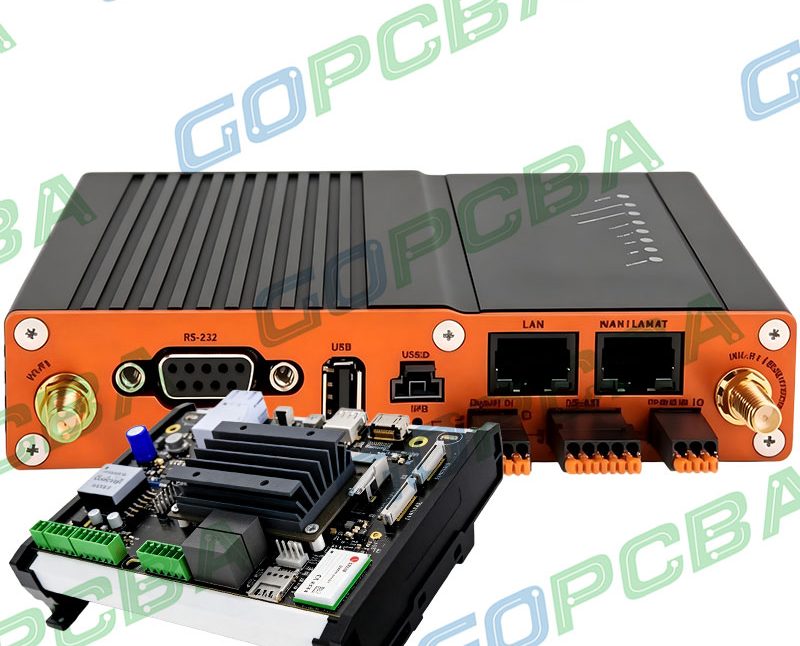
Material selection deserves its own budget line because it behaves differently at each speed class. Standard FR-4 carries the majority of consumer and industrial boards where trace lengths are short and loss budgets are loose. Low loss FR-4 becomes necessary at PCIe Gen 4 and above on longer channels, and the Megtron, Isola and Rogers families enter when backplane or AI server designs push into PCIe Gen 5 and 6 territory with 100 or 400 gigabit links. The practical pattern is to use the cheapest material that passes the channel loss simulation, then verify with the manufacturer’s actual Dk and Df values rather than datasheet averages, because the difference between material grades shows up as margin in the final eye diagram.
Assembly Cost on Top
Finished PCBA adds SMT placement, through hole insertion, BGA assembly, AOI, X-ray, ICT and functional testing. In 2026, sample PCBA service typically runs 80 to 300 US dollars per unit, small batches cost 15 to 80 dollars per board, and high volume assembly falls to 3 to 20 dollars per board. On computer boards the expensive silicon dominates the total: CPU, GPU, chipset and memory usually account for most of the project value, which is why board fabrication is often a minority share of the finished product cost.
How to Reduce Computer PCB Cost
Most savings come from design decisions made before the files are released. Use standard board thickness and normal copper weights unless the design demands otherwise. Right-size the layer count instead of adding pairs for comfort. Avoid blind and buried vias and via-in-pad where routing allows through holes. Optimize the board size and panel layout to raise material utilization. Standardize finish and design rules to avoid special processes, run a DFM review before tooling, and consolidate volumes with a single one-stop supplier so fabrication, assembly and testing share one quality system.
Quantity planning is the last big lever. Board pricing follows a steep curve from prototype to volume because setup, tooling and engineering effort are amortized across the batch, so consolidating several board variants into fewer part numbers with shared stack-ups often halves the unit cost. Annual volume commitments with a single supplier unlock panel-optimized pricing and reserved material, while frequent small orders pay the prototype penalty every time. Combining fabrication, assembly and test with one partner also removes logistics overhead and gives the engineering team a single DFM contact, which shortens the design cycle and reduces the risk of specification drift between suppliers.
FAQ
How much does a typical computer PCB cost? A four to six layer computer board in small batch production typically costs 8 to 35 US dollars per board, with prototype quantities at 50 to 200 dollars per board depending on complexity.
Why are AI server PCBs so expensive? They combine high layer counts, low loss high speed materials, HDI structures, impedance control and strict testing, which multiplies fabrication cost compared with ordinary consumer boards.
Why is ENIG more expensive than HASL? ENIG provides flat, corrosion resistant, solderable pads for fine pitch BGA and high speed designs; the nickel and gold chemistry and process control cost more than simple solder leveling.
Getting an Accurate Computer PCB Quote
The fastest route to a reliable computer PCB price is a complete design package: Gerber files, netlist, BOM, stack-up, impedance requirements, board size and annual volume. With that package a capable manufacturer can perform a DFM review, flag unnecessary cost and quote fabrication and assembly together. gopcb manufactures high layer count, high speed and HDI computer and server PCBs with impedance control and full testing services, supporting industrial PC, AI server and embedded customers from prototype through volume production. Send your files for a free DFM assessment and a 2026 computer PCB quotation.