FR4 PCB vs Polyimide PCB: Material Comparison Guide 2026
Why the Board Material Decision Matters
In PCB design and manufacturing, the substrate choice directly decides performance, cost and reliability. The two most widely used material families are FR4 PCB, a fiberglass epoxy laminate, and polyimide PCB, the high temperature flexible material family. FR4 is the standard rigid board material because of its low cost and mature processes, while polyimide serves high end electronics that need heat resistance or the ability to bend.
This comparison covers material properties, thermal behavior, electrical performance, manufacturing processes, real price ranges and application scenarios so engineers and buyers can make the right call for each project. Neither material is universally better, and the correct answer depends on the operating environment, mechanical requirements and budget.
gopcb fabricates both families and is a good starting point for a PCB manufacturing consultation.
What Is an FR4 PCB?
FR4 PCB is a rigid board built from woven fiberglass cloth impregnated with epoxy resin. It meets UL94 V-0 flame resistance and is the most common substrate in the electronics industry.
FR4 offers high mechanical strength, good electrical insulation, a mature low cost process system, multilayer capability and wide use across industrial and consumer products. Typical applications are consumer electronics, industrial control systems, power modules, automotive electronics and LED lighting, where rigidity and economy matter more than extreme temperature or flexing.
What Is a Polyimide PCB?
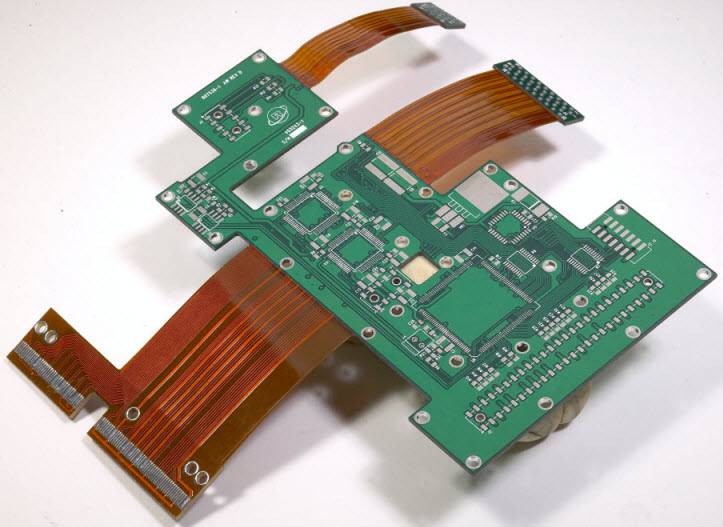
Polyimide PCB uses polyimide film as the base material and can be manufactured as flexible PCBs (FPC), rigid flex PCBs and high temperature rigid boards. Polyimide is valued for extreme heat resistance, repeated bending, strong vibration resistance and reliable operation in demanding environments.
Typical applications are aerospace equipment, defense electronics, wearables, implantable medical devices and foldable consumer electronics. For moving assemblies and high vibration systems, polyimide is often the only practical substrate.
FR4 PCB vs Polyimide PCB: Key Differences
Structure and flexibility. FR4 is rigid and cannot bend. Polyimide is flexible and can also be built as rigid flex boards, which is the main structural difference between the two families.
Cost. FR4 is low cost and process friendly. Polyimide sits in the medium to high range because the film itself is expensive and the process is more demanding.
Temperature resistance. Standard and high Tg FR4 withstand about 130 to 180 degrees Celsius. Polyimide handles 250 to 300 degrees Celsius, which makes it the choice for soldering heat, high ambient temperature and repeated thermal stress.
Flexing and vibration. FR4 has no flexing ability. Polyimide bends thousands of cycles and absorbs vibration far better, which is essential for drones, robotics arms, automotive harnesses and portable devices.
Electrical performance. FR4 offers stable dielectric constant and loss tangent for digital circuits and normal signals. Polyimide shows a lower dielectric constant of about 3.2 to 3.8 and lower signal loss, which helps high speed and high frequency designs.
Moisture resistance. FR4 absorbs moderate moisture while polyimide performs better in humid environments, although both need proper surface finish and storage control.
Manufacturing Process Differences
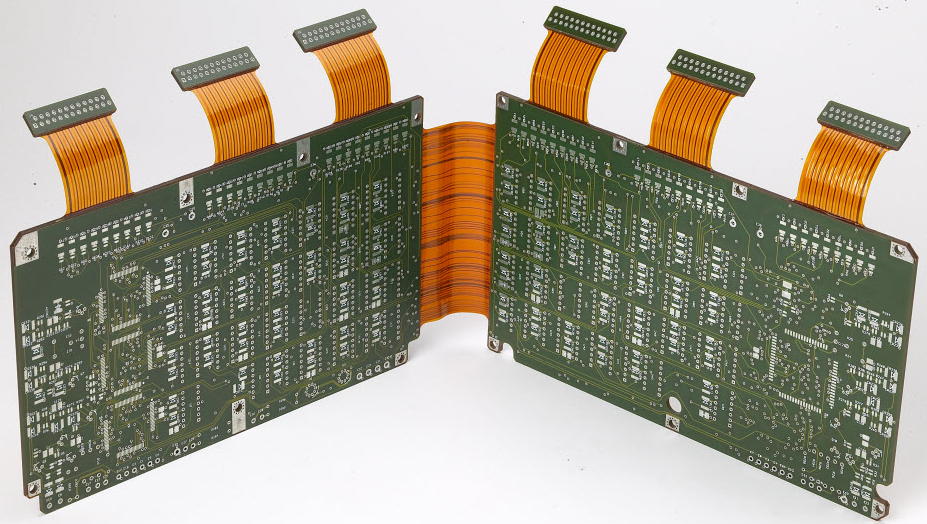
FR4 follows the standard rigid flow of lamination, drilling, plating, imaging, etching and surface finish. Polyimide adds laser cutting, coverlay lamination, flexible structure control and dynamic bending tests, and when a design is rigid flex, the rigid sections are laminated together with the flex layers in one controlled process.
The extra steps make polyimide manufacturing more difficult and slower. Tolerances on flex thickness, bend radius and adhesive coverage must be controlled, and assembly needs special handling because flexible boards can stretch or tear in the wrong fixture. Working with a manufacturer that has dedicated flex process experience avoids the most common yield problems.
Which Applications Fit Each Material
Choose FR4 PCB for industrial control equipment, consumer electronics, LED lighting, power supplies, automotive ECUs and IoT devices where rigidity, low cost and standard supply chains are the priority.
Choose polyimide PCB for foldable devices, aerospace systems, implantable and wearable medical products, high vibration machinery and any design that must route around a mechanical constraint. In mixed products, rigid flex boards combine FR4-like rigid zones with polyimide flex links, giving both stability and three dimensional packaging in one board.
FR4 PCB Manufacturing Capability
A capable FR4 partner supports 1 to 40 layers, board thickness from 0.2 mm to 6.0 mm, copper weight from 0.5 oz to 12 oz, minimum line width and spacing of 2.5 mil, and minimum hole size of 0.15 mm. Surface finishes include ENIG, immersion silver, HASL, OSP and hard gold, and quality systems such as ISO9001, IATF16949, ISO13485, UL, RoHS and REACH are standard for OEM work.
The same factory should support quick turn prototypes, small batches, mass production, DFM review and process optimization. gopcb offers rigid, flexible and rigid flex boards together with PCB assembly so the material choice does not create a handoff problem between suppliers.
In practice the choice between FR4 and polyimide is also a supply chain decision. FR-4 is available everywhere, has short lead times and supports quick turn fabrication, which keeps development cycles fast and predictable. Polyimide and rigid flex boards require specialty film suppliers, controlled lamination and more engineering time, so schedules are longer and the factory partner needs real flex experience. Products that are expected to ship for many years also benefit from selecting a substrate with proven long term data, because FR-4 has decades of reliability statistics while polyimide performance depends heavily on bend radius, adhesive system and assembly handling.
2026 Price Reference
FR4 PCB prototyping is inexpensive. Single sided boards run 8 to 20 USD, double sided 20 to 45 USD, four layers 45 to 90 USD and six layers 80 to 160 USD. Small batches of 100 to 500 pieces land between 0.8 and 8 USD per board, and volume above 1000 pieces reaches 0.2 to 4 USD per board.
Polyimide PCB typically costs 2 to 5 times more than FR4 because the film material is expensive, processing is more complex and lead time is longer. Flexible and rigid flex pricing is quoted per structure, so the layer count, number of flex zones and bend requirements should be defined before asking for a number.
IPC Standards and DFM Advice
Reference IPC-2221 for design, IPC-6012 for rigid boards, IPC-6013 for flexible boards, IPC-A-600 for acceptability and IPC-A-610 for assembly. For DFM, choose FR4 for cost sensitive projects, polyimide only for flex or high temperature needs, control the layer count, define line width and spacing, state impedance requirements clearly and submit complete Gerber files with a DFM review before release.
An early review reduces rework and keeps cost under control, especially for PCB design and layout details such as bend radii and coverlay openings on flex areas.
FAQ
Which is better, FR4 or polyimide? Neither is universally better. FR4 offers the best value for general electronics while polyimide is needed for high reliability, high temperature and flexible applications.
Can FR4 withstand high temperature? High Tg FR4 can handle around 170 degrees Celsius but is not suitable for extreme heat environments.
Why is polyimide more expensive? The raw film is costly and the flexible manufacturing process is more complex.
Can polyimide be made as a rigid board? Yes, but it is expensive and normally reserved for high reliability environments.
Which material do automotive products use? Standard ECUs use FR4, while high temperature and high vibration areas use polyimide or rigid flex.
Choose the Right Board for Your Product
FR4 PCB and polyimide PCB each fit different applications. FR4 gives low cost and broad versatility for everyday products, while polyimide supports high temperature, high reliability and flexible designs. gopcb provides one stop manufacturing for both families with fast prototyping, mass production, DFM engineering support and IPC based quality systems. Send your design files for a free DFM review and a material matched PCB quotation.