PCB Assembly vs Box Build: What Is the Difference?
Two Levels of Service
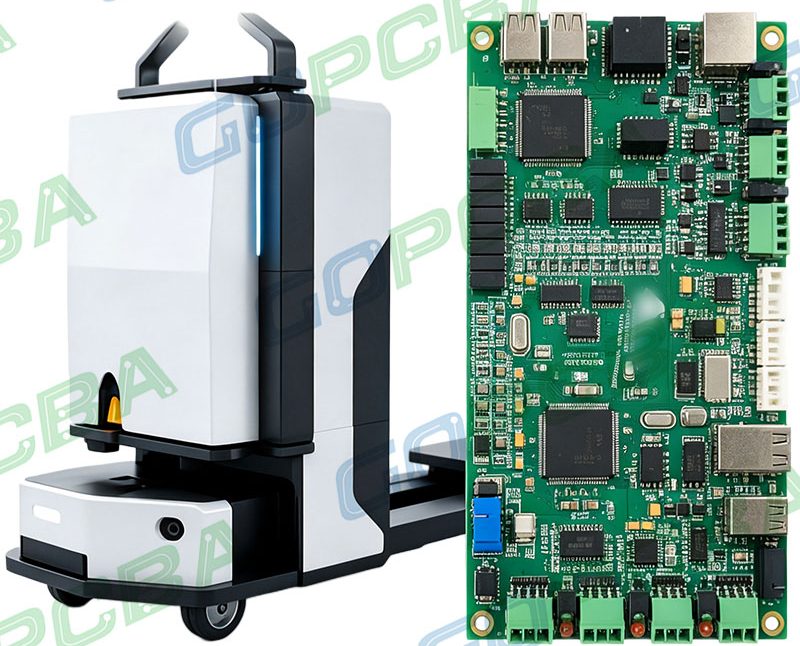
PCB assembly and box build are often quoted together, but they describe different scopes of work. PCB assembly produces a populated circuit board. Box build takes that board, or several of them, and turns it into a finished, testable product inside an enclosure, with the wiring, connectors, labels and packaging it needs. The boundary between the two is where a surprising amount of programme risk lives, because a product that leaves the assembly house as a bare board has to be integrated somewhere, and every extra handover adds cost, delay and the potential for damage.
What PCB Assembly Covers
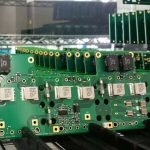
PCB assembly starts with the bare board and the bill of materials. It covers solder paste printing, component placement, reflow, through-hole or selective soldering, cleaning where required, automated optical inspection, X-ray for hidden joints, and electrical or functional testing of the board. It may also include conformal coating, firmware programming and depanelisation. The deliverable is a tested board, packed for shipping, with a quality record. What it does not include is anything mechanical: no enclosure, no cables, no user interface assembly, no final product test.
What Box Build Covers
Box build begins where assembly ends. It covers the mechanical and system level work: the enclosure and its hardware, cable assemblies and harnesses, connectors and switches, displays and membranes, thermal interface materials, gaskets and seals, and the assembly of the finished unit. It includes sub-assembly of modules, final system test, calibration where needed, labelling and serialisation, packaging suitable for the distribution channel, and often the logistics that follow, such as warehousing and direct shipment. In effect, the supplier becomes the manufacturer of the finished goods rather than the supplier of a component.
Where the Boundary Sits
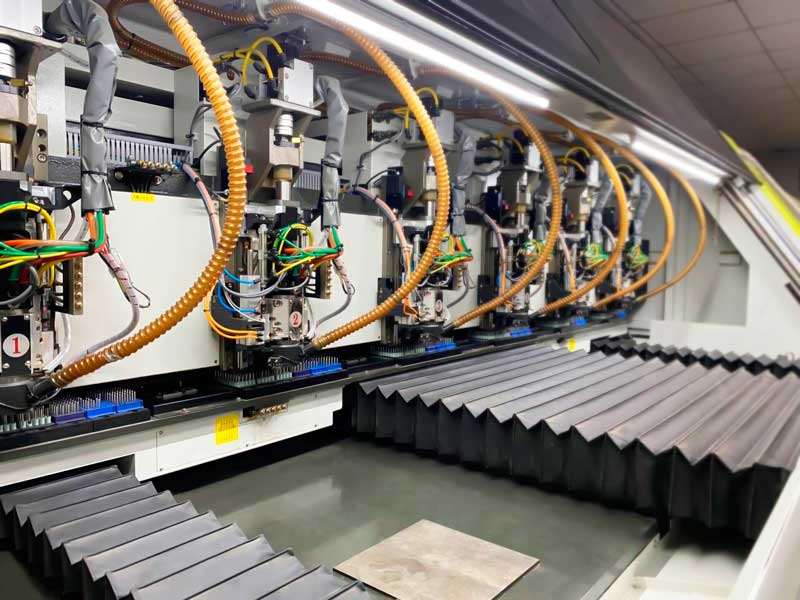
The boundary is not fixed. Some suppliers treat conformal coating, programming and depanelisation as box build steps, while others include them in assembly. Some customers want the boards delivered separately so that the enclosure partner can do the integration. The important thing is to define the boundary explicitly in the statement of work, listing who buys what, who tests what and where the material is stored, because the cost and the risk both change depending on where the line is drawn. A common and effective split is: assembly supplies tested boards to a defined quality level, and box build owns everything from enclosure onward, including final system test.
Cost Structure Compared
A PCB assembly quote is built from the bare board, the components, the placement time, the stencil and programming setup, the test strategy and the packaging. A box build quote adds the enclosure and mechanical parts, the cables and connectors, the labour for assembly and system test, the tooling for any custom fixtures, the warehousing of components and finished goods, and the logistics. The component cost share changes too: in assembly, the electronic bill of materials dominates; in box build, the mechanical parts and the labour take a much larger share. Because box build includes more manual steps, it is more sensitive to labour rates and to volume, and it usually benefits more from moving production to a lower cost region.
Testing Differences
Board level test asks whether the circuit works: continuity, in-circuit values, functional behaviour and, for radio products, a calibrated RF test. System level test asks whether the finished product works as the customer will use it: does the display light up, does the button respond, does the unit pass a full functional sequence, does it meet its acoustic or optical performance, and does it survive a burn-in. System test usually requires a purpose built fixture that also handles the mechanical interface, and it is the step that catches integration errors such as a connector that does not fully seat or a cable routed where it blocks a sensor.
Why Choose Box Build
The main argument for box build is fewer interfaces. One supplier owns the material, the assembly and the final test, so a problem found at system test is diagnosed and fixed in the same place instead of being argued across two companies. Handling is reduced, because the boards are not packed, shipped and unpacked again, which lowers the risk of ESD damage and mechanical damage. Traceability is easier to maintain end to end, and the schedule has one owner. The trade is flexibility: the customer gives up some control over the sub-suppliers and the process, and becomes more dependent on a single partner.
When to Keep Them Separate
Keeping the scopes separate makes sense when the enclosure is highly specialised, when the mechanical design is owned by a different partner, when the product is very large or heavy, or when the customer wants to hold finished goods inventory and distribute directly. It is also common when the volume is low enough that a dedicated enclosure supplier can do the integration more cheaply than a contract manufacturer would, or when the regulatory responsibility for the finished product sits with the customer. The decision is really about where the integration risk is best managed.
Both scopes end with a fabricated board, so the design and the process still have to be planned together. Review how PCB manufacturing feeds either service, apply the assembly rules in your PCB design and layout, and check the design and manufacturing considerations before release. A prototype PCB assembly run is the natural first step, and it also tells you whether the board is ready to hand to a box build partner.
FAQ
Is box build more expensive than assembly? Per unit, usually yes, because it includes mechanical parts, more labour and system test. It can still be cheaper overall by removing handovers.
Does box build include the enclosure? Normally yes, including its hardware, and often its tooling if the enclosure is custom.
Who is responsible for final product compliance? That depends on the contract. It is usually the customer unless the box build partner is acting as the manufacturer of record.
Can I start with assembly and move to box build later? Yes, and it is a common path, but the interface documentation should be defined early so the transition is clean.
Conclusion
PCB assembly produces a tested board and box build produces a finished product. The difference is the mechanical, system level and logistical work in between, and the boundary between them should be written down rather than assumed. Choose box build to reduce handovers and integration risk, keep the scopes separate when the mechanics or the distribution demand it, and define the interface clearly. Either way in 2026, the decision is about where the integration risk is best controlled.