Rework and Repair: Limits and Documentation
What Rework Covers
Rework is the correction of a defect to bring an assembly into conformance, and repair is the restoration of a functional assembly that has failed. In practice the two are treated together, because they use the same tools and carry the same risks: heat applied to a joint, mechanical force applied to a pad, and a component removed and replaced. What distinguishes a well-run rework operation from a risky one is not the skill of the operator alone but the existence of limits, of documentation and of a decision rule for when to stop.
What the Standards Allow
The acceptance standards set out what may be reworked and what must be scrapped, and they distinguish between defects that can be corrected and conditions that make the assembly unusable. A lifted pad, a delaminated area under a joint, a cracked barrel and a burned laminate are generally not repairable, while a bridged joint, a missing component or an insufficient fillet usually are. The distinction matters commercially as much as technically: a repair that is not permitted by the standard leaves the assembly non-conforming regardless of how well it functions, which is a problem for a product that is audited.
Thermal Limits
Every rework operation adds a thermal excursion to the board and to the component, and the number of excursions a device can tolerate is finite. The limit comes from two directions: the component’s own specification, which may state a maximum number of reflow cycles, and the laminate, whose adhesion and moisture content degrade with repeated heating. A board should be baked before rework if it has absorbed moisture, since a wet board heated locally can delaminate or blister at the pad. The tool matters as well: a hot-air or infrared station with a controlled profile is far gentler than a contact iron on a large pad, because the iron has to heat the whole thermal mass before the joint melts.
Pad and Barrel Damage
Removing a component stresses the pad and the barrel. A pad that is heated insufficiently lifts with the component, taking the copper with it; a barrel that is heated too much and pulled is cracked or elongated. Multi-layer boards with a small annular ring are the most vulnerable, because there is less copper to hold the pad. Where a pad is lost, a repair with a wire or an eyelet is possible for some designs, but the reliability of the repair is lower than the original, and the repair has to be documented and considered in the design’s acceptance criteria.
Rework of Area Array Packages
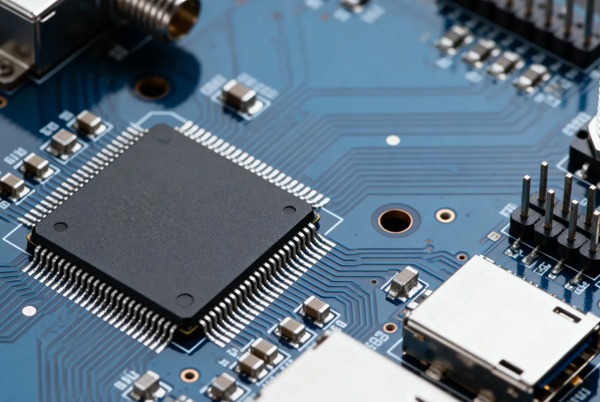
Ball grid arrays and other area array packages can be reworked, but the operation needs a dedicated machine, a preheat, a profile matched to the package and a re-balling or a paste-printing step to form the new balls. The risk of damaging the package is higher than for a leaded part, and the risk of a head-in-pillow or a void in the new joints is real. The economics often favour scrapping a low-value board and keeping the rework for high-value assemblies, and where the same failure recurs the answer is usually to fix the process rather than to rework more boards.
Coating and Adhesive Removal
Where a board has been conformally coated or has an adhesive under a component, the rework has to remove the material locally before the joint can be accessed, and then restore the protection afterwards. The removal is often more damaging than the soldering, because it involves solvent or mechanical scraping near delicate parts, and the restoration is rarely as good as the original. Where the coating cannot be removed without damaging the area, the assembly should be scrapped rather than repaired, and this is a decision that should be made at the design stage when the coating material is chosen.
Documentation and Traceability
A repair is a change to the product, so it has to be recorded: what was replaced, why, which operation was performed, who performed it, and what test was used to confirm the result. The record allows the failure rate to be analysed, it allows a subsequent fault to be distinguished from the repair, and where the product is regulated, it is a requirement. A rework that is not documented is a rework whose effect cannot be evaluated, and in a product that is audited it is also a non-conformance regardless of the outcome.
When to Scrap
The rule that prevents damage is to decide in advance what is not repairable: a lifted pad on a fine-pitch device, a delaminated area larger than a defined size, a burned laminate, a cracked barrel, a damaged coating that cannot be restored, and any assembly that has already exceeded its rework cycle limit. Writing those conditions down and giving the operator the authority to scrap removes the incentive to attempt a repair that will fail later, which is the most expensive outcome of all.
Rework and Process Improvement
The rate of rework is one of the most sensitive indicators of process health, and it deserves the same attention as the first-pass yield. A rising rework rate usually means the printing, the placement or the profile has shifted, and it appears at the rework station before it appears in the field. Tracking the defect types that are reworked, rather than only the count, points to the step that has drifted, and a Pareto of rework causes will usually show that a small number of defect types account for most of the work. Where a defect type is reworked repeatedly and never eliminated, the useful question is not how to rework it faster but why the process produces it at all, since a defect that is corrected a thousand times is still a process that is out of control.
FAQ
How many times can a joint be reworked? It is limited by the component’s specification and by the laminate’s tolerance of repeated heating, and it should be stated as a number in the process documentation.
Should a board be baked before rework? Yes, if it has absorbed moisture, because local heating of a wet board can cause delamination or blistering.
Can a lifted pad be repaired? Sometimes, with a wire or an eyelet, but the reliability is lower than the original and the repair must be documented and accepted.
Is BGA rework practical? Yes with the right equipment and profile, but the risk is higher, and for a low-value board scrapping is often the better decision.
Why document a repair? So the failure can be analysed, the repair can be distinguished from a later fault, and a regulated product remains conforming.
Conclusion
Rework is a controlled process with thermal limits, mechanical risks and documentation requirements, and its value comes from knowing when not to attempt it. Define the repairable and non-repairable conditions, bake the board, use a controlled thermal profile and record every operation. The assembly context is described in PCB assembly, the soldering processes involved in SMT PCB assembly, and the verification after a repair belongs to PCBA testing. Rework limits are normally established during prototype PCB assembly in 2026.