Refurbishing Assemblies and Re-Balling Packages
What Refurbishing Covers
Refurbishment is the restoration of an existing assembly to a usable condition. It covers replacing a failed component, re-balling a package whose solder balls were removed, replacing a worn connector, cleaning contamination from a board that has been in service, restoring a coating that was removed during a repair, and re-testing the result. It is used where a board is expensive, where a spare is not available, or where the equipment can afford a short outage but not a long lead time, which makes it common in industrial, medical and infrastructure products.
Re-Balling an Area Array Package
Re-balling is the process of removing the residual solder from a ball grid array package and forming new balls so that it can be fitted again. It requires a fixture to hold the package, a stencil matched to the ball pattern, a paste or a set of preformed spheres, and a reflow profile that is gentle enough not to damage the package. The difficulties are the small ball sizes, the collapse of the balls during reflow and the risk of leaving a partly cleaned pad that produces a weak joint. For a large package with thousands of balls, the process is slow and the yield is lower than the original assembly, which is why it is used mainly for expensive devices and for small packages where it is manageable.
Replacing a Connector
A connector is usually the component most likely to need replacement, because it takes the mechanical wear. Removing a through-hole connector requires desoldering every pin, and the risk is lifting a pad or cracking a barrel on a pin that does not clear. The techniques that reduce the risk are to preheat the board, to use a desoldering tool with adequate thermal capacity rather than an iron and braid alone, and to add fresh solder before removing so that the heat transfers more evenly. Where the connector is a press-fit type, the hole is deformed by the original insertion and the same hole may not accept a second connector reliably, so the replacement may need an oversized pin or a different connector.
Restoring Solderability
A board that has been in service or in storage may have a surface finish that has oxidised or a coating that has degraded, and the solderability has to be restored before a repair can be made. Light oxidation is removed by the flux in the paste or in the solder wire, heavier oxidation by a chemical treatment or a gentle abrasion, and a coating that has been damaged has to be removed locally and replaced after the repair. The judgment that matters is whether the finish is still functional: a finish that has to be heavily abraded to solder is a finish that has been consumed, and the joint that results will be weaker than the specification assumes.
Cleaning and Coating Repair
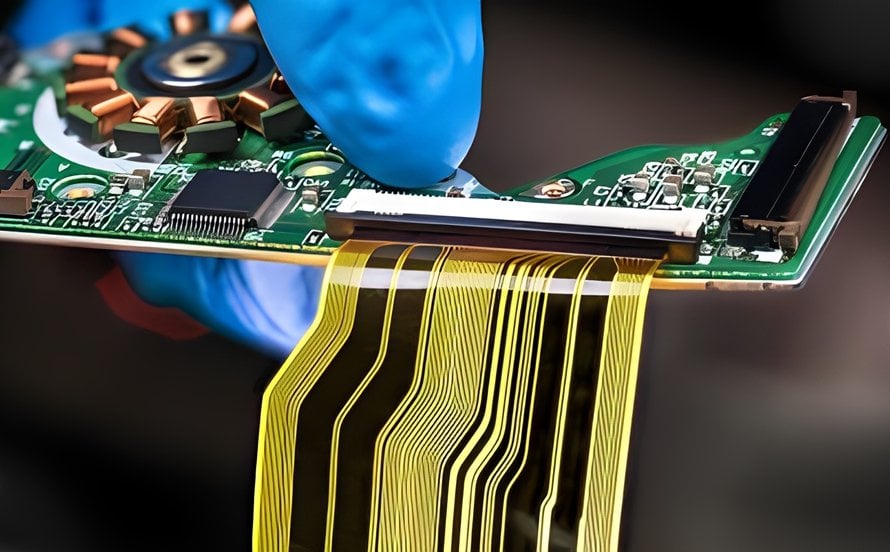
After a repair the board has to be cleaned to remove the flux residue, and the coating, if there was one, has to be restored. The cleaning is more difficult on an assembly that has already been coated, because the coating traps residue and the residue is often beneath it. The restoration is rarely identical to the original: a brushed-on coating over a repaired area has a different thickness and may not bond as well as the original sprayed or dipped film. Where the coating is part of the product’s protection against moisture, the repaired area is the most likely place for a future failure, and that should be recognised in the decision to repair at all.
Test After Refurbishment
A refurbished assembly should be tested to the same standard as a new one, and ideally more thoroughly, because it has an unknown thermal history. Functional test at the operating conditions is the minimum, and where the original production included a burn-in or a thermal cycling screen, the refurbished unit should go through it as well. Where the refurbishment was a re-ball or a reflow operation, an X-ray inspection of the new joints is worth the cost, because the failure mode of a badly re-balled package is a joint that looks formed and is not connected.
Limits and Liability
The decisions that should be made before any refurbishment are what may be repaired, what must be replaced, and what is not allowed. A board that has already been through the maximum number of rework cycles should not be refurbished again, since the laminate and the barrels have accumulated their thermal history. A package that has been re-balled more than once, a connector site that has been reworked repeatedly, and an area where a previous repair failed should all be treated as limits. Where the product is regulated or safety-related, the traceability of the refurbishment, including the identity of the person and the tests performed, is part of the record rather than an optional extra.
Deciding to Refurbish
The decision to refurbish should be made on the value of the board, the availability of a replacement, the number of previous repairs and the consequence of a failure. A board that has already been reworked several times, or that has a re-balled package, carries a higher risk than its history suggests, and the risk is not visible from the outside. Where the equipment is in a critical service and a failure is expensive, the rational choice is often to replace rather than to repair, even where the repair would be technically possible. Where repair is chosen, the operation should be treated as a controlled process with defined limits, a defined test and a record, rather than as an improvisation. The most expensive outcome is a repair that fails in service, because it carries the cost of the failure as well as the cost of the board it replaced.
FAQ
What is re-balling? Removing the residual solder from an area array package and forming new balls so that it can be re-fitted, using a stencil or preformed spheres.
Is refurbishment as reliable as a new assembly? Not necessarily. It carries an unknown thermal history, and the restored coating and joints are usually inferior to the originals.
Can a press-fit connector be replaced? Sometimes, but the hole is deformed by the first insertion, so a second insertion may not give a reliable joint without a change of connector or pin.
Should a refurbished board be re-tested? Yes, to the same standard as new, and ideally with a thermal screen or burn-in as well, since the history is unknown.
What must be recorded? What was replaced, which operations were performed, who did the work and the tests performed, particularly for a regulated or safety-related product.
Conclusion
Refurbishment is a useful option where a board is expensive or a spare is unavailable, but it carries a thermal history and produces joints and coatings that are inferior to the original. Decide in advance what may be repaired and how many times, restore the surface properly, test to the new-build standard and record everything. The assembly context is described in PCB assembly, the rework processes in SMT PCB assembly, and the verification that follows belongs to PCBA testing. Repairs are normally qualified alongside prototype PCB assembly work in 2026.