Quick-Turn Prototyping and Cycle Compression
What Quick Turn Really Buys
A quick turn service buys calendar time, and calendar time is the resource a development programme is shortest of. The value is not the board itself but the number of design iterations that fit before a deadline, because each iteration is what converts an assumption into a fact. A week saved on fabrication is therefore worth more than the difference in price, provided the board that arrives is good enough to test the thing that matters. That is the trade that quick turn makes explicit.
Standardise What You Can
The most reliable way to be fast is to design within limits that the factory keeps in stock. A four layer stackup in a common laminate, a standard thickness, one ounce copper, a common solder mask colour and an immersion silver or lead free hot air finish are all available immediately, and a board that uses them starts production the day the data is released. Each departure from the standard, whether a special laminate, an unusual thickness or a heavy copper build, adds a purchase order and a wait. Where the performance genuinely requires a special material, that is a fair cost, but it should be a decision rather than a habit.
Reuse the Stackup and the Panel
Speed also comes from reuse. A stackup that has already been built is a stackup whose process is known, whose impedance has been verified and whose fabrication data is already in the system. A panel that has been used for another product may allow two designs to share a tooling cost and a lead time. Where the mechanical outline and the connector positions can stay the same between revisions, the enclosure, the test fixture and the cable assemblies all carry over, which removes weeks from the programme that a board-level saving would not touch.
Design for the First Build
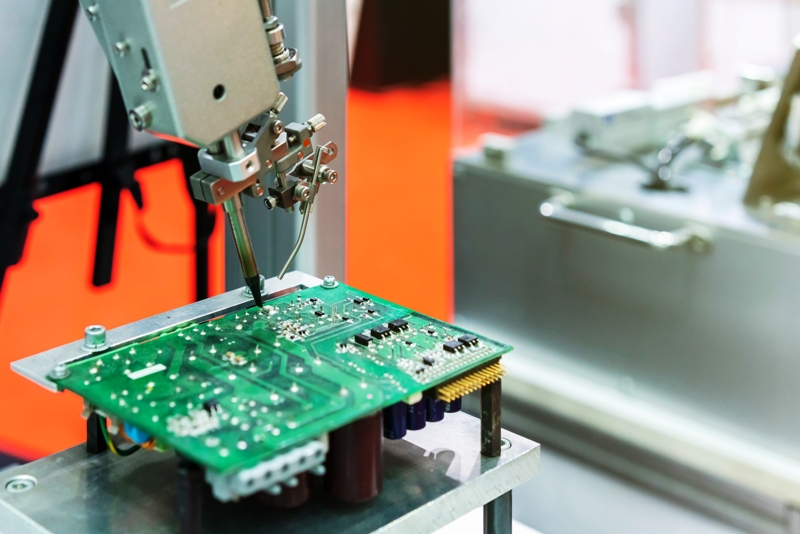
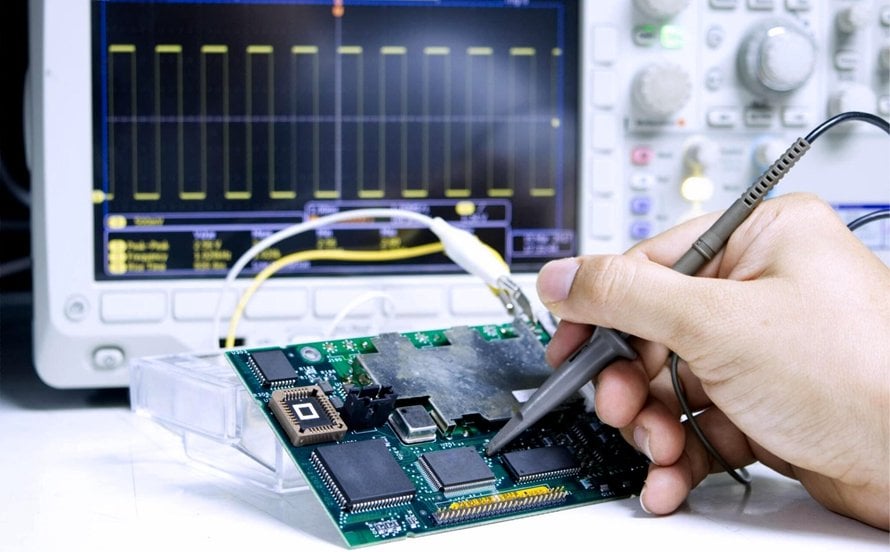
A prototype board should be designed so that it can be modified. Test points, spare pads, zero ohm links, a few unpopulated footprints and clearly marked debug headers cost little and save a respin, because a bodge wire on a prototype is much cheaper than a new board. Bringing out the signals that are most likely to need a probe, keeping the power architecture flexible and providing a way to isolate a suspicious block all reduce the number of iterations needed. This is not a licence to design carelessly; it is designing for the fact that the first board will reveal something.
Parallel Paths and Early Release
The schedule compresses most when the bare board, the components and the assembly data are released at the same time rather than in sequence. Long lead components should be ordered while the board is being fabricated, and the stencil and the placement program can be prepared from the same data. Where the design is not frozen, a deliberate split can help: a board with a conservative, fully understood section and an experimental section allows the known part to be built and tested while the risky part is still being resolved. The point is to overlap work that has no real dependency, which is almost always more than the original plan assumes.
Accepting the Right Compromise
Quick turn is not free, and the costs it imposes should be chosen deliberately. The finish may be one that is less ideal for long term storage; the panel may use a standard tooling that limits a fine feature; the assembly may skip an inspection step that would be routine in production. Where those compromises affect the question the prototype is meant to answer, they are not acceptable, and the programme should pay for the extra step. Where they do not, taking them is what keeps the schedule. Writing down which compromises are allowed is more useful than deciding each one under pressure.
From Prototype to Production
A quick turn prototype is a rehearsal, so it should be built in a way that the production build can inherit. Reusing the stackup, the stencil design, the placement program and the inspection plan means the later build starts from a verified base rather than from scratch. Capturing the fabrication and assembly data in a controlled form, and recording what was changed by hand on the prototype, is what allows the production release to be fast as well. The programme that treats each prototype as a disposable sample pays for the same learning twice.
Communication as a Speed Tool
A surprising share of a compressed schedule is lost to questions rather than to machines. A fabrication query about an ambiguous drill file, an assembly question about a missing polarity mark, or a clarification about the finish can each cost a day if it is asked by email and answered the next morning. Releasing data that is complete and unambiguous, marking the controlled items clearly and stating the intent of anything unusual removes those delays before they happen. A short call at the moment of release is often faster than a week of written clarification.
FAQ
What is quick turn PCB prototyping? A manufacturing service with a compressed lead time, used to shorten a design-build-test cycle rather than to save cost.
How do I get the fastest possible board? Stay within standard materials, stackups, thicknesses and finishes, and release complete data in one go.
Should a prototype be designed for modification? Yes. Test points, spare pads and debug headers often save a full respin.
Can bare board and assembly be compressed together? Yes, by releasing both at the same time and ordering long lead components in parallel with fabrication.
Which compromises are acceptable? Only those that do not affect the question the prototype must answer; the rest are worth paying for.
Conclusion
Quick turn is a way to buy iterations, and iterations are what reduce risk. Standardise the stackup, design for change and release everything at once. Fabrication speed belongs to PCB manufacturing, the assembly of the samples sits in prototype PCB assembly, and the volume build that follows is covered by PCB assembly. How the factory supports a compressed cycle is described under PCB capabilities in 2026.