Double-Sided SMT Assembly for a Smart Thermostat Board
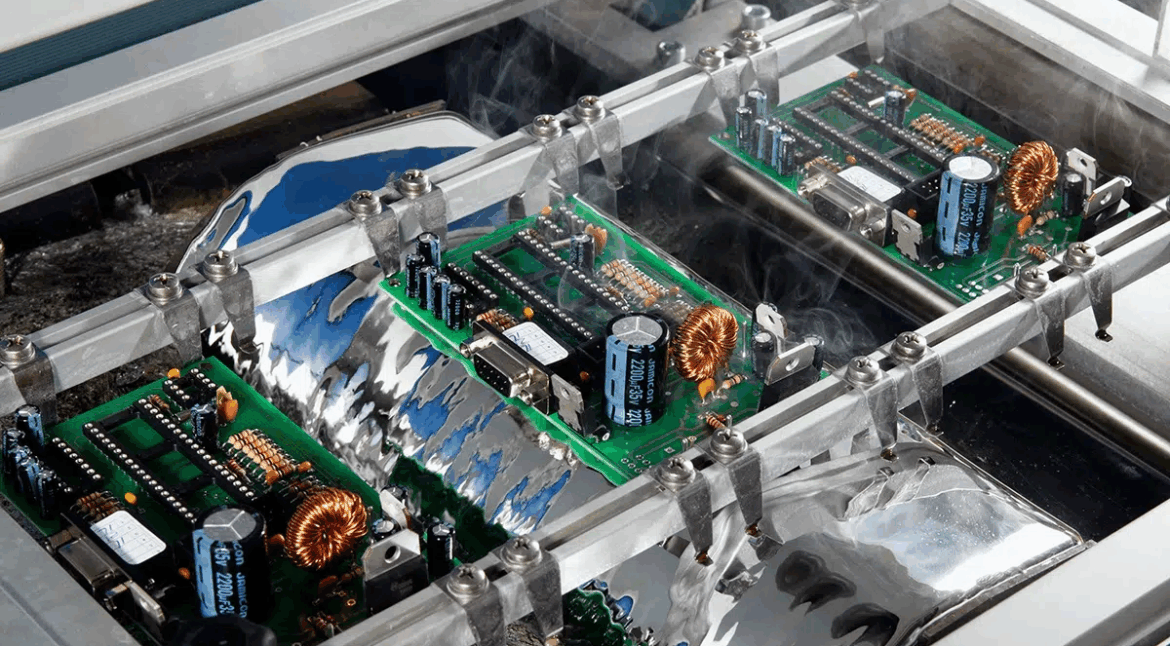
A thermostat board carries the controller, the temperature sensing interface, the display connector, the power management devices and the relay driver circuit, and it is usually built as a two sided assembly. The board that is populated first passes through the reflow oven twice, so the sequence is not decided by which side has fewer parts. The weight of the components, the package structure, the area of the pads and the effect of the second thermal cycle all belong in that decision.
Choosing Which Side Goes First
Four factors decide the order. The weight and the size of the components come first, because a heavy device or a large inductor sitting on the underside during the second pass is the one most likely to move. The pad structure comes next, since a large pad and an unusual package are more sensitive to the paste volume and to the temperature profile.
Third is the temperature capability of the devices, and fourth is whether the board can be supported properly at each stage. Where both sides are densely populated, the tooling for printing the second side has to clear the components already fitted on the first, while still holding the board flat under the squeegee. A support tool that is designed for the panel rather than for the product usually leaves a gap under the middle of the board, and the paste thickness varies across the panel as a result.
Checking the Data for Both Sides Before Production
Project intake expects the Gerber data, the bill of materials, the placement coordinates, the assembly drawing for each side, the panel drawing, the quantity and the lead time. The coordinate file should state the top and bottom layers explicitly together with the angle convention, and the assembly drawing should mark polarity, orientation and the positions that are not populated.
During import the reference designators, the quantities and the packages are compared across the bill of materials, the coordinates and the drawings. On a double-sided SMT job the specific risks are a reference designator assigned to the wrong side and a bottom side coordinate file that has not been mirrored correctly. Both produce a board that looks plausible and behaves as though parts are missing from the machine. Where the definitions in the file are ambiguous, the data are settled before the program is written.
Where the smart thermostat board is also to be programmed and functionally tested, the program revision, the sensor condition, the supply arrangement and the acceptance criteria are requested at the same time, because the test has to be planned before the line is running rather than after.
Separate Stencils, Separate Programs
Two sides means two sets of stencil data and two placement programs, and the most common error is calling the wrong one. The stencil version and the program name for the side being built are confirmed at the line before the run starts, and the first article is checked against the drawing for that side.
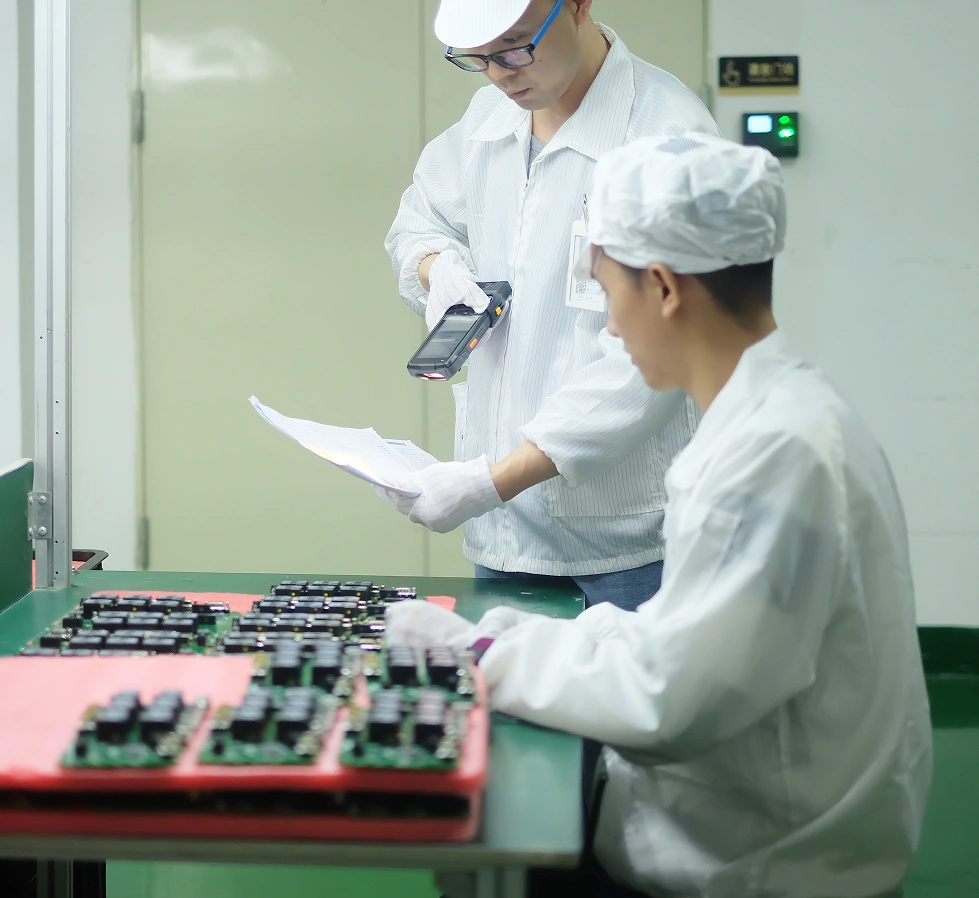
After printing the first side, the paste volume, the area and the offset are checked where the project requires it, and the first article is placed and examined. After reflow, AOI covers the missing parts, the offset, the bridging and the polarity. Only when the first side is confirmed is the second side started, which keeps a fault on one side from being combined with a fault on the other and becoming unreadable.
When the board is turned over, the first check is that the fitted components clear the support tray. After the second side has reflowed, the inspection returns to the first side as well, because a device that shifted, a joint that changed or mechanical damage that occurred during the second pass will not appear on the side that was just placed.
<img src="https://www.gopcba.com/wp-content/uploads/2021/01/ptt_sustainability.jpg" alt="double-sided PCB after the second reflow cycle” />
Reducing Movement During the Two Passes
The reflow profile is evaluated against the board structure, the thermal mass of the components, the paste characteristics and the customer requirement. A profile that is too cool leaves the wetting incomplete, and a profile that heats the assembly too quickly can disturb the joints that were already formed on the other side.
For a device that tends to move, the placement position, the paste volume, the pad design and the production order are examined before the oven is blamed. Adding hand soldering to compensate is a cost that hides the cause rather than removing it, and it also removes the ability to see whether the process change worked.
Before the second reflow parameters are fixed for production, a first article or a small batch is used to verify the component positions and the joint condition on both sides. If the board revision, the panel arrangement or a key component changes, the parameters are evaluated again rather than carried over, because the assumption that carried them over the first time may no longer hold.
Testing the Function as Well as the Joints
Once the assembly is complete, the programming and the functional test are arranged to the customer requirement. A thermostat project normally has to define the sensor input, the display state, the key response and the conditions under which the output is driven. When a temperature reading is wrong, the sensor, the cable, the program revision and the test input are verified before the acquisition circuit and its joints are examined.
After a repair, the same conditions are repeated rather than reduced to a check that the board switches on. Our SMT assembly line handles the double sided flow, the programming and the functional test, supported by component procurement and by the record keeping in our quality management system.
What the Record Has to Show
A two sided build is only repeatable if the conditions that produced it are written down. The record includes the stencil revision for each side, the paste type and the printing parameters, the program name for each side, the reflow profile and the oven, the first article result and the inspection results for both sides after the second pass. Without those, a batch that is questioned later has to be explained from memory, and the next order for the same product starts from a guess.
The record also carries the disposition of any board that was set aside and repaired, with the tests repeated afterwards. For a thermostat board, the temperature acquisition path is the part of the circuit where a marginal joint shows up as an intermittent reading rather than as a hard failure, so a board that was repaired near the sensing stage is tested with the repeated sequence rather than with a single pass.
FAQ
Is the side with fewer parts always placed first? No. The weight and the thermal sensitivity of the components decide, and a lightly populated side that carries a heavy inductor may still need to be placed second.
Why check the first side after the second reflow? Because the second pass heats the whole board, and a joint or a device on the finished side can change while it is not being looked at.
Can the placement order be changed later? It can, but the stencil, the support tooling and the program all follow the order, so the change is treated as a process change rather than as a line decision.