Small Orders Deserve Full Process Control
There is a particular failure in batch assembly that rarely appears on a formal list: the board that would have been built correctly if the order had been large. Where a supplier’s schedule is organised around volume, a small quantity can be treated as a trial, with parameters carried over from another product and inspection concentrated on the units that are easy to check.
The reason this matters is that a small order is usually the most important one a project will place. Those boards go into debugging, into software integration, into the mechanical fit and into the customer’s own demonstration, and an error in them is attributed to the design rather than to the process.
Why Small Orders Are Treated Differently
The economics explain the behaviour without excusing it. The setup dominates the cost, the productive part of the run is short, and the incentive to fine-tune the process is weaker when only a few dozen boards are involved.
The counter-argument is equally simple. The cost of getting a small order wrong is not proportional to its quantity, because the consequence falls on the project rather than on the boards. A week lost to a wrongly oriented component is a week lost to the whole development schedule.
The practical response is not to demand more effort but to require the same procedures. A first article on a batch of thirty boards costs a few minutes and prevents the entire batch from repeating the same mistake, and a written parameter set for the product is as useful on a small order as on a large one.
Process Control Applies Regardless of Quantity
Process control is a set of conditions rather than a level of output. The paste is controlled by temperature and working life, the stencil is designed for the pads, the printer is set and measured, the profile is established for the assembly, and the inspection follows a defined criterion.
None of those steps is materially cheaper to skip on a small batch, and each of them is cheaper to perform than to correct. The only genuine difference is the scale of the consequence: on a large order a defect becomes scrap and rework, while on a small one it becomes a delay in the customer’s project, which is frequently more expensive.
The visible marker of a controlled process is that it can be described. A supplier who can state which positions are inspected, what limit defines a pass and what happens to a board that fails is operating a process; one who answers in generalities is operating a habit.
The First Article in a Small Batch
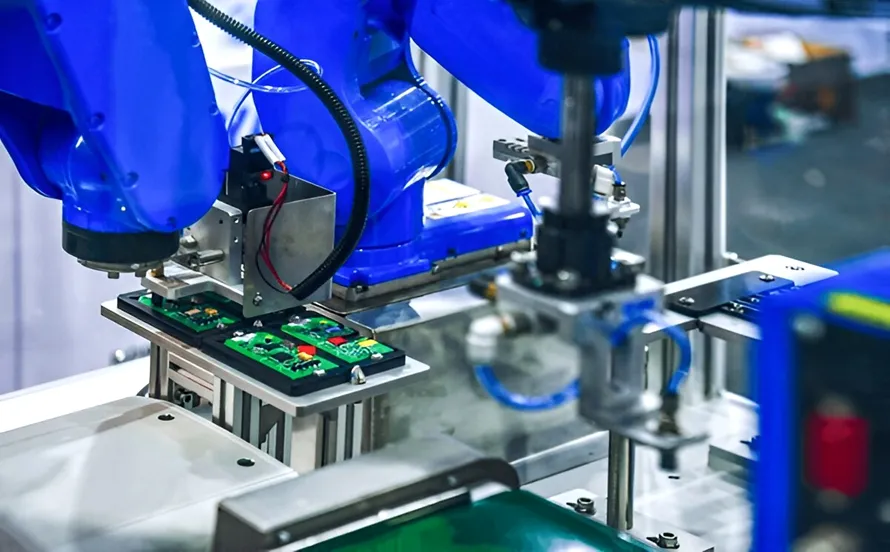
On a small order the first article carries a disproportionate share of the quality assurance, because there are few units over which to spread any other check.
A useful first article confirms the identity of each device, its position, its orientation and the appearance of the joint, and it does so before the remainder of the batch is run. Where the board carries packages whose joints cannot be seen, the first article is also the natural point at which to apply the method that can see them.
The record of that verification is as important as the verification. Where the result is written down and attached to the batch, the second version of the board can be compared with the first, and a change in behaviour has a baseline to be measured against.
Stencil, Programme and What Should Be Kept
The assets that make a repeat order efficient are created during the first one: the stencil, the placement programme, the process parameters and the inspection criteria. Whether they are retained is the difference between a second order that begins from a known state and one that begins again.
Retention is not only a matter of storage. The stencil for a product has to remain identifiable, the programme has to be associated with a board revision and the parameters have to be recorded in a form that can be recalled rather than remembered.
For the customer, the practical question is whether the supplier keeps these assets and how a revision is handled when the board changes. Where the answer is clear, the relationship becomes progressively cheaper; where it is not, every order is a first order.
The Engineering Review on a First Order
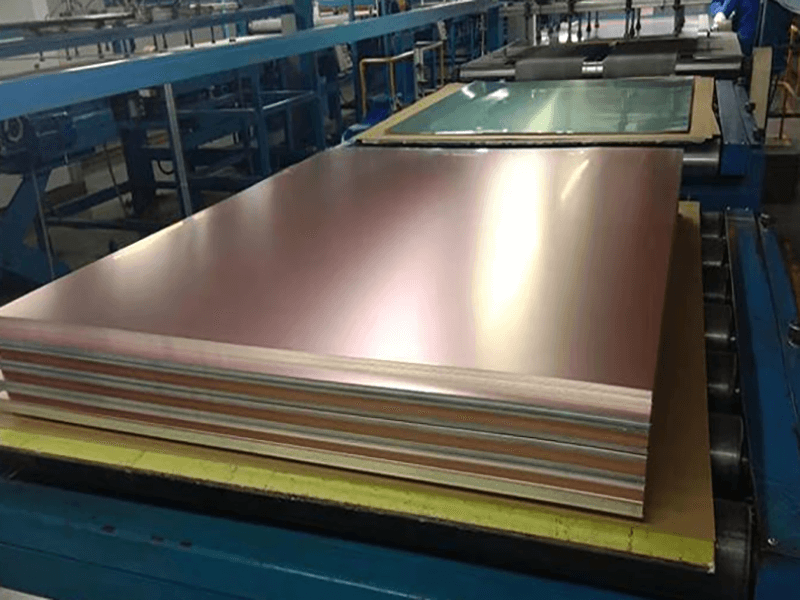
The review that happens before production is the most valuable service on a first order, and it is the one most often omitted when the quantity is small. A footprint that does not match the package, an ambiguous orientation, a component that cannot be bought and a test point that is missing are all questions that cost a message at the enquiry stage and a stopped line later.
Its value does not depend on the size of the order. The same review is performed once, and the information it produces is used by every batch that follows, which is why a first order is the right place to insist on it.
The operations that follow are the familiar ones: SMT assembly for the placement work, PCBA testing where verification is required and the controls that keep a batch consistent under quality management.
What a Customer Should State on a First Order
The information that removes most of the risk is the same for a first order as for a production batch, and it is short enough to send in one message.
The board revision that is actually to be built, stated explicitly where several exist. The bill of materials with the critical devices marked and the permitted substitutions described. The component classes that require particular attention, particularly any device that is smaller or finer than the rest of the board.
Then the acceptance requirements. Whether a programme must be loaded, what has to be verified, what the limits are and how a failing unit should be handled. Where the product will be used matters as well, because a board that will run continuously in an enclosure justifies a different profile and a different inspection from one that will be demonstrated once.
Finally, the delivery format. How the units should be packed, whether they are to be separated by batch, and what information should accompany the shipment. Those decide whether the boards can be used on arrival or have to be sorted first, and they cost nothing to specify in advance.
One further item is worth agreeing before the order rather than after it: the point at which the batch is considered complete. Whether a unit that required rework is counted within the quantity, and whether it has to be retested before it is packed with the others, are small questions that determine whether the delivery can be described precisely. Stating them at the outset avoids the position where neither party is certain what the delivered quantity represents.
FAQ
Is a small order a trial for the supplier? It should not be. The procedures are the same as for a production batch, and the consequences of an error fall on the project rather than on the quantity.
What is the most useful requirement on a first small order? The first article verification reported before the batch continues, together with the retention of the stencil and the recorded parameters.
Why insist on an engineering review? Because it is performed once and benefits every subsequent batch, and because the questions it raises are far cheaper than the delays they prevent.