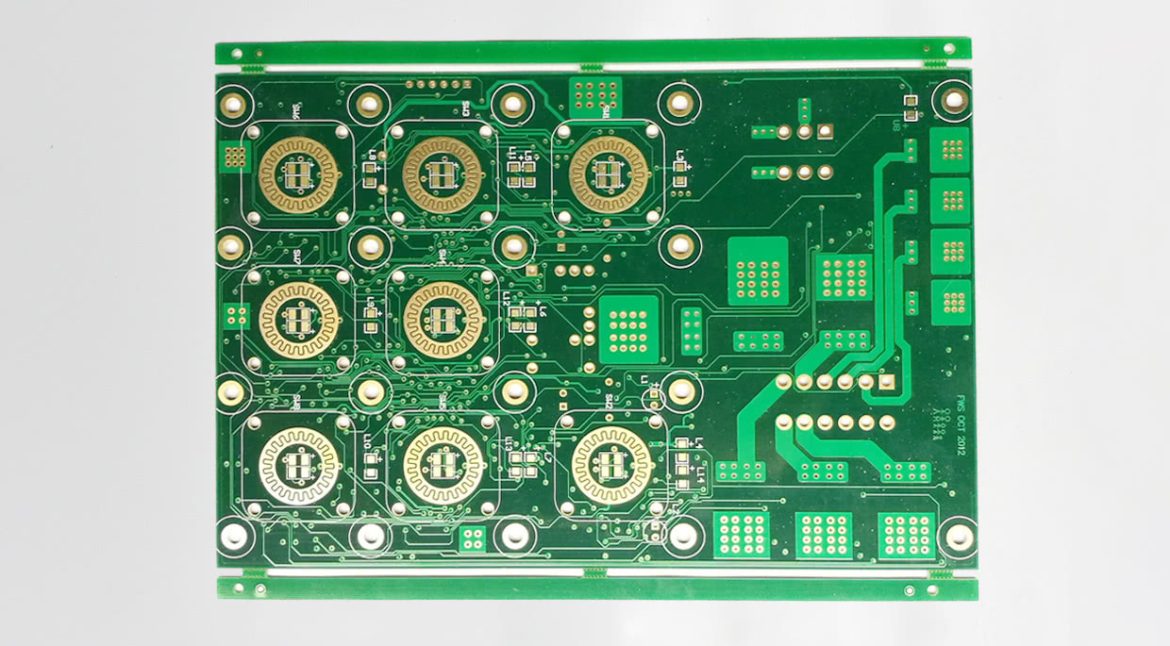
94V-0 PCB: What the Flammability Rating Means
A flammability rating appears on almost every fabrication drawing and is rarely understood by the people who specify it. A 94V-0 PCB is not a board that cannot burn; it is a board whose laminate, tested in a standardised way, stops burning within a defined time after the ignition source is removed. Knowing what the rating actually measures is what allows the right grade to be chosen rather than copied from a previous project.
What the Rating Measures
The rating comes from a flammability test in which a specimen is held vertically and a flame is applied to its lower edge for a defined period, then removed. The material passes if the flame extinguishes within a stated time, if it does not drip burning material onto the cotton below, and if the afterglow stops within a further defined period. V-0 is the most demanding of the vertical grades.
It describes behaviour, not ignition resistance. A 94V-0 laminate will still ignite if enough energy is applied, and it will still contribute fuel to a fire that has already started elsewhere in the product. What it does is limit propagation and remove the dripping hazard that turns a small electrical fault into a spreading fire.
What the Laminate Has to Contain
Flame retardancy in a laminate comes from the resin chemistry. Traditional grades use brominated compounds together with antimony trioxide as a synergist, which is very effective at suppressing flame but produces corrosive and toxic combustion products and is restricted in some markets.
Halogen free grades replace the brominated system with phosphorus or nitrogen based chemistry, usually with a metal hydroxide filler. They achieve the same rating through a different mechanism, at a higher cost, a slightly higher dielectric constant and often a higher moisture uptake. The choice between them is a regulatory and application decision rather than a technical superiority argument.
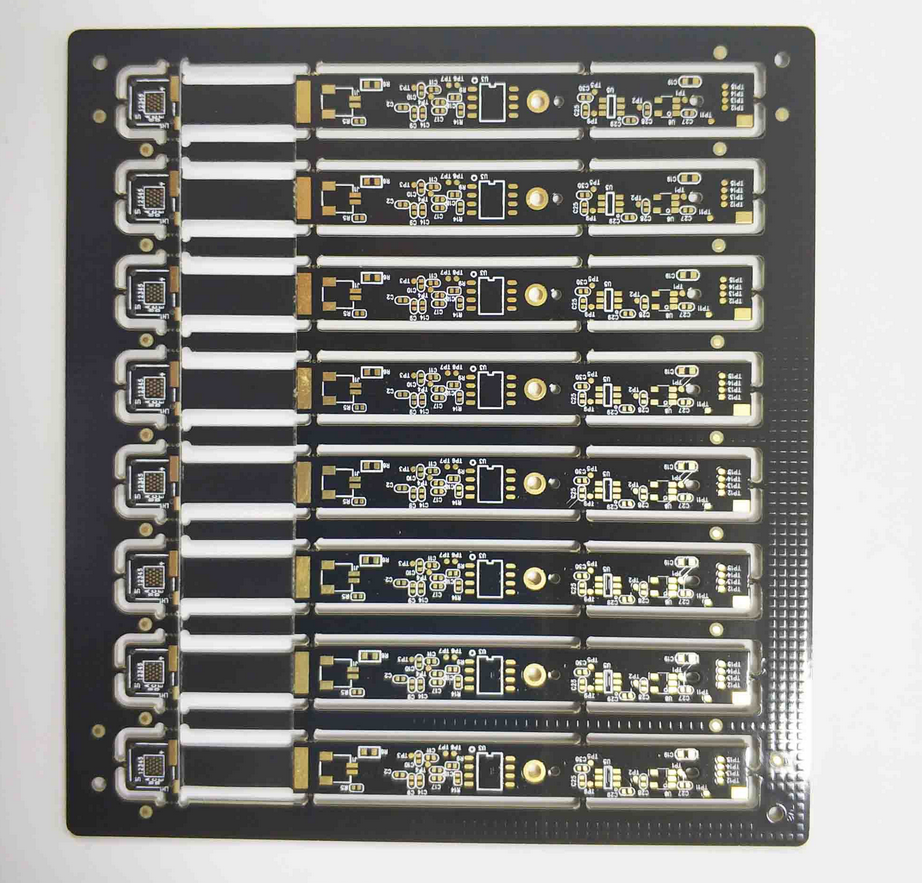
Rating, Glass Transition Temperature and Reliability
The flammability rating and the glass transition temperature are separate properties that are often specified together and confused with each other. The rating describes fire behaviour, while the glass transition temperature describes the point at which the laminate softens and its expansion rate changes. A high Tg material is chosen for thermal reliability through assembly and service, not for fire performance.
A common specification asks for both, which is why high Tg and 94V-0 so frequently appear on the same note. A material can be one without the other: a standard Tg laminate can carry a V-0 rating, and a high Tg material is not automatically flame retardant to that level unless it has been tested and listed.
How the Rating Is Verified
The laminate manufacturer tests the material and obtains a UL listing, and the fabricator purchases a listed grade and marks the board accordingly. The mark on the finished board, usually a UL mark with the flammability rating and the maximum operating temperature, is what a safety inspector looks for.
That means the designer cannot create the rating by writing it on a drawing. The board inherits it from the material, and the fabricator has to be able to show that the laminate used is a listed grade. Where a supplier substitutes an unlisted equivalent to save cost, the marking on the board becomes a false statement, which is a serious compliance problem.

Where the Requirement Comes From
End product safety standards generally require flame retardant materials in equipment that connects to mains, that contains a battery, or that is used in an unattended location. Consumer electronics, information technology equipment and household appliances all fall into that category, which is why the requirement is so widespread.
Products that are not mains powered and contain only low energy circuits may be permitted to use a lower grade, and some applications exempt small boards entirely. The exemption is often expressed as a maximum energy or a maximum board area rather than as a blanket allowance, so the wording of the clause should be read in full before it is relied on. Those exemptions are defined by the product standard and by the authority that tests the product, so the requirement should be confirmed from the applicable standard rather than from a general rule.
Design and Process Implications
Flame retardant grades are not electrically neutral. Brominated systems have a dielectric constant and dissipation factor that are adequate but not exceptional, while halogen free grades often have a higher dielectric constant and a higher moisture absorption, which changes the impedance calculation and the drying requirement before assembly.
The mechanical and thermal behaviour also differs materially. Filled halogen free laminates can be more brittle and are harder to drill cleanly, which affects the achievable hole quality and the minimum drill size. Both differences should be reflected in the stackup rather than discovered during fabrication, and the same discipline applies to the finish selection described in lead-free versus leaded solder.
Marking, Traceability and Compliance
The flammability marking belongs on the finished board, together with the manufacturer identification, the material designation and the maximum temperature. Marking is usually done in the copper etch or in the solder mask on the outer layer, so it has to be placed during layout rather than applied afterwards.
Traceability then connects the mark to a material lot. A safety audit that finds the marking but no evidence of the laminate grade leaves the product non-compliant, and the audit is normally performed on the finished equipment rather than on the bare board, which means the board supplier record has to be retrievable long after the shipment. Keeping the laminate certificate with the fabrication record is the practical way to close that gap, and the same documentation discipline is discussed in multilayer PCB advantages for high speed.
Choosing a Grade in Practice
Start from the product standard, which determines whether a flame retardant material is mandatory and which rating is accepted. Then check whether the market restricts brominated chemistry. Then confirm that the chosen grade can meet the electrical and thermal requirements of the design, since a halogen free material changes the impedance and the moisture behaviour.
Finally confirm that the fabricator stocks and marks the grade. A material that has to be ordered specially for every batch adds lead time and cost, while the same rating is often available in a grade the plant already runs. Coating is not a substitute for a flame retardant laminate, though it can offer additional protection as described in conformal coating and board protection.
FAQ
Does a 94V-0 board resist fire? It resists the spread of fire. The laminate will still ignite, but the flame self-extinguishes within the specified time and does not drip burning material, which is what limits damage to the surrounding product.
Is halogen free always better? It is better where the market requires it or where corrosive combustion products would be a hazard in the installation. It costs more and has slightly different electrical and mechanical properties, so it is not automatically the superior choice.
Can the rating be applied by adding a coating? No. The rating belongs to the laminate and to the board construction as tested. A coating may improve environmental protection and can reduce creepage requirements, but it does not create a flammability listing.