
Solder Mask Colour: Options and How to Choose
Solder mask colour is usually the first thing anyone notices about a circuit board and the last thing they think about as an engineering decision. It is a cosmetic choice in most cases, but not entirely: the colour affects the contrast for automated optical inspection, the reflectivity of the board surface, the visibility of the traces during rework and, marginally, the thermal behaviour of the surface. Choosing it deliberately costs nothing and occasionally prevents a problem.
Why Green Became the Default
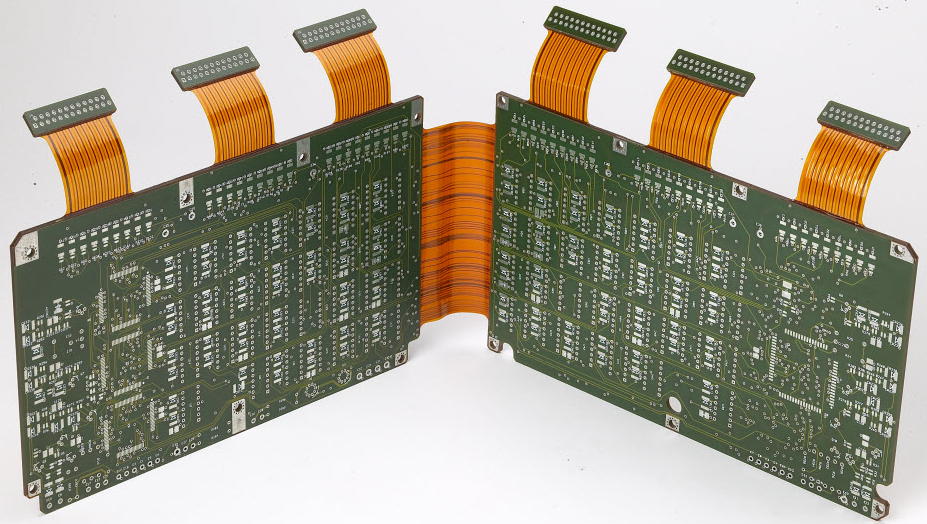
Green is the traditional colour for reasons that were originally technical. The epoxy chemistry that produced a reliable mask was easiest to formulate in green, and the contrast between the green surface and the pale copper or gold pads is excellent for visual inspection. The human eye is also most sensitive in the green region of the spectrum, which makes a green board the easiest to inspect under ordinary light.
Those reasons are historical rather than fundamental, but they left a legacy: the manufacturing processes, the inspection equipment and the operator habits that grew up around green boards are all tuned for it. A production line that runs mostly green boards will inspect them fastest and most reliably, and the first boards of a different colour will take slightly longer until the habits adjust.
The Options and What They Change
Black mask is the most common alternative and the most demanding. It hides the traces completely, which makes rework and visual fault-finding much harder, and it absorbs light rather than reflecting it, which reduces the contrast for automated optical inspection. The inspection systems can handle it, but the lighting and the algorithms have to be set up for it, and a black board also runs measurably hotter under the same conditions because it absorbs radiant energy.
Blue and red are cosmetic choices with the same contrast characteristics as green, slightly worse than green and much better than black. White is used in lighting products because it reflects light back into the luminaire rather than absorbing it, and it makes the board easier to inspect, at the cost of showing every flux residue and discoloration. Matte finishes are chosen for appearance and, in some cases, to reduce glare in optical equipment. Our design release checklist covers the finish specification.

What the Colour Does Not Change
The mask colour does not change the electrical performance in any meaningful way at low frequency. The dielectric properties of the mask material matter for controlled impedance traces on the outer layer, but that is a property of the material rather than of its pigment, and the thickness is what matters. Two boards with the same mask material in different colours have the same impedance.
It does not change the mechanical protection either. The mask protects the copper from oxidation and handling damage, prevents solder from bridging between pads and defines the areas where solder may flow, and it does all of that regardless of colour. What changes is the difficulty of inspecting the board and of working on it afterwards.
Practical Considerations for Inspection and Rework
Automated optical inspection compares what it sees with what it expects, and a board with poor contrast between the mask, the copper and the silkscreen is harder for it to interpret. A black mask with white silkscreen gives the best legibility for a human reader but the worst contrast for a machine, and a black mask with no silkscreen is the hardest case of all. Where the board is dense and the inspection system is doing the work, green or blue with white silkscreen is the combination that produces the fewest false calls.
Rework is the other consideration. A technician tracing a track on a black board has to use the layout file rather than the board, which slows the process and increases the chance of an error. For a product that is expected to be repaired rather than replaced, that is a real cost that a green board avoids for free.
Thermal and Optical Effects
A dark surface absorbs more radiant energy than a light one, so a black board in direct sunlight or under strong illumination reaches a higher temperature than a white or green one. In most products the effect is small compared with the components’ own dissipation, but in a product where the board is exposed to the sun or to a strong lamp, and where the thermal margin is tight, it is worth considering.
The reverse effect matters in lighting and in optical equipment, where a white board reflects light that would otherwise be lost and a matte finish reduces unwanted reflections. Those are functional choices rather than cosmetic ones, and they are usually made together with the optical design of the product rather than by the electronics engineer.
Making the Choice
If there is no functional reason to choose otherwise, green is the right answer because it is the most inspectable, the most repairable and the most familiar to every process in the supply chain. Black should be chosen deliberately, with the effect on inspection and rework understood, and it is best reserved for products where the appearance matters and the servicing is done by the manufacturer. White, matte and other specialist finishes are chosen for optical function rather than for appearance.
Whatever is chosen, the silkscreen should be white or another high contrast colour, the legend should be complete enough to service the board and the finish should be stated on the fabrication drawing along with its material specification. Those are the decisions that actually affect the product; the colour itself is the least of them.
Comparison With a Legend and a Finish Change
The colour decision is often entangled with two others: whether the legend is printed on both sides and which surface finish is used. Legend on both sides costs nothing significant and can be worth a great deal during fault-finding, particularly where components are fitted on both faces. The finish matters more: a gold finish against a black mask gives the highest contrast for machine vision, while a silver or tin finish on a black mask is the combination that produces the most false calls. Our ENIG finish article describes the plating side of that trade-off.
Where the product is inspected by machine rather than by eye, the combination of mask colour and finish should be chosen together and verified with a sample before the production run. A change of either after the inspection programme is written invalidates the setup, which is why the colour is best fixed early even though it seems like a late decision.
Supply Chain and Lead Time
Green is the most widely stocked mask material and is available from every fabricator at every volume. The less common colours, particularly matte black and matte white, are stocked in fewer widths and may add lead time, and a special colour can turn a routine order into a made-to-order one. That is a practical consideration rather than a technical one, and it is the reason a colour change is worth checking with the fabricator before it appears on a drawing. Our design release checklist places that confirmation in the review sequence.
FAQ
Does the solder mask colour affect performance? Not electrically. It affects inspection contrast, rework visibility and, slightly, the surface temperature of the board.
Why is a black board harder to inspect? Because it absorbs light rather than reflecting it, which reduces the contrast between the mask, the copper and the silkscreen. Inspection systems can handle it but need to be set up for it.
Why are lighting boards white? Because a white surface reflects light back into the luminaire instead of absorbing it, which improves the efficiency of the fixture and makes the board easier to inspect.