Aqueous Cleaning of Assemblies: Chemistry, Rinse and Drying
Cleaning an assembly after soldering is a chemistry problem with a mechanical solution, and the failure mode when it goes wrong is residue left in a place nobody can see. The measurement that settles the question is ionic contamination, and it is quick.
What Must Be Removed
The residue from a soldering process contains flux activators, metal salts, and the products of the reactions that occurred at the joint. Some of it is harmless and some of it is corrosive, and the difference is not visible.
The activators are the part that matters. They are designed to remove oxide during soldering, and after the joint has formed they remain on the surface unless they are removed or unless they are formulated to become inert.
No-clean fluxes are formulated to leave a residue that is non-corrosive and non-conductive under normal conditions. That is a real property, and it depends on the residue staying dry and intact, which is why a no-clean process may still require cleaning where the environment is humid or where the product is coated.
Aqueous and Semi-Aqueous Chemistry
Aqueous cleaning uses water with a saponifier or a surfactant to emulsify the flux residue. The chemistry is chosen to match the flux, and a mismatch produces a residue that is not removed or a surface that is attacked.
Semi-aqueous cleaning uses a solvent to dissolve the residue and water to rinse the solvent away. It handles some flux chemistries that water alone does not, at the cost of a solvent that must be managed.
The cleaning chemistry also affects the components. Some parts are not sealed against water, and some finishes are sensitive to the pH of the solution. The component list should be reviewed against the process before the process is chosen.
The Machine and the Four Stages
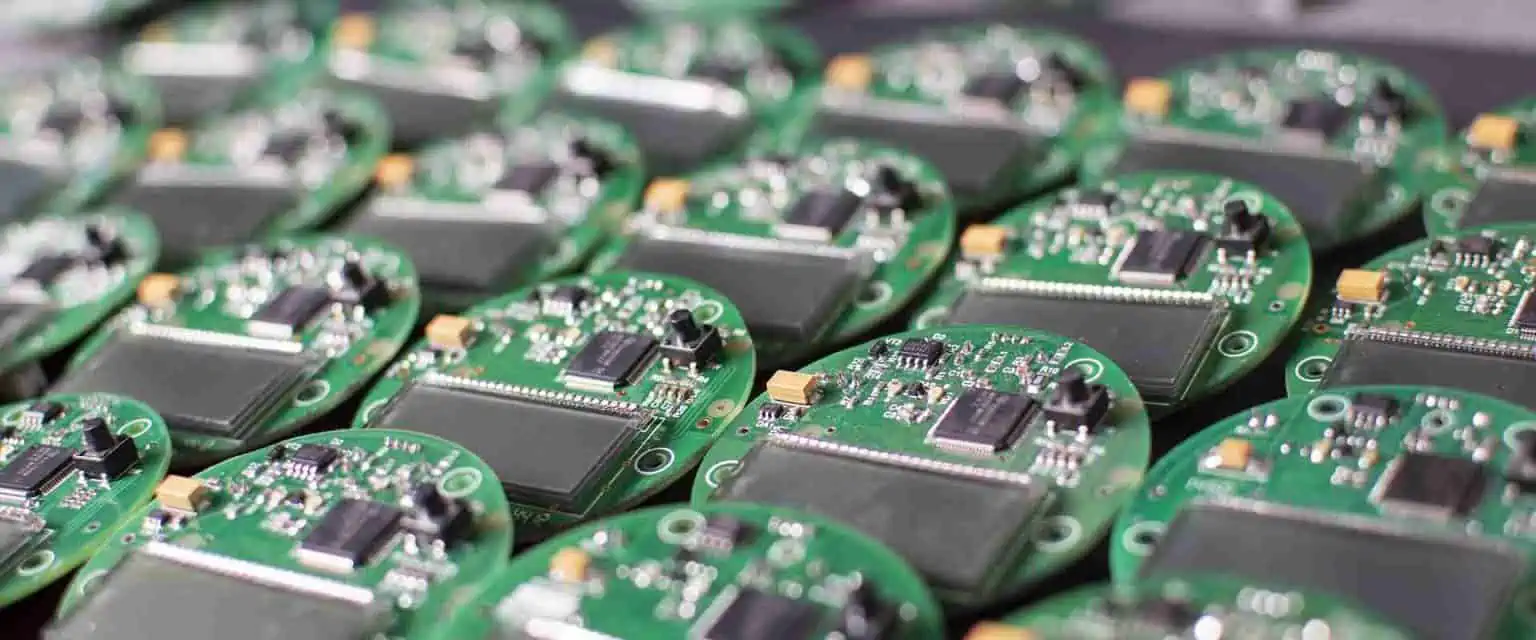
A typical inline cleaner has a wash stage, a rinse stage, a second rinse and a drying stage. Each stage has its own temperature, flow and dwell, and the whole sequence matters rather than the wash alone.
The rinse is where a cleaning process most often fails. Residue removed from the board must leave the machine, and if the rinse water is recirculated without adequate exchange, the residue is deposited back onto the board.
Drying is the stage that produces the most complaints. Water trapped in a plated hole, under a component or in a connector cavity will corrode and will also interfere with any coating applied afterwards. The drying stage must be capable of removing it, which depends on the geometry as much as on the temperature.
Water Quality and Rinsing
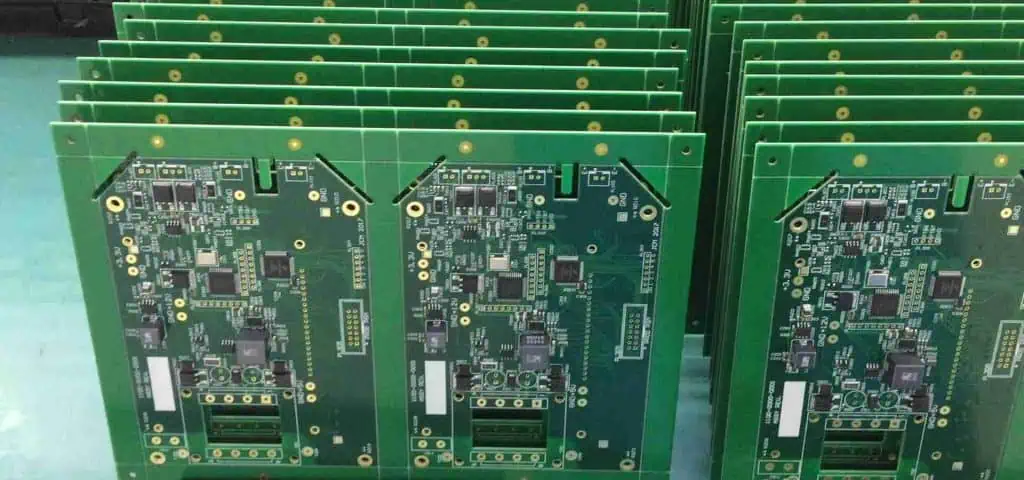
Deionised water is used for the final rinse because dissolved ions in the water would be left on the board as the water evaporates. The resistivity of the rinse water is monitored, and a falling resistivity indicates that the exchange rate is inadequate or that the resin bed needs regeneration.
The final rinse water resistivity is one of the few quantitative controls available in a cleaning process, and it should be logged with the lot.
Where the assembly will be coated, the rinse must also leave no surfactant residue, since a surfactant interferes with adhesion. Our coating notes describe the surface condition the coating requires.
Ionic Contamination Testing
The test extracts the ionic residue from the board into a known volume of a solvent mixture and measures the change in conductivity. The result is expressed as an equivalent mass of sodium chloride per unit area.
The measurement is a total, so it does not identify what the residue is. A board can pass the test and still carry a specific contaminant that is not very ionic, and it can fail because of a harmless material.
Its value is as a process control: a stable process produces a stable number, and a change in the number indicates that something has changed. The specification limit is usually set by the customer or by an industry standard. Our quality notes describe how the result is recorded.
Compatibility With the Assembly
Components with openings, such as switches, relays and connectors, can trap water and cleaning fluid. A part that holds fluid will release it slowly, and the release will appear as corrosion or as a coating defect long after the process.
Labels and marking can be removed by the cleaning chemistry, and some connectors lose their lubrication. The parts that must not be cleaned should be identified and either added after the process or protected.
Our solderability notes describe how the surface condition changes with cleaning, which is relevant where the board will be soldered a second time.
No-Clean as a Decision
Choosing no-clean removes the cleaning machine, the chemistry, the water treatment and the drying problem. It transfers the requirement to the flux, which must leave a residue that is acceptable for the life of the product.
The decision depends on the residue’s behaviour in the environment. A thin, even, fully reacted residue is much safer than a thick, sticky one, and the difference depends on the paste volume and the profile as much as on the flux.
Where the assembly will be coated, cleaned or used in a humid environment, the no-clean decision should be supported by data rather than by the flux supplier’s description. Our solder defects notes describe the failure modes that appear when a no-clean residue is left in a humid application.
Verification and Records
Records should include the chemistry used, its concentration and temperature, the flow rates, the rinse water resistivity, the drying parameters and the ionic contamination result.
Visual inspection under magnification after cleaning is a useful complement, since a board with visible residue will not pass the ionic test and the visual check localises the problem.
The combination of a quantitative test and a localising inspection is what makes a cleaning process controllable. A single test result establishes that something is wrong, and the inspection shows where.
Process Control and Verification
On a design of this kind, ionic contamination is the item that decides how the rest of the board is arranged. Where the requirement is not written down, the shop supplies its own default, and the default is chosen for the process rather than for the design. The measurements that matter are the repeatable ones: conductor width and spacing, annular ring, finished hole size, plating thickness and surface finish are all verifiable on a coupon that travels with the panel.
FAQ
Can a no-clean assembly be washed later? It can, and the flux must be compatible with the chemistry. A no-clean flux that has fully reacted may not dissolve in water, leaving a residue that the wash distributes rather than removes.
Is deionised water enough on its own? For some chemistries yes, and for many flux residues a saponifier or a surfactant is needed to lift the residue from the surface.
What does gopcb provide for cleaning? We provide chemistry selection matched to the flux and the component list, process records for all four stages, rinse water resistivity monitoring, ionic contamination testing with a stated limit, and visual confirmation of the result. Where no-clean is chosen, we support the choice with data from the specific paste and profile.