BGA Solder Joint Repair: Options and Limits
A ball grid array hides its solder joints underneath the package, so a joint that is marginal at assembly can survive test and fail in the field. Repair is possible, but the decision to repair depends on what the failure actually is and on the equipment available.
What a Marginal Joint Looks Like
A cold or partially reflowed ball has a poor interface between the solder and the pad, so the connection is made through a thin region of contact rather than through a continuous intermetallic layer. Electrically it measures as connected, which is why functional test often passes it.
Mechanically it is weak. Thermal cycling and vibration open cracks that grow slowly until the joint becomes intermittent, and an intermittent joint on a data bus produces faults that appear and disappear with temperature rather than with load.
Why Vibration Exposes the Fault
A board with a marginal ball can work on the bench and fail when the product is handled. The mass of the package works against the joint, and the stress concentrates at the ball that was already the weakest, which is why the same device fails repeatedly on the same product.
That pattern is a useful diagnostic. If a fault follows shock, drop or vibration and disappears when the board is rested, the cause is usually a mechanical joint problem rather than a silicon failure, and the package should be inspected before anything is replaced.
Reflow and Rework Stations
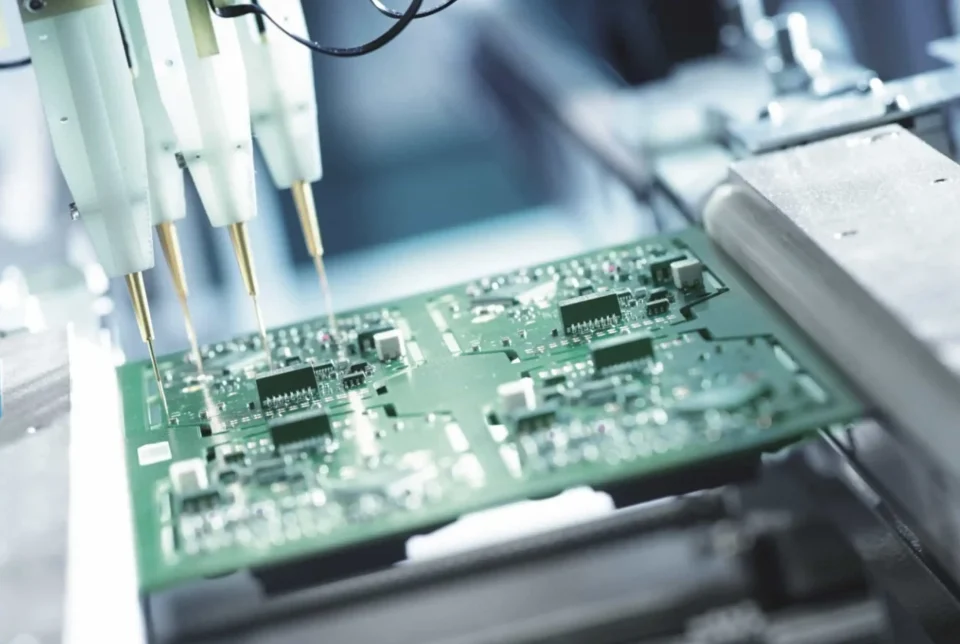
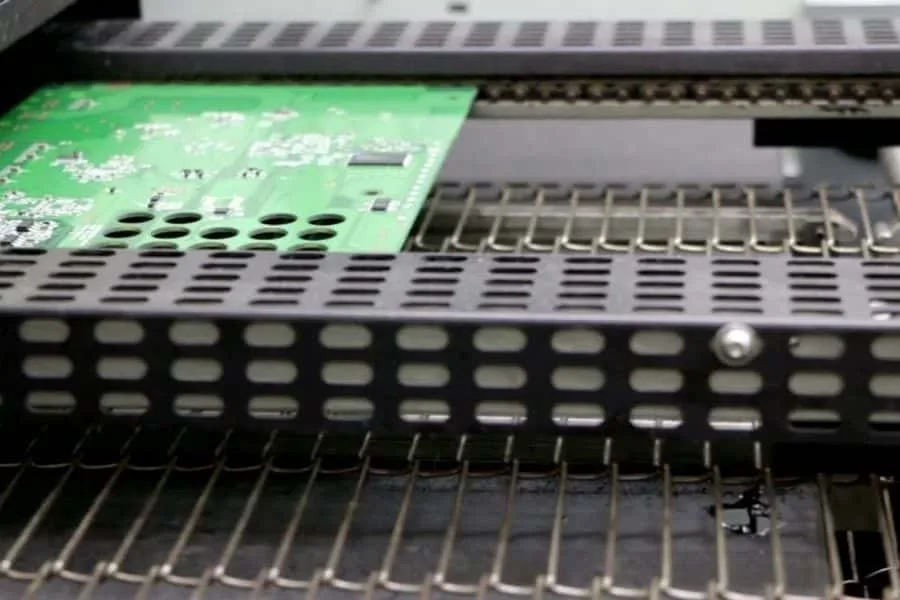
A proper rework of a ball grid array needs a machine that heats the whole package area to a controlled profile. Hot air from below and above, with a thermocouple or a profile recipe tied to the actual board, gives a joint that can be inspected and trusted.
Heating one package with a hand held gun does not reproduce that profile. The heat is uneven, the board warps, and adjacent parts move; in the worst case the balls collapse into a bridge, and a repair that was meant to save the assembly destroys it.
When Local Heat Is Enough
Some intermittent joints can be stabilised by localised heating, because the movement that opens the crack is small and the package can be brought back into contact. It works best where the fault is intermittent rather than open and where the board cannot be reworked.
Even then, the result has to be verified by inspection and by a functional test that includes temperature. A joint that is closed by heat and mechanical pressure without reaching liquidus is a temporary repair, and it should be recorded as one rather than treated as a permanent fix.
<img src="https://www.gopcba.com/wp-content/uploads/2024/11/541b7fd1e263742c74ee60eca244962.jpg" alt="X-ray image of a BGA solder joint array after rework” />
Mechanical Support as a Last Resort
Where a package is only marginally loose and the equipment for a full rework is not available, bonding the edges of the package to the board can hold the joint closed. A stiff adhesive applied around the perimeter works better than a soft one because it resists shear rather than peeling.
The surface has to be cleaned first, or the adhesive lifts and the fault returns. This approach is a stopgap for units that would otherwise be scrapped: it does not rebuild the joint, it only prevents the relative movement that opens it, and it must never be used where the product has to pass a temperature cycle test.
Reballing and Replacement
Where the failure is a single damaged ball or a package that has already been heated too often, the package can be removed, the site dressed and the device reballed or replaced. Reballing needs a stencil, fresh spheres and a controlled profile, and the pad must be flat before the new balls are placed.
Replacement is usually the better choice for a fine pitch package with many balls, because the reballing yield falls quickly as the pitch shrinks. Either way, the site has to be cleaned completely and the adjacent area protected from the heat.
Underfill and Mechanical Robustness
Underfill is the process answer to the same problem. It fills the gap between the package and the board and distributes the stress away from individual balls, so the fatigue life of the array improves even when the joints themselves are unchanged.
It has to be applied before the failure occurs to be effective as a reliability measure, and the material must be compatible with the cleaning and rework plan. Once cured, the assembly is difficult to rework, so underfill is normally reserved for packages where a repair is unlikely.
Inspection Before and After Repair
X-ray inspection shows voids, bridges and missing balls, and it is the only practical way to check an area array before power is applied. A scan of the site after a rework confirms that the balls have collapsed evenly and that no ball has been displaced.
Optical inspection still has a role at the edges of the package, where fillets are visible, and a sample cross section settles a disagreement about a specific joint. Where the equipment is not available, the assembly should be sent to a laboratory rather than declared good on the strength of a continuity test.
Prevention in the Assembly Process
Most repair work exists because the original profile was wrong for the assembly. A soak that does not bring the whole board to a uniform temperature, a pad that is too small for the ball, or a paste deposit that is short of volume will each produce the same symptom.
The controls that prevent it are ordinary: a verified profile for each board thickness, a stencil aperture that matches the ball, and a first article inspection that includes an X-ray of a representative device before the batch is released.
Repair or Scrap
The decision is commercial as much as technical. A single repair on a low value assembly is rarely justified, while a prototype or a high value unit may be worth reworking even at a low yield, because the schedule cost of a replacement is higher than the repair cost.
Once a board has been reworked more than twice, or once a package has been heated beyond its limit, the risk of latent damage exceeds the value of the repair. Recording the history of the unit and scrapping it when the limit is reached is the discipline that keeps a repair bench honest.
Process Control and Verification
On a design of this kind, underfill is the item that decides how the rest of the board is arranged. Running a first article through the same checks as the production panel confirms that the two agree, and that comparison is the cheapest form of process control available at prototype stage. Keeping a sample from the panel turns a dispute into a measurement, because the same coupon can be re-examined by both parties without rebuilding the batch.
Related reading: our fabrication notes, board quality and design release notes cover the same ground.
A first article check confirms that the process and the drawing agree on the points listed above, and that the coupon data supports the values used in the design.
Where a measurement falls outside the expected window, the sample is retained so that the cause can be established before the balance of the batch is released.
FAQ
Can a marginal BGA solder joint be repaired without a rework station? It can be stabilised, but not rebuilt. Local heat and a perimeter adhesive are stopgaps, and the joint will not pass a temperature cycling test.
Does a continuity test prove the repair worked? No. A marginal joint measures as connected. Verify with X-ray inspection and with a test that includes temperature and vibration.
How can voids be avoided next time? Control the paste volume and the profile, and review the results with the guidance on solder void prevention.